

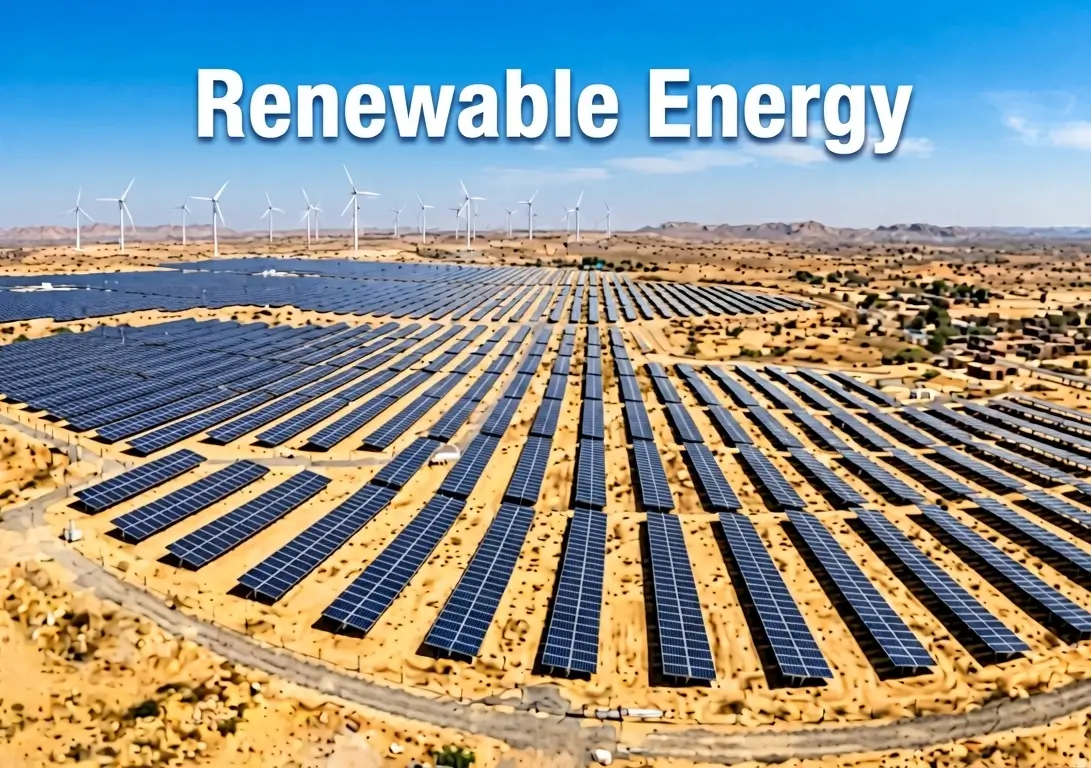
India is rapidly moving towards cleaner sources of energy. Among the states driving this change, Rajasthan has built a strong position in renewable energy, especially solar power. The state has a natural advantage that many other parts of India cannot match. Rajasthan gets long hours of sunshine, has large areas of land suitable for solar projects, and has good conditions for both solar and wind energy.
This combination has attracted large renewable energy projects and investments. In August 2026, the Rajasthan government announced that the state’s installed renewable energy capacity had crossed 50,000 MW. But Rajasthan’s renewable energy story is not only about producing electricity. It is also about investment, jobs, infrastructure, manufacturing, and the future growth of clean energy in India.
Rajasthan Renewable Energy: An Overview
| Factor | Rajasthan’s Advantage |
| Solar energy | High solar radiation and more than 320 sunny days |
| Land | Large areas suitable for renewable projects |
| Solar parks | Large projects such as Bhadla Solar Park |
| Wind energy | Strong wind conditions in western Rajasthan |
| Infrastructure | Power transmission and industrial infrastructure |
| Investment | Large planned and proposed clean energy projects |
| Future focus | Solar, wind, hybrid energy, storage and green hydrogen |
Rajasthan’s own investment portal highlights its high solar radiation, more than 320 sunny days a year, and large areas of land suitable for solar development. It also identifies western areas such as Jaisalmer as suitable for wind energy.
Why Does Rajasthan Have Such Strong Solar Potential?
The biggest reason is sunlight. Large parts of Rajasthan receive strong sunlight for most of the year. This gives solar power developers a useful natural advantage. Solar panels need sunlight to generate electricity. More consistent sunlight can help large solar projects produce power over long periods.
The Thar Desert and other dry areas also offer large stretches of land where developers can build solar projects. This makes it possible to develop renewable energy projects on a much larger scale. The Rajasthan government says the state has more than 320 sunny days a year and large areas of relatively barren land that can support extensive solar installations.
Bhadla Solar Park Shows Rajasthan’s Scale
When people talk about solar energy in Rajasthan, Bhadla Solar Park often comes up. The Rajasthan government lists the Bhadla Solar Park cluster as one of the state’s major renewable energy hubs. Its investment portal describes a 2,245 MW Bhadla Solar Park within a fully operational solar park area of about 5,700 hectares.
Projects of this size show why Rajasthan attracts large renewable energy developers. A large solar park can bring several projects together in one region. Developers can use shared infrastructure and connect their power generation to the wider electricity network. This creates an ecosystem rather than a single solar project for Rajasthan.
Wind Energy Adds Another Growth Opportunity
Rajasthan is not dependent only on solar power. Western parts of the state also have useful wind conditions. Jaisalmer has become an important wind energy area, and the state government identifies it as a major wind energy cluster.
This matters because solar and wind power can complement each other. Solar plants generate most of their electricity during daylight hours. Wind projects generate power at different times depending on local wind conditions.
Developers can therefore combine solar and wind projects with energy storage to create more reliable renewable power. This is one reason Rajasthan is increasingly focusing on hybrid renewable energy projects.
Government Policies Are Supporting Investment
Natural resources alone cannot create a large renewable energy industry. Investors also need suitable policies, land support, grid infrastructure, and a clear approval process. Rajasthan has introduced policies and incentives to encourage renewable energy investment.
The state’s Integrated Clean Energy Policy 2024 sets a target of reaching 125 GW of renewable energy capacity by 2030. The target includes 90 GW of solar and 25 GW of wind and hybrid energy. The policy also focuses on areas such as rooftop solar, green hydrogen, and energy storage.
The state also provides incentives for renewable energy projects under its investment framework. These include investment-linked support and exemptions related to electricity duty and conversion charges subject to the applicable policy conditions. Such policies can make a major difference when deciding where to develop a large project.
Rajasthan Is Attracting Large Investments
Renewable energy requires huge amounts of capital. Solar parks need land, panels, transmission systems, roads, substations, and other infrastructure. Rajasthan has attracted significant investor interest because of its natural and policy advantages.
According to the state’s Economic Review 2025-26, the government signed MoUs worth ₹6.57 lakh crore in November 2024 for projects across renewable energy segments including solar, wind, green hydrogen and battery storage.
These MoUs represent proposed investment commitments rather than money already spent. That distinction matters when looking at investment numbers. Still, the scale shows the level of interest that Rajasthan has generated in the clean energy sector.
Green Energy Infrastructure Is Also Growing
Producing renewable electricity is only one part of the story. The electricity must also reach homes, offices, factories and other users. Rajasthan is therefore developing transmission infrastructure to support its growing renewable capacity. The state government says a Green Energy Corridor is being developed in western Rajasthan to integrate solar and wind generation.
This type of infrastructure becomes increasingly important as more renewable projects connect to the electricity grid. Even a large amount of installed generation capacity cannot deliver its full value without enough transmission capacity.
Rajasthan Is Moving Towards Energy Storage
One challenge with renewable energy is that solar and wind generation can change with weather and time. Energy storage can help solve part of this problem.
Rajasthan is now moving towards projects that combine renewable generation with battery storage. In July 2026, the Rajasthan Electricity Regulatory Commission approved key deviations related to a proposed project at Pugal Solar Park involving 2,450 MW of solar and 1,600 MW / 6,400 MWh of battery energy storage.
This shows how the renewable energy sector is moving beyond simply building more solar panels. The next stage involves generating electricity, storing it, and supplying it when it is needed.
Renewable Energy Can Create More Than Electricity
The renewable energy industry can affect many parts of the local economy. Large projects require construction workers, engineers, technicians, transport services, security services and maintenance teams. They also create demand for equipment, electrical services and other supporting businesses.
Manufacturing can create another opportunity. Rajasthan’s investment framework includes incentives for solar PV module and cell manufacturing. The state has also included renewable energy as a focus area for industrial development. This can help Rajasthan move from simply generating clean electricity towards becoming part of the larger renewable energy supply chain.
Rajasthan’s Green Hydrogen Opportunity
Green hydrogen is another area that could become important for Rajasthan. Green hydrogen is a clean fuel made using renewable energy. This hydrogen is then used to help factories and industries that are hard to clean up cut down on their carbon pollution.
Rajasthan’s Integrated Clean Energy Policy 2024 includes provisions related to green hydrogen and renewable power. The state also provides a framework for government land allocation for green hydrogen projects under the policy.
The growth of solar and wind power gives Rajasthan an important base for exploring this opportunity. However, green hydrogen remains a developing industry, and its future growth will depend on technology, costs, infrastructure, and demand.
What Challenges Does Rajasthan Face?
Rajasthan’s renewable energy growth also comes with challenges. Large renewable projects need substantial land and transmission infrastructure. Developers must also manage environmental concerns, grid connectivity, and project financing.
Another challenge comes from the variable nature of solar and wind power. The state will need more storage, better transmission systems, and improved grid management as renewable capacity continues to grow. Water availability also matters in a desert state. Renewable projects need to consider local water conditions and use suitable technologies and practices. So, building more renewable capacity alone will not be enough. Rajasthan will also need strong planning and responsible project development.
Conclusion
Rajasthan has become one of India’s most important renewable energy hubs because several advantages come together in one state. Strong sunlight gives it excellent solar potential. Large areas of land allow developers to build projects at scale. Western Rajasthan also offers opportunities for wind energy. Government policies and investment incentives have added another layer of support. Large solar parks such as Bhadla have demonstrated the state’s ability to host major renewable projects.
The next phase will involve much more than solar panels. Battery storage, hybrid power, transmission infrastructure, rooftop solar, manufacturing, and green hydrogen can shape Rajasthan’s renewable energy future. Rajasthan offers an important example of how natural resources, infrastructure and policy can work together to support long-term clean energy growth.