

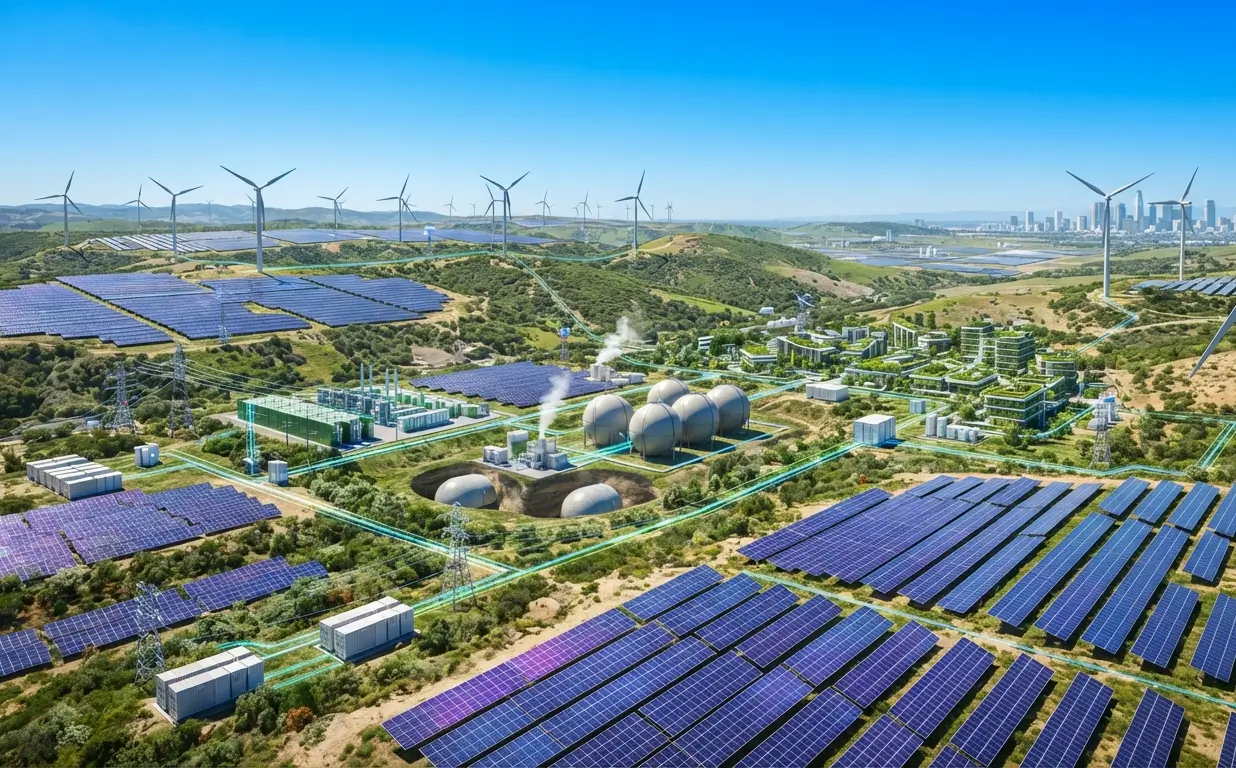
The way the world produces and uses electricity is changing quickly. Solar panels are appearing on homes and factories. Large wind and solar projects are becoming common. Battery storage is growing. Electric vehicles are increasing the need for clean electricity. At the same time, governments and companies are looking for ways to reduce their dependence on fossil fuels.
India has an important role in this transition. The country has already crossed 300 GW of installed non-fossil electricity capacity as of July 31, 2026. India has set a goal to produce 500 gigawatts of energy from clean sources (sources other than coal, oil, and gas) by the year 2030.
The answer will involve much more than installing solar panels. Energy storage, smarter electricity grids, rooftop solar, wind power, domestic manufacturing, and green hydrogen could all become important parts of the next phase.
Renewable Energy in 2030: An Overview
| Trend | What Could Change by 2030 |
| Solar power | Much larger share of new electricity capacity |
| Wind energy | Continued growth in suitable regions |
| Battery storage | Greater use for storing renewable electricity |
| Pumped hydro | More long-duration energy storage |
| Rooftop solar | More homes and businesses generating their own power |
| Smart grids | Better management of electricity supply and demand |
| Green hydrogen | Growing use in selected industries |
| Manufacturing | More domestic production of clean-energy equipment |
| Electric vehicles | Higher electricity demand and greater battery use |
| Renewable jobs | More opportunities across installation, manufacturing and maintenance |
1. Solar Power Will Remain the Biggest Renewable Energy Trend
Solar power is likely to remain at the centre of renewable energy growth through 2030. The reason is simple. Solar technology has become increasingly competitive, and developers can install solar projects at different scales. A large power plant can generate electricity for the grid while a small rooftop system can help a family or business generate electricity at its own location.
The International Energy Agency expects solar PV and wind to account for about 95% of global renewable capacity growth through 2030 in its 2024 main-case forecast. India is also seeing rapid solar expansion. As of July 31, 2026, India had about 164.59 GW of installed solar power capacity, according to the Ministry of New and Renewable Energy. This growth could change how electricity reaches consumers. Rather than depending only on giant power plants, India can mix large solar farms with rooftop solar panels and other smaller, local energy sources.
2. Rooftop Solar Will Become More Important
Large solar parks get a lot of attention. But rooftop solar could have an equally important role in everyday life. A house with a suitable rooftop can install solar panels and generate electricity during the day. Offices, schools, hospitals, shops and factories can also use rooftop systems. India’s PM Surya Ghar scheme is supporting the expansion of residential rooftop solar. The government has set a target of helping one crore households through the scheme. For a normal household, rooftop solar is not simply about environmental benefits. It can also reduce electricity purchased from the grid.
The actual savings depend on factors such as system size, electricity consumption, local sunlight, installation cost, and applicable electricity rules. By 2030, more Indian households may therefore become both electricity consumers and small-scale electricity producers.
3. Battery Storage Will Change Renewable Energy
Solar power has one obvious limitation. It does not produce electricity at night. Wind power also changes according to weather conditions. This makes energy storage extremely important. A battery can store electricity when renewable generation is high and release it later when demand increases.
The IEA says global energy storage capacity needs to increase sixfold to 1,500 GW by 2030 in its Net Zero Emissions scenario. Batteries account for most of that projected increase. This does not mean every home will suddenly have a giant battery. Storage can exist at several levels. A homeowner can use a small battery system. A commercial building can use a larger system. Electricity companies can develop large battery energy storage projects connected directly to the grid. This could help make renewable electricity more useful beyond daylight hours.
4. Pumped Hydro Storage Could Support the Grid
Batteries are not the only answer. Pumped-storage hydropower can also store electricity for later use. The basic idea is easier to understand than the name suggests. When electricity is available in excess, the system uses that electricity to pump water to a higher reservoir. When the grid needs more electricity, the stored water flows down through turbines to generate power.
This type of storage can support the electricity system for longer periods than many short-duration battery applications. India is therefore looking at both battery storage and pumped-storage projects as renewable energy capacity grows. The broader goal is to make the electricity grid flexible enough to handle large amounts of solar and wind power.
5. Wind Energy Will Continue to Grow
Solar power may dominate renewable-energy discussions, but wind energy will remain important. India already has a large wind-energy base. The country had about 58.14 GW of installed wind capacity as of July 31, 2026. Wind projects work particularly well in areas with suitable wind resources.
India can also combine wind and solar projects. For example, a hybrid project can produce solar electricity during sunny hours while wind generation can occur at different times. Adding storage can make such projects even more useful. The IEA expects global wind expansion to accelerate through 2030, although the sector still faces challenges related to financing, permitting, and grid connections.
6. Solar-Wind Hybrid Projects Could Become Common
A major renewable energy trend by 2030 will be the move from single-source projects towards combinations of technologies. Imagine a large project containing solar panels, wind turbines and battery storage. Solar panels can generate electricity during the day. Wind turbines can contribute when wind conditions are favourable. Batteries can store some excess power and release it when required.
This approach can make better use of transmission infrastructure and available land. It can also help developers provide a more predictable electricity supply. India has already been encouraging hybrid renewable projects as part of its broader clean-energy transition.
7. Smart Grids Will Become More Important
Adding renewable power creates a new challenge. Electricity generation can change throughout the day. At the same time, electricity demand also changes. This makes the electricity grid more complicated to manage. Smart-grid technology can help utilities monitor electricity flows and respond to changes in supply and demand.
Smart meters can also give consumers better information about their electricity consumption. For example, a family may discover that its electricity use becomes much higher during certain hours. That information can help the household change its usage habits. As more solar systems, batteries, electric vehicles, and other technologies connect to the grid, better digital management will become increasingly important.
8. Green Hydrogen Will Find Specific Industrial Uses
Green hydrogen is another major topic in the renewable energy sector. Green hydrogen uses renewable electricity to produce hydrogen through electrolysis. Some industries are difficult to electrify directly. Heavy industry, chemicals, fertilisers and some transport applications may need other solutions. Green hydrogen could help reduce fossil-fuel use in selected applications. However, it is important not to assume that green hydrogen will replace everything.
The IEA’s renewable-energy forecast expects renewable hydrogen to remain a relatively small driver of new renewable capacity through 2030 compared with solar and wind. It expects renewable hydrogen to account for only around 4% of total hydrogen production in 2030 in its main case. So, green hydrogen has potential, but its growth will depend on costs, infrastructure, demand, and government support.
9. Domestic Clean-Energy Manufacturing Will Grow
Renewable energy is not only about generating electricity. India also needs the equipment required to generate and store that electricity. Solar modules, solar cells, batteries, inverters, cables, transformers, and other equipment form a large supply chain.
India has been working to increase domestic solar manufacturing through policy support and manufacturing incentives. This can help reduce dependence on imports and create opportunities for Indian manufacturers. It can also support jobs in manufacturing, engineering, quality testing, logistics, and maintenance. The growth of domestic manufacturing could therefore become an important part of India’s renewable-energy story by 2030.
10. Electric Vehicles Will Increase the Need for Clean Electricity
Electric vehicles and renewable energy are closely connected. An electric car does not burn petrol or diesel while driving. Instead, it uses electricity stored in its battery. As EV adoption increases, electricity demand from charging will also increase.
This creates both an opportunity and a challenge. If EVs receive electricity from a grid with a growing renewable-energy share, their overall energy system can become cleaner. But utilities also need to manage charging demand carefully. For example, vehicles could charge at times when electricity demand is lower or renewable generation is high. This could turn EV batteries into a useful part of the wider electricity system in the future.
Conclusion
The future of renewable energy by 2030 will not depend on one technology. Solar power will remain a major growth engine. Wind energy will continue to support the electricity mix. Batteries and pumped hydro will help store electricity. Smart grids will help manage changing supply and demand. Rooftop solar can bring electricity generation closer to households and businesses. Domestic manufacturing can strengthen India’s clean-energy supply chain. Green hydrogen may support selected industries that cannot easily switch directly to electricity.
The biggest change may be the way these technologies work together. India has already crossed 300 GW of non-fossil electricity capacity and is working towards 500 GW by 2030. The road ahead will still bring challenges. But if India continues improving its grid, storage, manufacturing, and renewable-energy infrastructure, the energy system of 2030 could be cleaner, more diverse, and more flexible than the one we use today.