

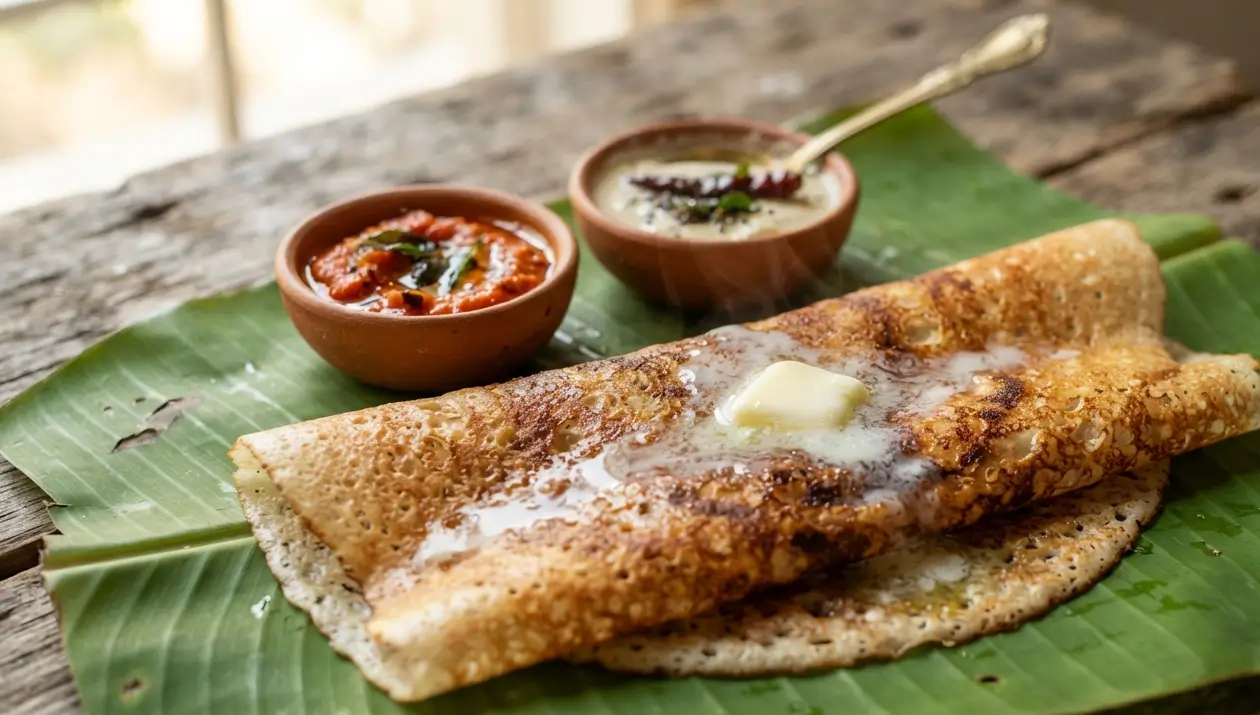
Dosa is one of the most loved South Indian foods in India. You can find many types of dosa across the country, from plain dosa and masala dosa to set dosa, neer dosa, and rava dosa.
But Davangere benne dosa has a special place among dosa lovers. This dosa comes from Davangere in Karnataka and is known for its generous use of butter, soft texture inside, and crisp edges. The word “benne” means butter in Kannada, which gives you a big clue about what makes this dosa special.
At first glance, Davangere benne dosa may look similar to a regular dosa. However, the taste, texture, cooking method, and use of butter create a noticeably different experience. So, what exactly makes Davangere benne dosa different from a regular dosa?
What Is Davangere Benne Dosa?
Davangere benne dosa is a traditional dosa style associated with Davangere, Karnataka. The word “benne” means butter. As the name suggests, butter plays an important role in preparing and serving this dosa. Unlike a basic plain dosa that may use oil or a small amount of ghee or butter, Davangere benne dosa gets much of its rich taste from butter.
The dosa usually has a soft and slightly fluffy centre with crisp edges. Cooks spread the batter on a hot tawa and cook it with butter, giving the dosa a rich aroma and a golden surface. Many people enjoy it with potato palya and coconut chutney. The combination of the buttery dosa, mildly spiced potato filling, and chutney creates the familiar Davangere-style experience.
Why Is Davangere Benne Dosa So Popular?
The main attraction is its combination of buttery taste and soft-crispy texture. A regular dosa often focuses on a thin and crisp texture. Davangere benne dosa takes a slightly different approach. The centre can remain soft while the outer portion develops a light crispness. Butter adds richness without changing the basic character of the fermented dosa batter.
Another reason people enjoy it is its simplicity. You do not need a long list of toppings to make the dosa interesting. A well-made benne dosa with butter, potato palya, and chutney can provide plenty of flavour on its own.
What Makes Benne Dosa Different From Regular Dosa?
The biggest differences come from the butter, batter consistency, texture, and cooking style.
Here is a simple comparison:
| Feature | Davangere Benne Dosa | Regular Plain Dosa |
| Main highlight | Butter-rich taste | Crisp dosa flavour |
| Texture | Soft inside with crisp edges | Usually thin and crisp |
| Fat used | Butter is an important part | Oil, ghee or butter may be used |
| Batter | Usually prepared for a softer texture | Often spread thin |
| Serving style | Served with potato palya and chutney | Served with chutney and sambar |
| Taste | Rich and buttery | Light, crisp and fermented |
The exact recipe can differ from one restaurant or home kitchen to another. But the buttery character remains one of the main features of Davangere benne dosa.
The Role of Butter in Davangere Benne Dosa
Butter is not just a topping in this dosa. It plays an important role during cooking and gives the dosa its characteristic rich taste. When the batter reaches the hot tawa, the cook spreads it and adds butter. The butter melts across the surface and around the dosa. This helps create a golden finish while adding a rich aroma. That is why eating a benne dosa feels different from eating a simple dosa cooked with a small amount of oil. The butter also pairs well with the slightly sour flavour that comes from fermented dosa batter.
Why does butter make such a difference?
Think about the difference between toast with nothing on it and toast with a generous layer of butter. The bread remains the same, but the butter changes the flavour and mouthfeel. Something similar happens with benne dosa. The dosa batter provides the base, while butter gives the dish a richer and more indulgent character.
The Texture Is Another Big Difference
Texture is one of the easiest ways to identify the difference. A regular plain dosa often has a thin structure and a crisp bite. Many restaurants spread the batter very thinly to create a crisp dosa. Davangere benne dosa usually aims for a different texture. The centre remains softer and slightly thicker, while the edges can become crisp. This combination gives you two textures in the same bite. You get the softness of the fermented batter in the middle and a light crunch around the edges. That soft-and-crispy combination is a major reason why people enjoy this style of dosa.
Is the Batter Different?
The batter and the way the cook handles it can affect the final texture. Dosa batter generally uses fermented rice and lentil ingredients. However, different dosa styles use different proportions, preparation methods and consistency. For Davangere-style benne dosa, cooks generally aim for a batter that helps create a softer and thicker dosa rather than an extremely thin restaurant-style crisp dosa.
The fermentation also matters. Properly fermented batter gives the dosa a pleasant aroma and mild tanginess. The exact ingredients and proportions can vary between recipes, so there is no single universal recipe that every Davangere restaurant follows.
How Is Davangere Benne Dosa Cooked?
The tawa needs the right temperature before the batter goes on it. The cook pours the batter and spreads it in a controlled way. The dosa should not become as thin as some varieties of plain dosa. Butter then goes onto the dosa as it cooks. The heat helps the butter melt and spread across the dosa. The cook allows the bottom to develop a golden colour while keeping the centre soft.
If the tawa is too hot, the dosa may cook too quickly and lose the desired soft texture. If the heat is too low, the dosa may not develop the right surface and aroma. Experienced dosa makers usually develop a feel for the correct heat and batter consistency through practice.
What Is Usually Served With Benne Dosa?
Davangere benne dosa comes with potato palya and coconut chutney. The potato palya provides a soft and mildly spiced filling that works well with the buttery dosa. Coconut chutney adds freshness and a different texture. Some restaurants may serve other chutneys or accompaniments as well. The exact serving style can depend on the restaurant. But when people talk about the classic experience, butter dosa with potato palya and chutney is a familiar combination.
Davangere Benne Dosa vs Masala Dosa
People sometimes confuse benne dosa with masala dosa because both can include a potato filling. The difference is mainly in the dosa itself.
- A typical masala dosa is usually thin and crisp, with the potato masala placed inside or on top.
- Davangere benne dosa focuses more on the soft, buttery dosa itself. The potato palya complements the dosa instead of being the only major attraction.
So, if you enjoy very thin and crunchy dosa, you may notice the difference immediately.
Is Davangere Benne Dosa Very Heavy?
It can feel richer than a plain dosa because of the amount of butter used. A plain dosa can be relatively light depending on how it is prepared. Benne dosa adds more fat through butter, which gives it a richer taste. That does not mean everyone needs to avoid it. Like any rich food, you can enjoy it as part of a balanced diet. The portion size and amount of butter used can make a difference. If you are eating at a restaurant and want a lighter version, you can ask about the amount of butter used. However, reducing the butter may also reduce some of the characteristic taste of benne dosa.
Can You Make Davangere Benne Dosa at Home?
You can make a similar style of dosa at home. The most important things are the batter, fermentation, tawa temperature, and butter. Start with properly fermented dosa batter. The batter should have a pleasant fermented smell rather than an unpleasant or overly sour smell. Heat the tawa properly and pour the batter. Spread it gently rather than making an extremely thin dosa.
Add butter and allow the dosa to cook until the bottom develops a golden colour. Serve it immediately with potato palya and coconut chutney. The result may not taste exactly like a dosa from Davangere because restaurant cooks often have years of experience with their batter and tawa. But you can still create a delicious homemade version.
Final Thoughts
The word “benne” means butter, and butter plays a central role in the dish. Instead of aiming only for a very thin and crisp dosa, Davangere-style benne dosa usually offers a softer centre with crisp edges. Its combination with potato palya and coconut chutney also gives it a distinct serving style. A regular dosa can be light and crisp, while Davangere benne dosa offers a richer and more buttery experience. That difference is simple but important. It shows how one familiar Indian dish can develop a completely different character from one region to another.
If you ever visit Davangere or find an authentic Davangere-style dosa restaurant, try the benne dosa fresh from the tawa. The combination of warm dosa, melted butter, potato palya and chutney is what makes this Karnataka specialty so enjoyable.