

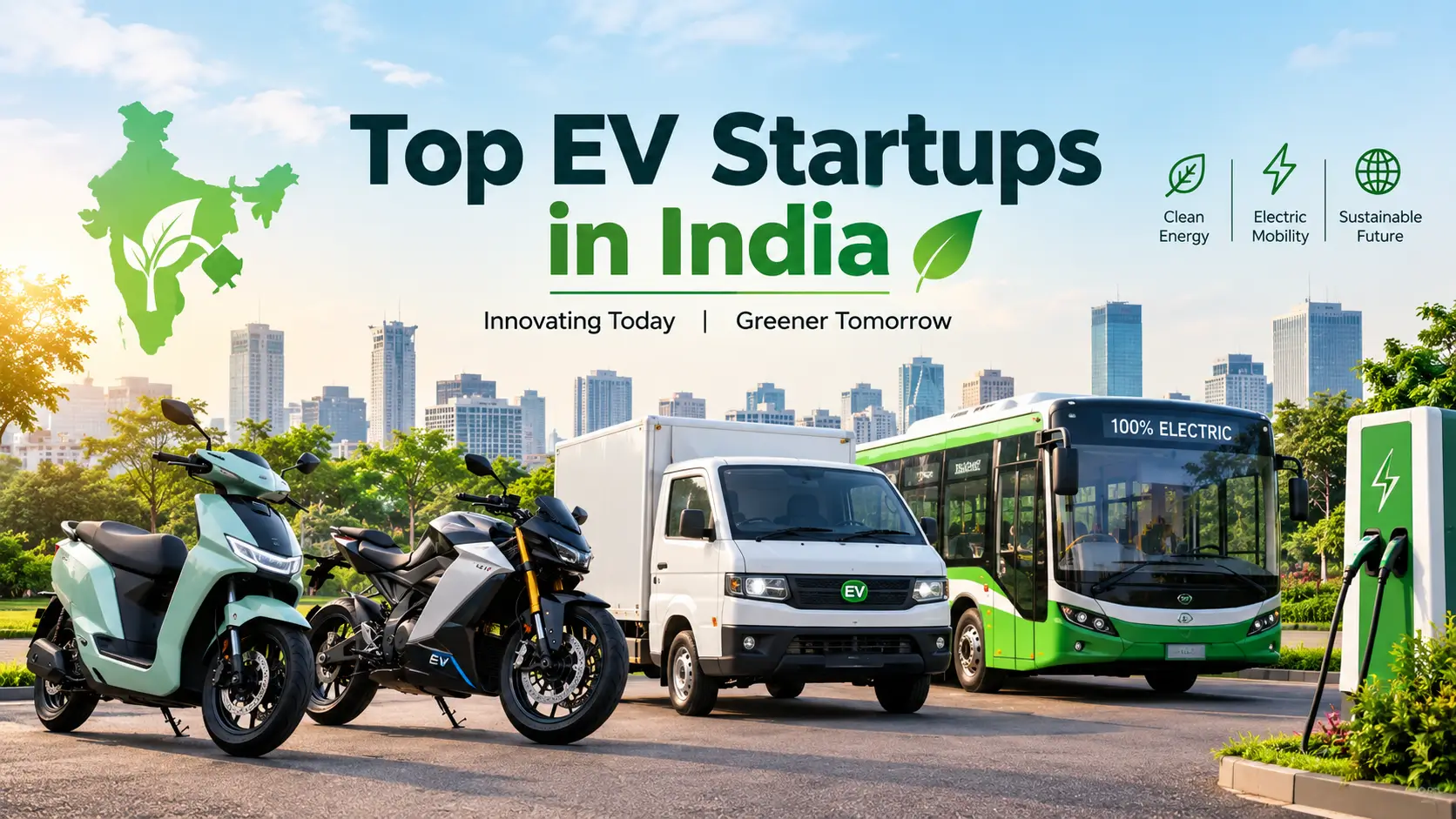
India is changing the way people travel. Electric scooters and motorcycles are becoming more common on Indian roads, and businesses are also looking at electric vehicles for deliveries and transportation. This change has created an opportunity for a new generation of Indian EV startups. Companies such as Ather Energy, Ola Electric, Ultraviolette, River, Oben Electric, Matter, Raptee.HV and Euler Motors are working on different parts of the electric mobility market. Some focus on everyday scooters while others are building performance motorcycles or electric commercial vehicles.
India’s EV market has also grown beyond a small niche. According to Vahan data reported in January 2026, India recorded about 23 lakh EV sales in 2025, and EVs accounted for around 8% of new vehicle registrations. Electric two-wheelers made up the largest share of those EV sales. But the EV story is not only about selling more vehicles. These startups are also working on batteries, charging, software, vehicle design, manufacturing, and new ways of using electric transportation.
Why Are EV Startups Important for India?
India imports a large amount of crude oil to meet its energy needs. Electric vehicles can reduce petrol and diesel consumption when the electricity used for charging comes increasingly from cleaner sources. EVs can also change the cost of daily travel. For a person who travels long distances every day, electricity can cost less than petrol or diesel per kilometre. Electric vehicles also have fewer moving mechanical parts than traditional internal-combustion vehicles, which can reduce some maintenance requirements.
However, EV ownership still depends on factors such as purchase price, charging availability, battery warranty, service support, and daily driving needs. This is where EV startups are trying to make a difference.
Top EV Startups in India
The following companies represent different parts of India’s growing electric mobility ecosystem. The list is not a ranking because these companies operate in different vehicle categories.
1. Ather Energy
Ather Energy is one of India’s well-known electric two-wheeler startups. The company focuses mainly on electric scooters and has built its products around connected features, charging support, and everyday urban riding.
Its current range includes the Ather 450 family and the family-focused Ather Rizta. Ather also sells the newer Konarc scooter. The company’s official website lists features such as connected dashboards, navigation, and different battery-range options depending on the model.
Ather has also worked on its own charging ecosystem through Ather Grid. For Indian customers, this matters because buying an electric scooter involves more than the vehicle itself. Easy access to charging and service can make everyday EV ownership more practical.
What makes Ather important?
Ather has helped build an Indian electric two-wheeler brand around product development, software, charging, and customer experience. The company also continues to expand its product range beyond its original performance-focused scooter positioning.
2. Ola Electric
Ola Electric has become one of the most visible names in India’s electric two-wheeler market. The company focuses on electric scooters and has also invested heavily in battery technology and manufacturing. Ola says it is building an integrated EV ecosystem covering areas from cells to electric vehicles. Its manufacturing operations include a large facility in Tamil Nadu.
The company has positioned its products around affordability, technology, and connected features. Ola Electric is important to India’s EV story because large-scale manufacturing can help bring electric vehicles to a wider customer base. At the same time, customers should look at the specific scooter, price, service network, warranty, and charging requirements before making a purchase.
3. Ultraviolette
Ultraviolette takes a different approach from companies focused mainly on family scooters. The Bengaluru-based company develops electric motorcycles with an emphasis on performance and technology.
Its F77 Mach 2 is a high-performance electric motorcycle. The company lists a 30 kW peak power figure, a 155 km/h top speed, and a claimed WMTC range of up to 231 km for the model.
Ultraviolette has also expanded its activities beyond India. The company says its F77 has been launched in multiple European countries, showing how an Indian EV startup can try to build products for international markets.
Why is this important?
Electric mobility does not have to mean only practical city scooters. Performance motorcycles can also become part of the EV market if manufacturers can offer the combination of range, charging speed, safety, and riding experience that customers expect.
4. River
River is another Indian electric two-wheeler startup with a different product philosophy. Its Indie electric scooter focuses heavily on utility. The company describes the Indie as a scooter designed for both personal transportation and livelihood. It offers features such as 14-inch wheels, 55 litres of storage, and front foot-pegs.
This makes River interesting for people who want an electric scooter for more than just short daily commuting. The company has also been expanding its retail presence across India. River raised $120 million in a Series C funding round in August 2026 to scale production and develop more models, according to TechCrunch.
River’s approach
River is trying to combine scooter practicality with a more rugged design. For many Indian riders, storage space, road conditions and everyday usefulness matter just as much as technology.
5. Oben Electric
Oben Electric is a Bengaluru-based electric motorcycle startup. The company says it designs, develops, and manufactures its electric motorcycles and important EV components in-house. Its current product range includes the Rorr Evo and Rorr EZ Sigma. The Rorr Evo is positioned as an electric motorcycle for Indian riders who want a combination of performance and everyday usability. Oben’s official information lists an LFP battery, connected features, and an 8-year battery warranty.
The company also says it has been expanding its showroom and service network. This type of expansion matters because after-sales service remains an important consideration for people buying an EV from a relatively young company.
6. Matter
Matter is an Ahmedabad-based EV startup known for its geared electric motorcycle. Its AERA uses a gearbox, which gives riders a riding experience closer to a traditional geared motorcycle. Matter lists an 11.5 kW motor, 172 km IDC range, and a liquid-cooled battery system for the AERA. The company also highlights its HyperShift gearbox and connected dashboard.
The startup’s approach shows that electric motorcycles do not have to follow exactly the same design as scooters or conventional single-speed electric bikes. Matter is also working on connected technology and its own software ecosystem around the motorcycle.
7. Raptee.HV
Raptee.HV is working on high-voltage electric motorcycles. Its T30 uses a high-voltage architecture and supports CCS2 charging. This allows the motorcycle to use compatible car charging infrastructure rather than relying only on a dedicated motorcycle charger.
The company lists an estimated 200 km IDC range, a 135 km/h top speed, and 20-80% charging in around 36 minutes using public fast charging. Raptee.HV started deliveries of the T30 in Bengaluru in September 2026, according to recent reporting. This approach is important because charging convenience remains one of the biggest questions for people considering an electric motorcycle.
8. Euler Motors
Not every EV startup is building vehicles for private customers. Euler Motors focuses on electric commercial vehicles. The company develops electric vehicles for businesses that depend on regular transportation and deliveries. This segment can benefit significantly from electrification because commercial vehicles often travel many kilometres every day.
Euler also provides charging support for its commercial vehicle ecosystem. Its website lists a charging network with thousands of charging points and partnerships with several charging providers.
Why commercial EVs matter
A delivery vehicle that travels throughout the day consumes a lot of fuel. If an electric commercial vehicle can provide the required range and operating economics, businesses may have a strong reason to consider switching.
What These EV Startups Are Changing
These companies are working in different segments, but their work points towards several larger changes in Indian transportation.
1. Better Electric Two-Wheelers
Scooters and motorcycles form a major part of India’s daily transportation system. Startups are developing products for families, commuters, enthusiasts, and business users.
2. More Local Technology
Several startups are developing batteries, motors, vehicle software and other components in India. This can help strengthen India’s domestic EV ecosystem.
3. New Charging Ideas
Charging remains an important part of EV ownership. Companies are exploring home charging, fast charging, public networks, and compatibility with existing charging infrastructure.
4. More Choices for Customers
Earlier, electric mobility often meant choosing from a limited number of products. The market now includes family scooters, performance motorcycles, utility scooters, and commercial EVs.
Challenges Still Facing Indian EV Startups
The electric vehicle industry also faces a few big challenges. High battery costs can make the cars expensive to buy, and more charging stations need to be built across the country. Additionally, as companies sell vehicles in different cities, they must set up reliable service and repair networks to support their customers.
Startups also need enough capital to develop products, build factories, and support customers after the sale. Government incentives can help the sector grow, but companies ultimately need products that customers find useful and financially practical. For customers, the important thing is to look beyond the advertised range. Before buying an EV, check the real-world use case, charging options near your home and office, service availability, warranty terms, battery replacement conditions, and total ownership cost.
What Is the Future of EV Startups in India?
India’s electric mobility market still has significant room to grow. Electric two-wheelers can become important for daily commuting. Electric three-wheelers can support passenger and goods transportation. Commercial EVs can help delivery businesses reduce fuel dependence.
Electric cars will also remain part of the transition, although this article focuses mainly on startups and newer companies. The next phase of the EV market will likely depend on better batteries, charging infrastructure, local manufacturing, reliable service, and sensible pricing. The companies that can solve real problems for Indian customers will have an important role in this transition.
Conclusion
India’s EV startup ecosystem has moved well beyond the early stage of simply putting an electric motor and battery into a vehicle. Ather Energy and Ola Electric are building comprehensive electric scooter ecosystems, while Ultraviolette and Raptee. At the same time, River focuses primarily on utility and practical design, and Oben Electric and Matter are developing electric motorcycles using their own unique technology approaches. Additionally, Euler Motors is working on commercial electric transportation solutions.
Together, these companies show how wide India’s electric mobility opportunity has become. The success of India’s EV transition will not depend on one company alone. It will depend on affordable vehicles, dependable batteries, convenient charging, good service, and products that fit the way Indians actually travel and work. The growing number of EV startups means more choices. For India, it creates an opportunity to build a stronger electric mobility industry that can support cleaner transportation, manufacturing, and new businesses.