

Imagine a situation where electricity demand suddenly increases across a city. Millions of homes switch on air conditioners, fans, lights, and other appliances at almost the same time. At that moment, the power system needs to supply more electricity without delay. Now imagine the opposite situation. Solar power plants are producing a lot of electricity during the afternoon, but demand is not high enough to use all of it.
This is where pumped storage power plants can play an important role. A pumped storage plant works like a giant rechargeable battery. It stores energy when electricity is available and releases that energy when the grid needs extra power. This ability helps electricity companies manage sudden changes in demand and supply. As India increases its use of solar and wind power, this type of energy storage is becoming increasingly important.
What Is a Pumped Storage Power Plant?
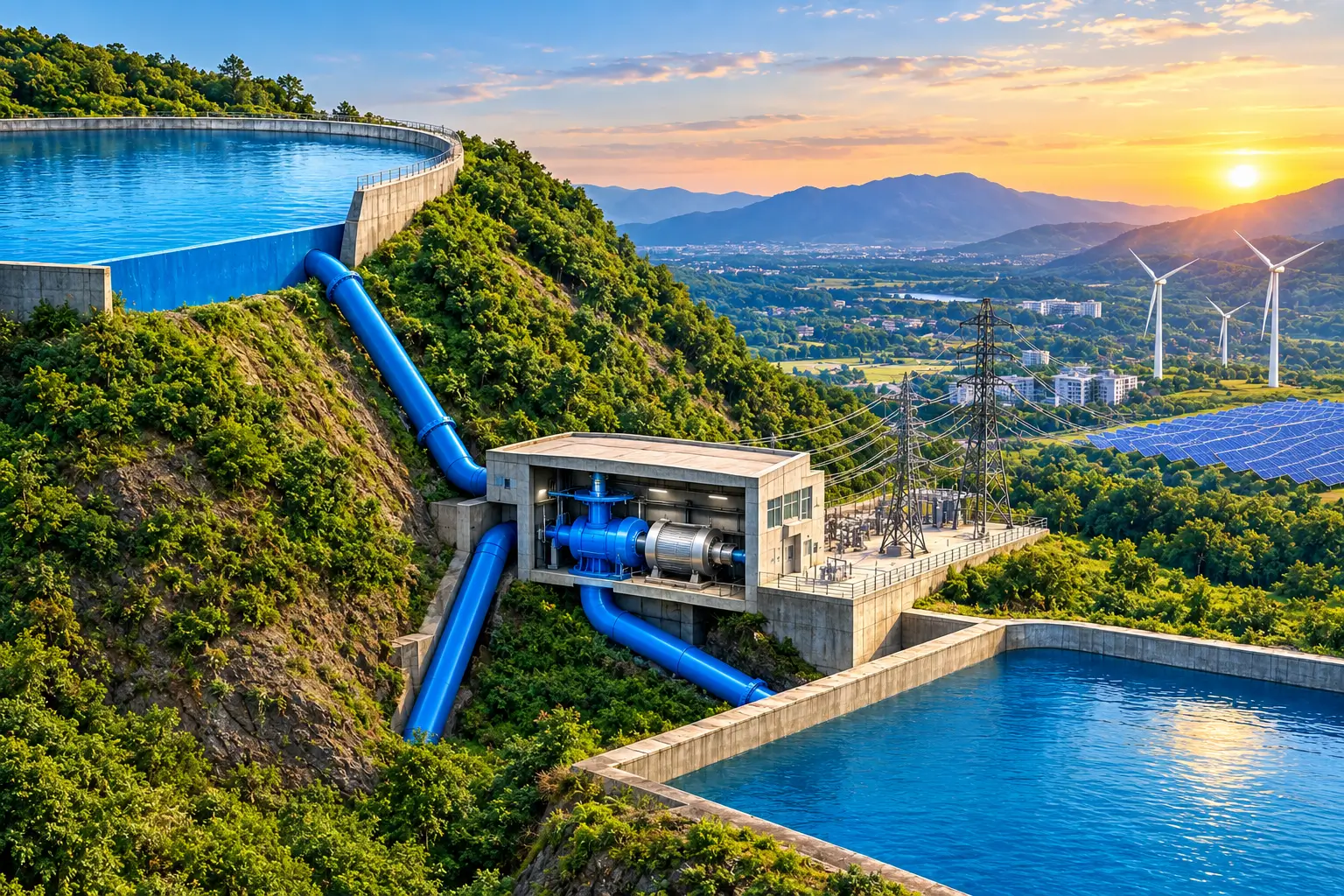
A pumped storage power plant is a type of hydropower project that stores electricity by moving water between two reservoirs located at different heights. When the grid has extra electricity, the plant uses that electricity to pump water from a lower reservoir to an upper reservoir. The water stays there until the electricity system needs more power. When demand increases, the stored water flows back down through large pipes. The moving water turns turbines and generates electricity.
How Does Pumped Storage Power Plant Work?
A pumped storage power plant project generally has an upper reservoir, a lower reservoir, pumps, turbines, generators, and water passages connecting the two reservoirs.
The process has two main modes.
- Charging mode: The plant uses electricity from the grid to pump water uphill into the upper reservoir.
- Generating mode: The plant releases water from the upper reservoir towards the lower reservoir. The flowing water turns turbines and produces electricity.
This makes pumped storage different from a normal hydropower plant. A normal hydropower plant mainly uses naturally available water flow to generate electricity. A pumped storage plant can move and reuse water between two reservoirs to store energy.
Why Does the Electricity Grid Need Energy Storage?
Electricity generation and electricity use must remain closely balanced. You cannot simply produce a large amount of electricity and leave it sitting on ordinary power lines for later use. The grid needs enough generation to meet demand at that particular time.
Demand also changes throughout the day. For example, electricity demand may be lower during the afternoon in some areas but rise sharply during the evening when people return home and start using lights, fans, televisions, cooking appliances and other equipment. Pumped storage can help manage these changes.
| Grid situation | Role of pumped storage |
| Extra electricity available | Uses excess electricity to pump water uphill |
| Electricity demand increases | Releases stored water to generate power |
| Solar generation falls | Can provide additional electricity |
| Sudden demand increase | Can respond quickly when generation is needed |
| Grid needs balancing | Helps match electricity supply with demand |
How Pumped Storage Can Help Prevent Grid Failures
A grid failure can happen when the electricity system cannot maintain a proper balance between supply and demand. Pumped storage does not eliminate every possible cause of a blackout. However, it can provide an important source of flexibility when the grid experiences changes in electricity supply or demand.
1. It Provides Extra Power When Demand Rises
Electricity demand can increase quickly. For example, a very hot evening can push up demand because many households and businesses use air conditioners and cooling equipment. If the grid needs additional generation, a pumped storage plant can release water from its upper reservoir and generate electricity. This gives grid operators another source of power when demand increases.
2. It Stores Excess Electricity
Sometimes the grid has more electricity than it needs at that moment. This can happen when renewable energy production is high or when electricity demand is relatively low. Instead of allowing available generation to go unused, a pumped storage plant can use some of that electricity to pump water into the upper reservoir. The electricity effectively becomes stored energy that the plant can use later.
3. It Supports Solar Power
Solar power has one major limitation. Solar panels produce electricity during daylight hours but cannot generate electricity at night. Electricity demand does not stop when the sun goes down. Pumped storage can help bridge this gap. When solar plants produce more electricity than the grid needs, pumped storage can store some of that energy. Later, when solar generation falls, the stored water can help produce electricity. This makes energy storage particularly useful as India adds more renewable power to its electricity system.
4. It Helps Manage Wind Power Changes
Wind power also changes with weather conditions. Wind turbines produce a large amount of electricity when wind conditions are favourable. At another time, wind generation may fall. A flexible storage system can help manage these changes. Pumped storage can absorb electricity when renewable generation is high and release electricity when the grid needs additional supply. This does not mean pumped storage can replace every other type of power plant. Instead, it gives grid operators another tool for managing changing generation.
5. It Can Provide Fast Grid Support
Electricity systems sometimes need additional power quickly. Pumped storage plants can change from pumping to generating mode and provide power when required. The exact response time depends on the plant’s design and operating conditions. This flexibility makes pumped storage useful for grid balancing. It can also help reduce pressure on other generators that may not respond as easily to sudden changes.
What Happens When Electricity Demand Suddenly Falls?
Pumped storage can also help when electricity production becomes higher than demand. Suppose a large amount of electricity is available during a period when consumers are using less power. The pumped storage plant can use some of that electricity to move water from the lower reservoir to the upper reservoir. Instead of treating excess electricity as a problem, the grid can use it to charge the storage system.
Why This Matters for India
India is adding large amounts of renewable energy capacity. Solar and wind power can produce electricity without burning fuel, but their output changes with sunlight and weather conditions.
This creates a need for flexible resources that can help match generation with demand. Pumped storage is one such resource. India also has several existing and planned hydropower projects that can support the wider electricity system. Pumped storage projects can add another layer of energy storage to this system.
Pumped Storage vs Battery Storage
People often compare pumped storage to large batteries. Both can store electricity and use it later, but they work differently. A battery stores energy through electrochemical reactions. A pumped storage plant stores energy by moving water to a higher elevation.
Pumped storage projects can provide large-scale storage for long periods, but they need suitable locations, water systems, and significant infrastructure. Batteries can be installed in more locations and can offer flexible deployment, but their cost, lifespan, and performance depend on the technology and project design. For this reason, pumped storage and batteries can complement each other rather than simply compete.
What Are the Limitations of Pumped Storage?
Pumped storage has many benefits, but it also has limitations. Building a pumped storage project requires suitable geography and significant infrastructure. Developers need suitable locations for reservoirs and water passages. Projects can also take considerable time to plan and construct.
Environmental and social factors also need careful assessment. Water availability, land use, local communities, and the impact of construction all require attention before a project moves forward. So pumped storage is not a simple solution that can work everywhere.
Conclusion
Pumped storage power plants work like giant rechargeable batteries for the electricity grid. They use extra electricity to pump water uphill and store energy. When electricity demand increases, they release the stored water through turbines to generate power. This simple process can help manage peak demand, store excess renewable electricity, and support the grid when solar or wind generation changes.
As India continues to expand renewable energy, the ability to store electricity will become increasingly important. Pumped storage can form one important part of that solution. It will not prevent every grid failure. But by giving grid operators a reliable way to store and release large amounts of energy, pumped storage can make the power system more flexible and better prepared for changing electricity demand and supply.