

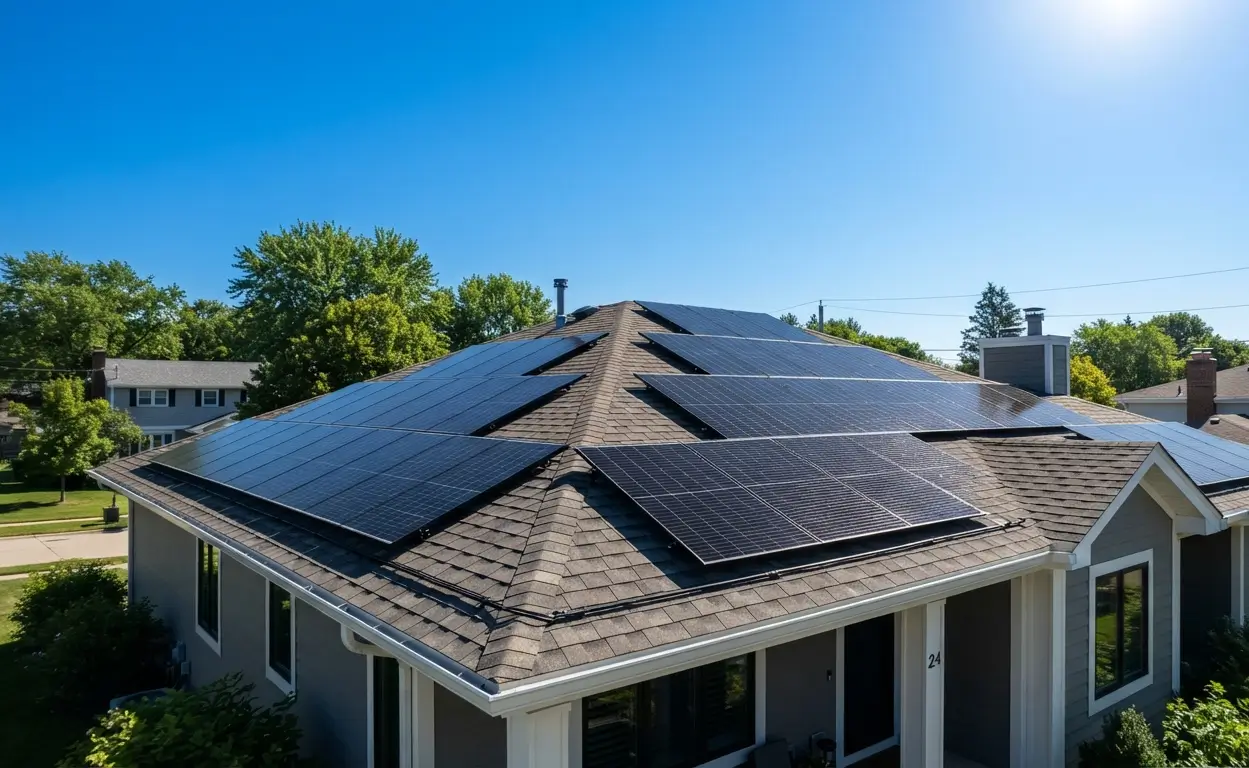
Solar panels have become a popular choice for homes, offices, factories, and other buildings in India. They help generate electricity from sunlight and can reduce dependence on electricity supplied through the grid. But when people start looking for solar panels, they often see terms such as panel efficiency, wattage, temperature coefficient, degradation rate, operating voltage, and power output. These specifications can look confusing if you are buying a solar system for the first time.
High-efficiency solar panels can produce more electricity from the same amount of sunlight compared with lower-efficiency panels of the same physical size. However, efficiency is not the only thing you should check. The panel’s size, power rating, temperature performance, warranty, construction quality, and expected performance over time also matter.
What Are High-Efficiency Solar Panels?
High-efficiency solar panels convert a higher percentage of the sunlight that reaches their surface into usable electrical energy. For example, imagine two solar panels with the same physical size. If one panel has a higher efficiency rating, it can generally produce more power from the same amount of sunlight under the same test conditions.
This becomes especially useful when you have limited roof space. A larger roof gives you more freedom to install several panels. But if your roof has limited usable space, high-efficiency panels can help you get more power without increasing the panel area as much.
However, the actual electricity produced by a solar panel depends on more than its efficiency rating. Sunlight, temperature, shading, panel orientation, dust, and other installation conditions also affect real-world output.
Key Specifications of High-Efficiency Solar Panels
Before buying a solar panel, it helps to understand the main numbers written on its datasheet.
1. Panel Efficiency
Panel efficiency shows how effectively a panel converts sunlight into electricity. A higher efficiency percentage means the panel can generate more electrical power from a given surface area under standard testing conditions. This does not mean a high-efficiency panel will always produce more electricity throughout the day. Real output changes with sunlight intensity, temperature, shading, and installation conditions. For homeowners with limited roof space, efficiency becomes an important specification to consider.
2. Power Output
Power output is usually shown in watts (W). A solar panel may have a power rating such as 400 W, 450 W, or another value depending on the model. The rating indicates the panel’s electrical output under specified test conditions. It is important to understand that a panel rated at a particular wattage does not produce that amount of electricity continuously throughout the day. Sunlight changes from morning to evening. Clouds, heat, dust, and shade can also reduce output.
3. Voltage and Current
Solar panels also have electrical specifications such as voltage and current. Voltage describes the electrical potential produced by the panel, while current describes the flow of electricity. These values matter when panels are connected with an inverter and other parts of a solar system. You do not necessarily need to calculate these values yourself when buying a complete rooftop solar system. However, checking that the panel and inverter specifications are compatible is important.
4. Temperature Coefficient
Solar panels work outdoors and can become quite hot under direct sunlight. Their electrical performance changes as their temperature increases. The temperature coefficient tells you how the panel’s power output changes when its temperature moves above the reference condition used for testing. A less negative power temperature coefficient generally indicates better power retention as the panel gets hotter. This specification can be useful in India’s hot climate, especially for installations where panels regularly experience high temperatures.
Important Performance Features
Specifications tell you what a panel is designed to do. Performance features help you understand how it may behave during actual use.
1. Better Performance in Limited Space
One of the biggest reasons people consider high-efficiency solar panels is limited roof space. Suppose you want a particular solar capacity but only have a small usable roof area. Higher-efficiency panels can help you install more generating capacity within that available area. This can be particularly useful for urban homes where roof space may be limited.
2. Performance Under Different Light Conditions
Solar panels need sunlight to generate electricity, but the amount of sunlight changes throughout the day. Early mornings and late afternoons offer different conditions compared to midday, and clouds can also block sunlight from reaching the panels. Some modern solar technologies are designed to perform well across a range of operating conditions. Still, you should not expect a panel to produce its rated maximum output throughout the entire day.
3. Performance in Hot Weather
India experiences high temperatures across many regions. Since panel temperature can affect electrical output, temperature performance deserves attention when comparing products. Do not look at efficiency alone. Check the manufacturer’s datasheet for the temperature coefficient of power and other operating specifications. This gives you a better idea of how the panel responds when temperatures rise.
4. Long-Term Performance
Solar panels are expected to operate for many years. Their power output can gradually decline over time. Manufacturers therefore provide information about expected degradation and product or performance warranties. When comparing panels, look at the manufacturer’s warranty terms instead of assuming that every solar panel will have the same long-term performance.
Why Solar Panel Degradation Matters
Solar panel degradation means the panel’s ability to produce electricity can reduce gradually over its operating life. The reduction does not normally mean that a panel suddenly stops working. Instead, its maximum expected power output can decrease over time.
This is why buyers should check the manufacturer’s performance warranty. A performance warranty provides information about the output level the manufacturer expects the panel to maintain over the specified warranty period, subject to the warranty conditions.
What Should You Check?
Look for:
- Product warranty
- Performance warranty
- Stated degradation rate
- Warranty period
- Conditions and exclusions
Always read the actual warranty document rather than relying only on information provided by a salesperson.
Solar Panel Technologies
High-efficiency panels can use different solar cell technologies. The technology used affects the panel’s design and performance characteristics.
1. Monocrystalline Solar Panels
Monocrystalline panels use solar cells made from monocrystalline silicon. They are widely used in residential and commercial solar installations. Modern monocrystalline panels offer relatively high efficiency, making them suitable for situations where available space matters.
2. TOPCon Solar Panels
TOPCon stands for Tunnel Oxide Passivated Contact. It is a solar cell technology that manufacturers use to improve cell performance. TOPCon panels have become increasingly common in the solar market. When comparing a TOPCon panel with another panel, do not judge the product only by the technology name. Check the actual efficiency, power rating, temperature coefficient, warranty, and other specifications.
3. Other Cell Technologies
The solar industry also uses other technologies and cell designs. Technology continues to develop, so the name of the cell technology should not be the only factor behind your purchase decision. The actual datasheet and warranty conditions provide more useful information about a particular product.
Factors That Can Reduce Solar Panel Output
Even a high-efficiency solar panel cannot perform at its rated level under every condition.
1. Shade
Shade from trees, buildings, water tanks, or nearby structures can reduce solar generation. Even partial shading can affect the output of a solar installation depending on the system design and electrical configuration. Before installation, check the roof at different times of the day to identify possible shading.
2. Dust and Dirt
Dust can settle on solar panels and block sunlight from reaching them, which lowers the amount of power they can generate. The effect depends on the local environment and the amount of dirt that accumulates. Regular inspection and suitable cleaning can help keep the panels in good condition.
3. Panel Orientation and Tilt
The direction and tilt of solar panels affect how much sunlight they receive. A professional installer should assess the roof and system requirements before deciding the final installation position.
4. High Temperature
Hot conditions can affect solar panel electrical output. This is why the temperature coefficient is worth checking when comparing panels for Indian conditions.
High-Efficiency Solar Panels: Important Specifications at a Glance
| Specification | What It Tells You |
| Efficiency | How effectively the panel converts sunlight into electricity |
| Power rating | Maximum rated electrical output under specified test conditions |
| Voltage | Electrical potential produced by the panel |
| Current | Flow of electrical charge |
| Temperature coefficient | How power changes as panel temperature changes |
| Degradation rate | Expected reduction in output over time |
| Product warranty | Coverage for the physical product |
| Performance warranty | Manufacturer’s stated long-term output commitment |
How to Choose the Right Solar Panel
Choosing a solar panel should start with your actual requirements rather than simply looking for the highest efficiency number.
1. Check Your Available Roof Space
Measure the usable roof area before selecting the panels. Keep space for maintenance and consider obstacles such as water tanks and other structures. If space is limited, panel efficiency becomes more important.
2. Compare the Complete Datasheet
Do not compare products using only wattage. Check efficiency, temperature coefficient, dimensions, voltage, current, warranty, and degradation information. Looking at the complete datasheet gives you a clearer picture of the product.
3. Consider Your Local Conditions
A panel installed in a hot and dusty environment may experience different conditions from one installed in a cooler location. For Indian buyers, temperature behaviour and installation quality deserve attention.
4. Check the Warranty
A solar panel is a long-term purchase. Read both product and performance warranty details before making a decision. Also check who will provide warranty support and what documents you need if a problem occurs.
Conclusion
Solar panels help homeowners and businesses generate more electricity from limited roof space. But efficiency is only one part of the picture. Before buying a panel, check its power rating, efficiency, temperature coefficient, voltage, current, degradation information, and warranty. Also consider practical factors such as roof space, shading, dust, panel orientation, and local weather conditions.
Compare complete datasheets instead of choosing a panel only because it has a higher wattage or efficiency rating. A good solar system should match your electricity requirements, available space, and budget while offering reliable long-term performance.