

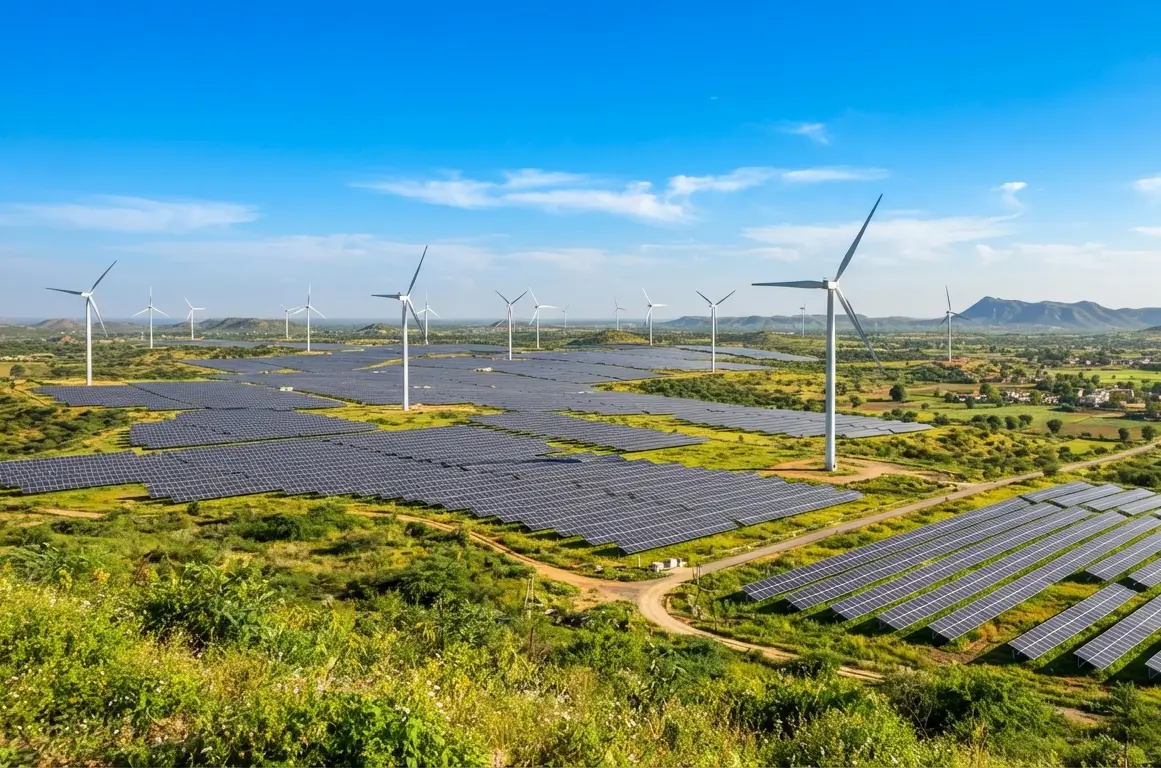
India needs more electricity every year. Homes are using more appliances and air conditioners. Businesses need reliable power. Factories are expanding, and electric vehicles are becoming more common. At the same time, India needs to reduce its dependence on fossil fuels and manage rising energy costs. This makes renewable energy an important part of India’s future.
India has already made major progress. According to MNRE, the country had around 295.55 GW of renewable energy capacity as of 31 August 2026. Solar power accounted for about 168.04 GW while wind power stood at around 58.52 GW. But becoming a true global renewable energy giant will require much more than installing solar panels and wind turbines. India will need stronger power grids, energy storage, domestic manufacturing, better financing, and faster project execution.
India’s Renewable Energy Journey Has Already Started
India has one major advantage. It receives a large amount of sunlight across much of the country and also has strong wind resources in several states. The government estimates India’s solar potential at around 748 GW based on a specific land-use assessment. This shows the large scale of opportunity available from solar power.
Solar power has already become one of the biggest parts of India’s renewable energy growth. The country has also expanded wind power. States such as Gujarat, Tamil Nadu, Karnataka, Rajasthan and Maharashtra have important wind-energy resources and projects. India also uses hydropower, biomass and other renewable sources. This mix can help the country avoid depending on just one source of clean electricity.
What Does It Take to Become a Global Renewable Energy Giant?
Producing renewable electricity is only one part of the story. India also needs to make that electricity available when and where people need it. The following areas will play a major role.
1. Expand Solar Power Across India
Solar power can become one of India’s biggest clean-energy strengths. Large solar parks can produce electricity at scale. At the same time, rooftop solar can help homes, offices, schools, factories and shops generate electricity closer to where they use it.
India had around 32.59 GW of grid-connected rooftop solar capacity as of 31 August 2026, according to MNRE. Rooftop solar is especially useful because it can reduce pressure on the power grid during the daytime. However, India should not focus only on large solar parks. A combination of utility-scale projects, rooftop systems, and decentralised solar can create a stronger renewable energy system.
2. Make Wind Energy More Important
Solar power produces electricity mainly during daylight hours. Wind power can add another source of renewable electricity. India already has more than 58 GW of installed wind capacity according to the latest MNRE data.
The next step should be better use of suitable wind locations and stronger transmission systems. India can also explore newer opportunities such as offshore wind where projects make economic and technical sense. Mixing solar and wind power helps balance out the ups and downs of using just one source of energy.
3. Build More Energy Storage
This may be one of the most important pieces of India’s renewable energy journey. Imagine a solar plant producing a lot of electricity in the afternoon. Demand may be lower at that time. Later in the evening, people return home and electricity demand increases while solar production falls.
Energy storage can help solve this problem. Battery Energy Storage Systems and pumped-storage projects can store electricity when supply is high and make it available when demand rises. MNRE notes that India’s projected storage requirement could reach 411.4 GWh by 2031-32, based on projections in the National Electricity Plan. This means renewable energy growth and energy storage need to develop together.
Why Storage Matters
Without enough storage and other forms of flexibility, adding large amounts of variable renewable power becomes more difficult.
Storage can help with:
- Managing changes in solar and wind generation
- Meeting peak electricity demand
- Improving grid stability
- Using more renewable electricity
- Reducing the need to waste available renewable power
India therefore needs to treat batteries and pumped storage as important parts of its electricity infrastructure rather than as separate technologies.
4. Strengthen India’s Power Grid
You can generate electricity in Rajasthan or Gujarat, but that electricity may need to travel hundreds of kilometres before reaching a consumer. This is why transmission infrastructure matters. India’s Ministry of Power has planned transmission infrastructure to support the country’s 500 GW non-fossil capacity goal for 2030. The 2025-26 annual report also identifies large additions in transmission lines and transformation capacity through 2032.
A stronger grid will allow renewable electricity to move between regions more efficiently. India also needs better distribution networks because electricity ultimately has to reach homes, shops, offices, and factories. Renewable generation without adequate transmission can create bottlenecks. Therefore, grid development needs to happen alongside renewable projects.
5. Increase Domestic Manufacturing
India should not depend heavily on imported equipment while trying to become a renewable energy leader. Solar modules, cells, batteries, inverters, wind equipment, power electronics, and other components create opportunities for Indian manufacturing. Domestic manufacturing can support the renewable energy sector in two ways.
First, it can create jobs and businesses inside India. Second, it can make the country less dependent on overseas supply chains for critical energy equipment.
MNRE has highlighted domestic manufacturing of renewable-energy components as an important part of India’s energy transition. India can also build stronger research and development capabilities so that Indian companies develop and improve clean-energy technologies rather than only assembling imported products.
6. Make Green Hydrogen a Practical Industry
Renewable electricity can do more than power homes and buildings. It can also support green hydrogen production. Green hydrogen can potentially help industries where direct electrification is difficult. These include some industrial processes and applications that require hydrogen as a fuel or raw material.
India has already created the National Green Hydrogen Mission. The opportunity is significant, but India should focus on projects that have clear demand and workable economics. Producing hydrogen alone does not create a successful industry. India also needs storage, transportation, buyers and supporting infrastructure.
7. Make Renewable Energy Easier for Businesses
Large companies can play an important role in India’s clean-energy growth. Factories, technology companies, shopping centres, warehouses and other businesses consume large amounts of electricity. Businesses can use options such as rooftop solar, open-access renewable power and other clean-energy arrangements where regulations and economics allow.
This can create a larger market for renewable electricity. It can also encourage private investment because companies have a direct reason to look for reliable and competitively priced power.
8. Improve Financing and Project Execution
A renewable energy project needs large amounts of money before it starts producing electricity. Developers therefore need access to finance at reasonable costs. The International Energy Agency has highlighted financing costs, payment risks and transmission limitations as challenges for renewable energy investment in India.
India can improve the investment environment by making project approvals more predictable, strengthening the financial position of electricity distribution companies and improving transmission planning. A project that receives approval but takes too long to build does not help India’s electricity system quickly enough.
9. Use Renewable Energy in Rural India
Renewable energy can also support rural development. Solar pumps can help farmers access electricity for irrigation. Rooftop and decentralised solar systems can support local businesses and public facilities where suitable.
Bioenergy can also use agricultural and other organic waste to produce useful energy. MNRE says bioenergy can create local jobs and business opportunities while helping industries and communities make better use of available waste. This gives renewable energy a role beyond electricity generation. It can also support local economic activity.
10. Develop Skilled Workers
India will need people who can design, install, operate, and maintain renewable energy systems. This includes engineers and technicians as well as electricians, project managers, researchers, manufacturing workers and maintenance professionals. Skill development should therefore grow alongside renewable energy capacity. A solar panel is useful for many years only when people install it properly and maintain the complete system.
What Are the Biggest Challenges for India?
India has a strong opportunity, but several problems need attention.
- The first is grid integration. Solar and wind production can change with weather and time.
- The second is financing. Renewable projects require significant upfront investment.
- The third is land and local infrastructure. Large projects need suitable locations and supporting transmission.
- The fourth is equipment supply. India needs reliable domestic manufacturing without creating unnecessary cost increases.
- The fifth is distribution-company finances. Electricity generators need timely payments so that the entire power sector remains financially healthy.
The IEA has identified transmission constraints and distribution-company payment issues among the challenges affecting India’s energy investment environment.
India’s Opportunity Is Bigger Than Electricity
India’s renewable energy opportunity is not limited to producing clean power. It can create a wider economic ecosystem around manufacturing, engineering, construction, storage, software, maintenance, finance, and research.
A growing clean-energy industry can also help India reduce its exposure to imported fossil fuels over time. The global clean-energy market is expanding as countries invest in solar, wind, batteries, grids and electrification. The IEA expects global clean-energy investment to remain much larger than investment in fossil fuels. India can participate in this market not only as a buyer but also as a manufacturer and exporter.
Conclusion
India already has a strong foundation in green energy. Recent data shows the country has reached nearly 296 GW of renewable capacity, with solar and wind making up the largest share.
The next stage will be more challenging. India needs to build renewable projects faster while also developing storage, transmission networks, domestic manufacturing, and skilled workers.
The country also needs a power system that can deliver renewable electricity reliably when consumers need it. If India connects these pieces properly, renewable energy can become more than a climate solution. It can support energy security, manufacturing, investment, jobs, and long-term economic growth.
Becoming a global renewable energy giant will not happen through one technology or one government scheme. It will require steady progress across the entire energy system.
Frequently Asked Questions
1. Is India already a renewable energy leader?
India has a large and rapidly growing renewable energy sector. MNRE reports around 295.55 GW of renewable energy capacity as of 31 August 2026.
2. What is India’s biggest renewable energy source?
Solar power currently forms the largest part of India’s renewable energy capacity. MNRE reported around 168.04 GW of installed solar capacity as of 31 August 2026.
3. Can renewable energy create jobs in India?
Yes. The sector requires workers for manufacturing, project development, construction, installation, operations, maintenance, engineering, and research.
4. What is India’s 2030 renewable energy goal?
India plans to hit 500 GW of clean energy capacity by 2030, backed by new transmission infrastructure built to handle the expansion.