

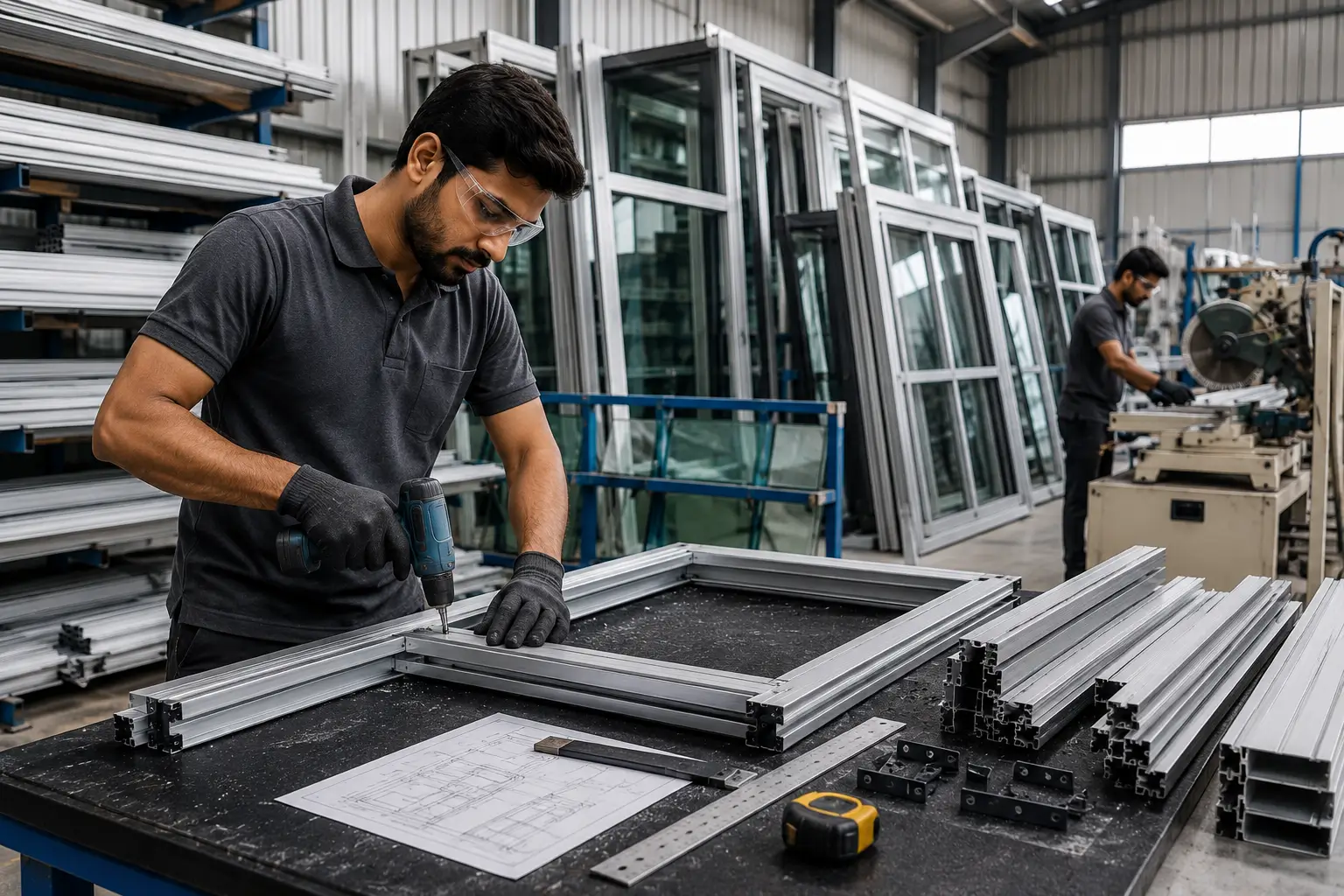
The Aluminum Fabrication Business is one of the most profitable manufacturing and service businesses in India. The demand for aluminium doors, windows, partitions, railings, curtain walls, office cabins, and other fabricated products is increasing every year. As the construction, real estate, commercial, and industrial sectors continue to grow.
Today, aluminium has become one of the most preferred materials because it is lightweight, rust-resistant, durable, and easy to maintain. Builders, architects, interior designers, and homeowners use aluminium products in residential buildings, offices, shopping malls, hotels, hospitals, schools, and factories.
The best part is that you can start with a few basic tools and grow bigger. If you do great work, finish on time, and keep your clients happy, you can build a very successful business.
What is an Aluminum Fabrication Business?
An Aluminum Fabrication Business involves cutting, bending, drilling, assembling, and installing aluminium sections to manufacture different products according to customer requirements. Aluminum fabrication businesses usually work on custom orders received from builders, contractors, architects, businesses, and individual homeowners.
An aluminum fabrication business may include manufacturing and installing:
- Aluminium doors
- Aluminium windows
- Office partitions
- Glass partitions
- Railings
- Curtain walls
- Shopfronts
- Modular office cabins
- Aluminium frames
Since most projects are customised, every order offers different earning opportunities.
Why Aluminum Fabrication Business is Growing in India
Several factors have increased the demand for aluminium fabrication services.
- Rapid Growth in Construction: India is building more homes, offices, hotels, and shopping malls. Modern buildings use a lot of aluminum because it is durable and looks great.
- Modern Interior Design Trends: People now prefer stylish aluminium frames with glass for offices, homes, and commercial buildings. These products improve the appearance of a property while requiring very little maintenance.
- Long Life and Low Maintenance: Unlike iron, aluminium does not rust easily. This makes it suitable for areas exposed to moisture and changing weather conditions.
- Increasing Commercial Projects: Corporate offices, hospitals, schools, airports, and retail stores regularly require aluminium fabrication work during construction and renovation.
Products You Can Manufacture
An aluminium fabrication unit can produce a wide variety of products.
- Aluminium Doors: Aluminium doors are widely used in offices, apartments, hospitals, and commercial buildings because they are strong, lightweight, and long-lasting.
- Aluminium Windows: These modern aluminium windows are popular due to their sleek appearance, durability, and ease of maintenance. They are available in sliding, casement, and fixed designs.
- Glass Partitions: Many offices use aluminium frames with glass partitions to create cabins and meeting rooms. They give workplaces a modern and professional appearance.
- Railings: Aluminium railings are commonly installed on balconies, staircases, terraces, and commercial buildings. They require less maintenance than many traditional materials.
- Shopfronts: Retail stores often install aluminium and glass shopfronts because they look attractive and allow better product display.
Investment Required to Start an Aluminum Fabrication Business
The investment depends on the size of your workshop and the machinery you purchase.
| Business Size | Estimated Investment |
| Small Workshop | ₹5 lakh – ₹10 lakh |
| Medium Workshop | ₹10 lakh – ₹25 lakh |
| Large Fabrication Unit | ₹25 lakh and above |
Your investment may include:
- Workshop setup
- Machinery and tools
- Aluminium sections
- Glass inventory
- Power tools
- Office setup
- Labour costs
- Transportation
- Marketing
- Working capital
Starting with essential machinery helps reduce initial costs while allowing future expansion.
Space Required
A fabrication workshop does not require a very large factory, but it should provide enough space for production and storage.
You need space for raw materials, cutting, putting things together, storing finished items, an office, and loading up trucks. Being close to a good road also makes it much easier to ship your products safely.
Raw Materials Required
Good raw materials make good products. You will need things like aluminum frames, glass, rubber seals, screws, hinges, locks, handles, glue, and other parts. Using high-quality materials means fewer complaints from customers and stronger products that last longer.
Machines Required
You will need some basic tools for your workshop, like cutters, drills, and grinders. Later on, when your business gets bigger, you can buy fancy automatic machines to make things much quicker.
Aluminum Fabrication Business Process
Step 1: Receive Customer Requirements
You first figure out what the customer wants, including the design and exact sizes. Getting the measurements right stops you from making expensive mistakes later.
Step 2: Material Selection
Suitable aluminium sections, glass, and accessories are selected according to the project specifications. Using quality materials ensures better strength and appearance.
Step 3: Cutting
You cut the aluminum pieces to the right sizes using a special saw. It is important to be careful when cutting, making sure everything fits together perfectly in the end.
Step 4: Drilling and Assembly
You drill holes in the cut pieces, connect them together, and add all the parts. Putting everything together properly makes the product strong and ensures it works smoothly.
Step 5: Quality Inspection
Every fabricated product is checked before delivery. The inspection includes dimensions, alignment, smooth movement, finishing, and overall workmanship. Any defects are corrected before installation.
Step 6: Installation
The finished products are transported to the customer site and installed by trained technicians. Proper installation ensures safety, durability, and customer satisfaction.
Licenses and Registration
Before starting your aluminum fabrication business, complete the necessary registrations according to your business structure and location.
Depending on your operations, you may require:
- Business registration
- PAN and bank account
- GST registration
- Shop and Establishment registration
- Trade licence, where applicable
- Labour law compliance
Requirements may vary across states, so always verify the latest rules with the relevant local authorities.
How to Find Customers
Getting regular clients is one of the most important parts of the aluminum fabrication business.
- Builders and Contractors: Construction companies require aluminium fabrication work for residential and commercial projects. Building long-term relationships can generate continuous business.
- Architects: They regularly recommend fabrication companies to their clients. Delivering quality work helps increase referrals.
- Interior Designers: Interior designers often need aluminum partitions, doors, windows, and office cabins. Making friends and building connections with them can get you regular work.
- Homeowners: Lots of homeowners update their kitchens, balconies, and windows with aluminum. Putting up local ads and getting recommendations from happy customers will help bring in new buyers.
- Online Marketing: Many customers search online before selecting a fabrication company.
A professional website, Google Business Profile, and active social media pages increase your visibility and credibility.
Challenges in Aluminum Fabrication Business
Every business comes with its own challenges.
- Material Price Fluctuation: Aluminium prices may increase or decrease depending on market conditions. Proper quotation planning helps protect your profit margin.
- Skilled Labour: Experienced fabricators play an important role in product quality. Regular training improves workmanship and productivity.
- Competition: Lots of local workshops are chasing the same jobs. Doing great work, finishing on time, and treating your customers like pros will help your business stand out from the crowd.
- Project Delays: Construction projects sometimes get delayed. Maintaining good communication with clients helps manage expectations and scheduling.
Tips to Grow Your Aluminum Fabrication Business
- Focus on Quality: People want products that are tough, long-lasting, and look neat. If your work is always good, customers will keep coming back and tell their friends about you.
- Deliver Projects on Time: Timely completion improves customer satisfaction and builds trust. Late delivery can affect your reputation.
- Build Strong Relationships: Stay connected with builders, architects, and contractors. Long-term professional relationships often result in regular projects.
- Invest in Better Machinery: Modern machines improve accuracy, reduce wastage, and increase productivity. As your business grows, upgrading equipment can improve profitability.
- Promote Your Business: Post pictures of your finished work on your website and social media. Good reviews and real photos of your projects will help bring in new clients.
Final Takeaway
Due to the growing need for aluminum goods in India’s commercial, industrial, and residential sectors, the aluminum fabrication industry presents great prospects. Aluminum has become a popular material for modern dwellings, office buildings, and retail establishments because of its strength, lightweight construction, and appealing appearance.
The company can produce consistent revenue through bespoke fabrication projects even though it needs to invest in machinery, skilled labor, and workshop setup. Strong ties with builders, architects, and homeowners, prompt delivery, reasonable pricing, and high-quality work are all necessary for success.
Your aluminum fabrication company can develop into a successful and long-lasting business if you begin with careful planning, uphold high standards, and concentrate on client happiness.
Read More: How to Start E-Rickshaw Business in India?