

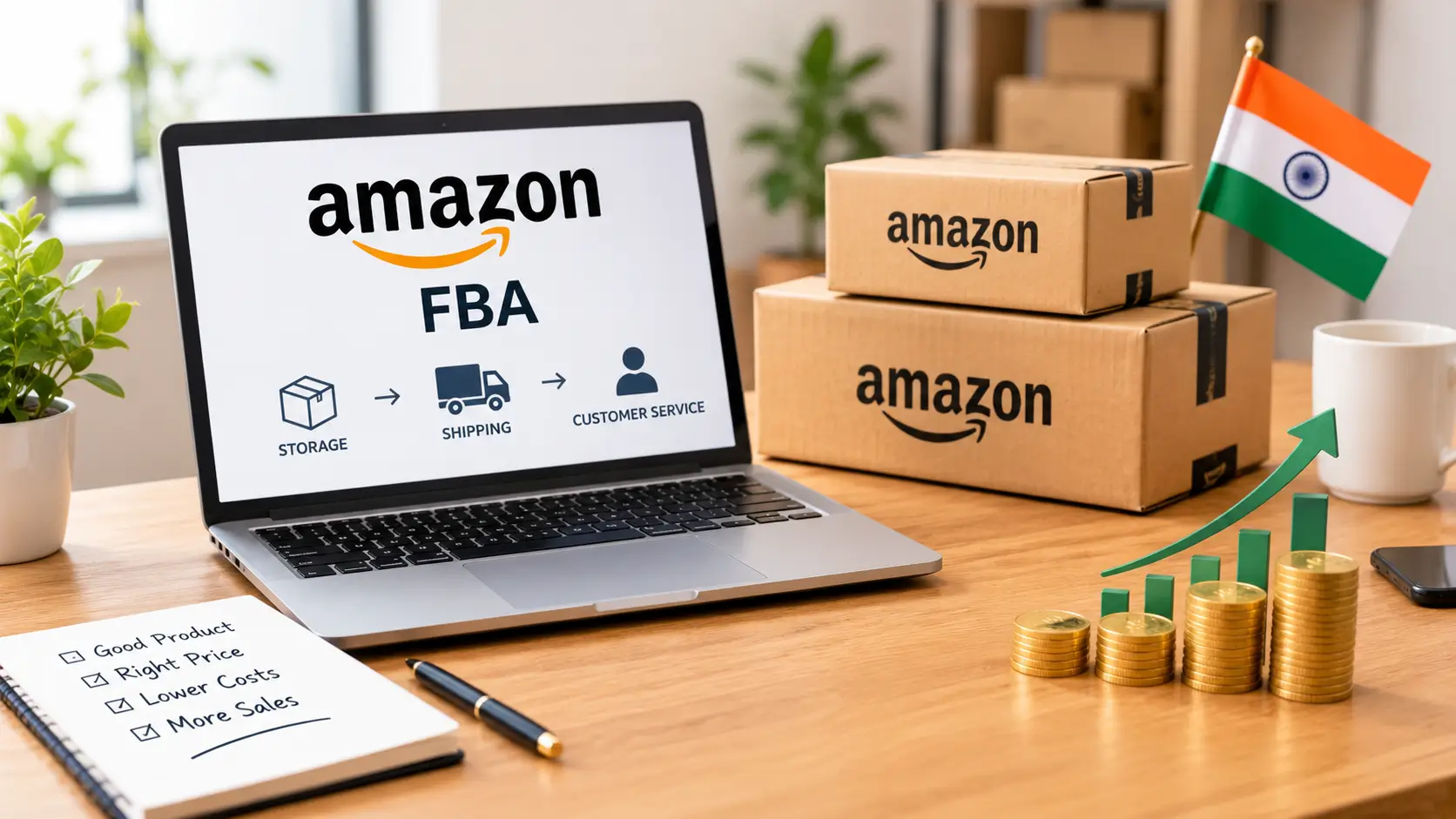
Many people in India wish to establish an online business without opening a shop. Amazon FBA is appealing because it gives sellers access to online customers without the logistics of each delivery. Making a profit requires the right product, careful cost planning, and a clear understanding of how Amazon works. FBA means Fulfilment by Amazon. You send your products to Amazon’s fulfilment centres, and Amazon handles storage, packing, shipping, and some customer service. You still need to select products, manage inventory, set prices, and track your profits.
What Is Amazon FBA in India?
One tool that helps sellers handle order fulfilment is Amazon FBA. You send qualifying merchandise to Amazon’s fulfilment centre rather than keeping every product at home and packing every order yourself. Amazon manages the fulfilment process in accordance with the service terms when a consumer submits an order. As your company expands, this might help you handle orders and save time. However, Amazon does not run your entire business for you. You remain responsible for product selection, pricing, stock planning, product listings, and business expenses.
How does Amazon FBA work?
The process generally follows these steps:
- Register as a seller on Amazon India.
- Choose a product and find a suitable supplier.
- Create a product listing with clear images and accurate details.
- Prepare your stock according to Amazon’s packaging and labelling requirements.
- Send your products to an eligible Amazon fulfilment centre.
- Monitor orders, fees, inventory, customer feedback, and profit.
You can read the official Amazon India seller guide for registration and selling requirements.
Is Amazon FBA Still Profitable in India?
In India, Amazon FBA might still be profitable. However, rather than the quantity of orders you receive, success is determined by the numbers behind each transaction. Because they purchase goods at competitive prices and effectively control their expenses, certain merchants may make healthy profits. Others can have trouble because they chose congested product categories, overspend on promotion, or hold unsold inventory.
Additionally, Amazon periodically modifies its seller fee schedule. The company declared in March 2026 that there would be no referral fees for qualified products in over 1,800 categories that cost less than ₹1,000. Although not all selling costs are eliminated, this modification may benefit qualified sellers. Therefore, before making a big purchase, you should verify the current costs for your particular product.
Why some sellers make money
Profitable sellers usually understand their customers and calculate their costs before launching a product. They choose products that solve a clear problem and offer reasonable value.
For example, a kitchen organiser may appeal to people who want to save space in a small apartment. A well-designed product with clear measurements and useful photos can help customers decide whether it meets their needs. Good product selection does not guarantee success. However, research and cost control can help you avoid common mistakes.
How Much Can You Make Using Amazon FBA?
Your income depends on your product price, sales volume, expenses, and competition. No fixed monthly income applies to every Amazon FBA seller. Consider this simple example to understand how profit works.
Imagine that you sell a kitchen organiser for ₹699.
| Expense | Example amount |
| Selling price | ₹699 |
| Product purchase cost | ₹220 |
| Amazon fees and fulfilment | ₹140 |
| Packaging and transport to fulfilment centre | ₹25 |
| Advertising cost per sale | ₹70 |
| Other costs and returns allowance | ₹35 |
| Estimated profit per unit | ₹209 |
These figures are hypothetical examples, not current Amazon fee quotes. Your actual costs may differ based on product size, weight, category, fulfilment method, taxes, and other factors. In this example, the seller keeps ₹209 before any additional business expenses not included in the calculation and income tax. If the seller sells 100 units, that equals ₹20,900 before those extra expenses.
However, you should not assume that you will sell 100 units every month. New products may take time to attract customers, and advertising or returns may reduce your profit. The important lesson is simple: calculate profit per unit before investing in stock.
Which Products Should You Consider for Amazon FBA India?
You do not need to sell expensive electronics or popular branded products to start an online business. A smaller product can also work if customers want it and the numbers make sense. Instead of selecting a product only because it looks popular, research customer demand, competition, selling prices, and sourcing costs.
1. Home and kitchen products
Home and kitchen products are worth researching because customers buy items for cooking, storage, cleaning, and everyday organisation. Examples include drawer organisers, storage accessories, kitchen tools, and selected household items. Look for products that solve a specific problem and offer something useful compared with existing listings. Before you choose a supplier, look at the size, quality of the material, packaging needs, and customer complaints. Don’t buy things that break easily or that cost too much to ship compared to how much they cost.
2. Office and stationery products
Make a note of your selling price, the cost of your suppliers, the fees charged by Amazon, the costs of delivery, your advertising budget, and the predicted returns. Examine the most recent estimate of the fees rather than relying on the previous figures provided by another vendor. Consider switching to a new supplier, improving the design of the product, or switching to another product category if the residual profit appears to be insufficient. To make your estimates appear more appealing, you should not rely on sales projections that are not reasonable.
3. Pet accessories
Pet owners buy products for feeding, grooming, walking, and everyday care. You can research items such as pet grooming brushes, feeding accessories, and selected storage products. Check material safety, durability, and suitability for the intended animal. Read existing customer reviews to identify problems that your product could solve. Avoid making unsupported health or safety claims. Start with products you can source reliably and describe accurately.
4. Travel and storage accessories
Travel organisers, packing cubes, and selected storage bags may appeal to people who want to organise their belongings. Compare competing products carefully. Look at size, material, stitching, product images, and customer feedback before deciding what to sell. Choose items that fit your budget and shipping plan. Bulky products may create higher storage and fulfilment costs, so check their dimensions before placing an order.
What Costs Should You Calculate Before Starting?
Amazon FBA is not a business where you should count only the product purchase cost and selling price. Several expenses can affect your final profit.
1. Amazon selling and fulfilment fees
Amazon may charge referral fees, closing fees, shipping or weight-handling fees, and other applicable fees. FBA can also involve storage, fulfilment, and related service charges. The exact charges depend on the product and fulfilment arrangement. Use the official Amazon India fees and pricing page to estimate the expenses for your product.
2. Product sourcing and packaging
You need to pay your supplier before you can sell the stock. You may also need packaging materials, labels, quality checks, and transport to the fulfilment centre. Request samples before placing a large order. This helps you check product quality and identify problems before committing more money.
3. Advertising and returns
Advertising can help customers discover a new listing, but every sale should justify its advertising cost. Monitor your spending and adjust campaigns when they fail to produce suitable results. Returns can also reduce profits. Damaged products, customer dissatisfaction, and unsold inventory may create additional expenses, so include a reasonable allowance in your calculations.
How to Start Amazon FBA in India with Less Risk
You do not need to launch dozens of products on your first day. A small, well-researched launch can help you understand the process before you invest more money.
Step 1: Research demand and competition
Search Amazon India for products you are considering. Compare prices, reviews, product features, and the number of similar listings. Read negative reviews carefully. They may reveal issues such as weak material, confusing instructions, or poor packaging. Use these findings to decide whether you can offer a better product.
Step 2: Calculate your expected profit
Write down your selling price, supplier cost, Amazon fees, shipping expenses, advertising budget, and expected returns. Check the current fee estimate instead of relying on another seller’s old figures. If the remaining profit looks too small, consider a different supplier, a better product design, or another product category. Do not depend on unrealistic sales forecasts to make your calculations look attractive.
Step 3: Check registration and tax requirements
Amazon India asks sellers to register and provide the necessary company information. Depending on the things you sell, you may need to register for GST and additional paperwork. Amazon has special guidelines for seller registration and for goods that are GST-exempt. Review the current regulations before listing your products. If you’re unsure of your position, speak to a tax professional who is competent in this area.
Step 4: Start with a manageable quantity
Don’t spend all of your money on your first order of inventory. Start with an amount that you can handle and leave some extra for running costs and problems that come up out of the blue. Keep track of how fast your stock sells and how much money each order brings in. Don’t increase the size of your order until your sales and costs show that it’s a good idea.
Step 5: Improve your product listing
Use good pictures, correct product descriptions, and helpful product information. Tell people what they’ll get, how they can use it, and what makes it unique. Do not copy false claims or use fake reviews. Giving people honest information helps them make better choices and lowers the chance that they will complain.
Common Amazon FBA Mistakes to Avoid
Many beginners focus on finding a popular product but ignore the work required to run a business.
- Buying too much stock: Large orders can tie up your money for months. Test demand before committing to more inventory.
- Ignoring all selling fees: Even a product with a low purchase cost can lose money after fulfilment, advertising, and returns. Calculate every major expense before setting your price.
- Copying competitors without research: A product that works for another seller may not work for you. Your supplier price, customer offer, advertising costs, and competition may differ.
- Expecting quick profits: New listings need time to attract customers and collect useful sales data. Keep your expectations realistic and avoid borrowing money based on promised returns.
Conclusion
In India, you can still make money with Amazon FBA, but you need to plan, do study on the products you sell, and keep track of your money well. Even though FBA can help you with storage and deliveries, it can’t promise sales or profits. The things you sell, the prices you pay, how well you run your ads, and how much you spend on each sale will all affect how well you do.
First, learn about a few products and figure out how much money they will likely make. Check out Amazon’s current fees, know what your tax obligations are, and use a manageable amount of stock to test demand. Most importantly, don’t see Amazon FBA as a way to get quick cash; treat it like a real business. Keep your costs low, focus on what your customers want, and only grow when your results back it.