

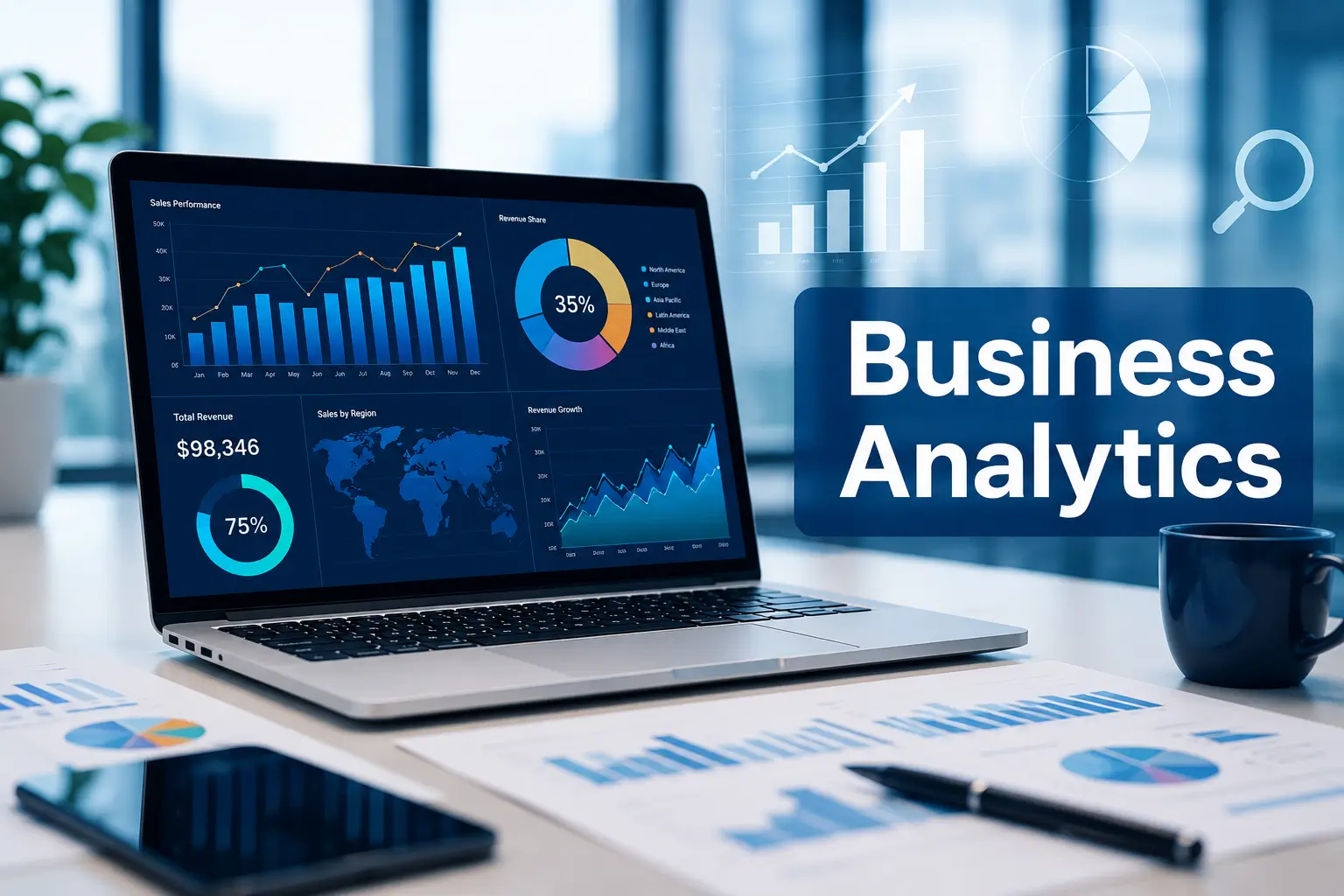
Business analytics is very important for businesses. Today, businesses create a huge amount of data every day. Every sale, website visit, and transaction adds to this information. Just collecting the data is not enough. You must analyze it to get real value and useful ideas.
It turns raw data into useful information. This helps companies make smarter choices. It makes work more efficient. It also helps save money and find new ways to grow. Whether you’re running a startup, managing a retail store, or leading a multinational company, business analytics can help you make better decisions based on facts rather than assumptions.
What Is Business Analytics?
Business analytics uses data to help you make better business choices. It uses tools like statistics and AI to create simple charts and reports. This helps you understand what happened in the past. It also helps you predict what might happen in the future. Finally, it shows you the best steps to take next.
Why Is Business Analytics Important?
Modern businesses compete in rapidly changing markets where decisions must be made quickly and accurately.
Business analytics helps companies in these ways:
- Make smart decisions: You base your choices on facts instead of guesses.
- Understand customers: You learn exactly what your customers want and need.
- Improve operations: You find ways to make your work faster and better.
- Increase profits: You find new ways to make more money.
- Reduce risks: You spot potential problems before they happen.
- Find opportunities: You identify new areas to grow your business.
- Gain an advantage: You react faster to market changes than your competitors.
Key Benefits of Business Analytics
1. Better Decision-Making
Businesses can use data to make informed strategic decisions in place of relying on guesswork. This helps them move forward with confidence. For example, data helps companies decide when to launch new products by showing what customers actually want. It also assists in setting the right prices by analyzing sales trends. Additionally, businesses can use data to choose the best marketing channels to reach their audience and decide if expanding into new markets is a good idea. By using facts, companies make better choices that support their long-term growth.
2. Improved Customer Understanding
Analytics helps businesses learn important details about their customers, including their preferences, buying habits, and shopping patterns. Companies also track customer lifetime value and satisfaction levels to see how happy people are with their services. By using this information, businesses can provide more personalized products and experiences. Understanding these patterns allows a company to offer exactly what each customer needs, which ultimately makes those customers more loyal and satisfied.
3. Higher Operational Efficiency
Analytics identifies bottlenecks and inefficiencies in business processes.
Examples include:
- Supply chain optimization
- Workforce planning
- Inventory management
- Production scheduling
4. Cost Reduction
Business analytics acts like a roadmap for your company’s finances. By taking a closer look at your data, you can spot those hidden, unnecessary expenses and get a better handle on how your resources are being used. It makes day-to-day life easier, whether it’s keeping just the right amount of inventory on hand, cutting down on wasted effort, or helping your team work more effectively. Plus, when it comes time to pick a vendor, you’ll have the facts to make a choice that actually makes sense. Ultimately, it’s about working smarter, spending wisely, and keeping your business in a much stronger financial position.
5. Increased Revenue
Understanding customer behavior and market trends helps you sell more. You can use this data to recommend the right products. Keeping customers happy prevents them from leaving. These actions increase your revenue and grow your business.
6. Better Risk Management
Business analytics works like an early warning system for your company. By keeping a close eye on the data, teams can catch red flags like signs of fraud, sudden shifts in the market, or unhappy customers long before they become major headaches. It also helps you spot supply chain snags or financial risks before they get out of hand.
Types of Business Analytics
Business analytics uses four main types of analysis to help companies make better decisions:
- Descriptive Analytics explains what happened by looking at past data. Examples include monthly sales reports, revenue analysis, and customer demographics.
- Diagnostic Analytics explores why it happened. It digs into data to find the reasons behind trends, such as why sales are declining, how marketing campaigns performed, or what caused customer complaints.
- Predictive analytics identifies future trends and outcomes. Companies use these insights to forecast sales, predict customer demand, estimate future churn, and plan inventory levels.
- Prescriptive Analytics determines what action to take. It uses AI and advanced algorithms to recommend the best steps for a business to follow based on available data.
Real-World Applications of Business Analytics
Business analytics drives smarter decision-making across diverse industries by leveraging data to solve specific challenges.
- Retail: Businesses use analytics for demand forecasting, customer segmentation, product recommendations, and inventory optimization.
- Healthcare: Analytics helps hospitals keep a pulse on patient recovery, ensure they have enough staff and supplies on hand, stay ahead of health trends, and keep daily operations running smoothly.
- Banking: Banks use data to catch fraud in its tracks, weigh credit risks, better understand their customers, and make the loan approval process faster and easier.
- Manufacturing: Factories can use analytics to know exactly when machines need repairs, keep production moving quickly, ensure every product meets quality standards, and keep their supply chains steady.
- E-commerce: Online shops use data to suggest products you’ll actually love, adjust prices in real-time, figure out why carts are being abandoned, and help keep loyal customers coming back.
Popular Business Analytics Tools
Businesses use various tools depending on their needs.
Popular platforms include:
- Microsoft Power BI
- Tableau
- Google Looker Studio
- Microsoft Excel
- SQL
- Python
- R Programming
- SAS
- SAP Analytics Cloud
- IBM Cognos
Each tool offers different strengths in reporting, visualization, and advanced analytics.
Business Analytics vs Business Intelligence
| Feature | Business Analytics | Business Intelligence |
| Primary Focus | Predicting and improving future performance | Reporting historical performance |
| Data Usage | Advanced analysis | Reporting and dashboards |
| Technologies | AI, Machine Learning, Predictive Models | Reporting tools and visualization |
| Objective | Better future decisions | Understanding past performance |
Role of Artificial Intelligence in Business Analytics
Artificial Intelligence makes business analytics faster and more accurate. By using AI, companies can easily predict customer behavior, stop fraud, and create automated reports. These tools also help forecast demand, suggest the right business moves, and turn data into insights on their own. As AI gets better, analytics tools are becoming smarter and easier for anyone to use.
Common Challenges
Organizations often hit roadblocks like messy or incomplete data, worries about privacy, and the high price tag of getting started. It can also be tough to find the right talent, convince teams to change how they do things, or get different software systems to talk to each other. The good news is that these hurdles become much easier to manage when you have a solid plan in place and prioritize keeping your data organized and secure.
Career Opportunities in Business Analytics
Across all industries, companies increasingly need professionals who can work with analytics.
Popular job roles include:
- Business Analyst
- Data Analyst
- Business Intelligence Analyst
- Data Scientist
- Analytics Consultant
- Product Analyst
- Marketing Analyst
- Financial Analyst
Professionals with skills in SQL, Excel, Power BI, Tableau, Python, and statistics are highly sought after.
Future of Business Analytics
Several key trends will shape the future of business analytics:
- Artificial Intelligence
- Machine Learning
- Generative AI
- Real-time analytics
- Cloud computing
- Predictive automation
- Self-service analytics
Businesses that invest in these technologies will compete much better in our data-driven world.
Conclusion
Business analytics is now essential for any company that wants to stay competitive. Businesses can make wise decisions, improve customer experiences, and run their operations more smoothly. It also helps companies manage risks and find new ways to grow.
Whether you run a small business, lead a corporation, or want a career in the field, using analytics creates long-term value. As tools like AI and machine learning continue to improve, business analytics will only become more important.
Read More: Smart Ways to Stay Updated with Your Order Tracking
Frequently Asked Questions
Why is business analytics important?
Business analytics helps companies make smarter decisions and keep customers happy.
What are the four types of business analytics?
The four major types are descriptive, diagnostic, predictive, and prescriptive analytics.
Which industries use business analytics?
Retail, healthcare, finance, manufacturing, education, logistics, e-commerce, telecommunications, and government organizations all use business analytics extensively.
Is business analytics a good career?
Organizations increasingly rely on data-driven decision-making, demand for skilled business analytics professionals continues to grow across multiple industries.