

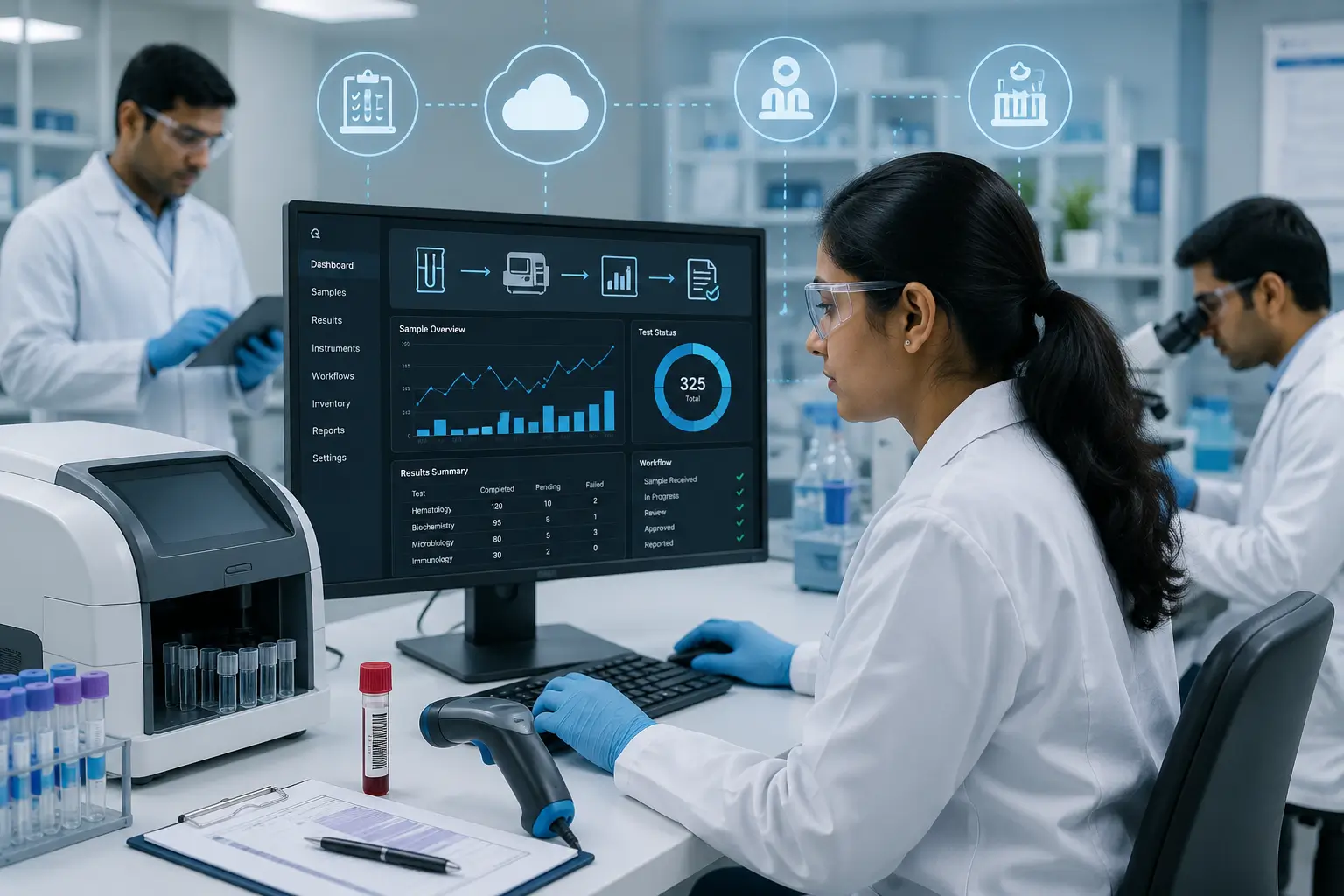
A laboratory produces a huge amount of information every day. Someone records its details. A technician performs a test. Results go into a computer or sometimes onto paper first. Another person may check the result and enter it into a report. Later, someone may need to move the same information into another system.
This process can consume a surprising amount of time. It can also create opportunities for mistakes. A wrong sample number, typing error, or misplaced sheet can cause problems that nobody wants in a laboratory.
This is where a Modern LIMS can make a major difference. LIMS stands for Laboratory Information Management System. A modern LIMS does much more than store laboratory records. It can connect different parts of laboratory operations and help information move between instruments, people, and software with less manual work.
For laboratories in India, this can become particularly useful as testing volumes increase and organisations demand faster reporting, better traceability and stronger data management.
What Is a Modern LIMS?
A LIMS is software designed to help laboratories manage samples, test information, results and related laboratory activities. Traditional laboratory processes often depend heavily on spreadsheets, paper forms, and manual data entry. These methods may work when the laboratory handles a small number of samples, but they can become difficult to manage as the workload grows.
A modern LIMS takes a more connected approach. It can help manage the journey of a sample from registration to testing and final reporting. Depending on the system and laboratory requirements, it may also connect with laboratory instruments and other business or healthcare systems.
The goal is not simply to replace paper with a computer screen. The bigger goal is to create a reliable flow of information throughout the laboratory.
Why Manual Data Entry Creates Problems
Manual data entry looks harmless when someone enters only a few records. The situation changes when hundreds or thousands of results need processing. Imagine a diagnostic laboratory handling a large number of samples every day. A staff member may need to enter patient or sample information, select tests, record results, and prepare reports. Repeating this process creates several challenges.
1. Typing Errors
People can make mistakes while entering numbers, names, sample IDs, or test results. Even a small mistake can require additional checking and correction.
2. Duplicate Work
The same information may need to be entered into multiple systems. For example, a sample number could first appear on a form and later get entered into laboratory software. This repeated work does not add value to the testing process.
3. Delays
Manual processes take time. When workloads increase, staff may spend more time entering and checking information instead of focusing on other laboratory activities.
4. Difficult Tracking
Paper records and disconnected spreadsheets can make it harder to understand where a sample is in the testing process. A connected system can provide a clearer view of sample status.
How a Connected Lab Works
Communication between various equipment and systems is made possible in a connected laboratory.
For example, a typical workflow might look like this:
Sample registration → Sample identification → Testing → Instrument data → Result review → Report
The exact workflow depends on the laboratory, but the basic idea remains the same. When systems exchange information correctly, staff do not need to manually enter every piece of data at every stage. This can reduce unnecessary work and make the overall process more organised.
How Modern LIMS Reduces Manual Data Entry
One of the biggest advantages of modern LIMS technology is its ability to automate routine information handling.
1. Sample Registration
When a sample enters the laboratory, staff can create a digital record containing important details such as the sample ID, test requirements, and collection information.
Barcode-based identification can further reduce the need to manually type sample numbers. Once the sample receives its identification, staff can use that ID throughout the testing process.
2. Instrument Data Transfer
Many modern laboratories use automated analysers and other testing equipment. A connected LIMS may receive results directly from compatible laboratory instruments through appropriate interfaces.
Instead of a technician reading a result from an instrument and typing it into another system, the data can move electronically. This can reduce repetitive work and lower the risk of transcription errors.
3. Automatic Result Association
The system can associate incoming results with the relevant sample record when the laboratory has configured the workflow correctly. This helps staff avoid manually matching every result to a sample.
Proper configuration and validation remain important because laboratories must ensure that data moves to the correct record.
Modern LIMS Does More Than Data Entry
It is easy to think of LIMS as a digital replacement for laboratory registers. Modern systems can do much more.
1. Sample Tracking
A LIMS can help laboratories track samples through different stages. Staff can see whether a sample has been received, is waiting for testing, has completed testing, or requires further action, depending on the workflow configured in the system. This can make it easier to identify delays.
2. Result Management
A LIMS can bring test information together in one place. Authorised staff can review results, apply laboratory rules where configured, and complete the necessary approval steps before reporting.
3. Reporting
Once results pass the required review process, the system can help prepare reports using stored laboratory information. This can reduce repetitive formatting and data-entry work.
4. Audit Trails
Many LIMS platforms provide audit trail functionality that records important changes made within the system. This can help laboratories understand what happened to a record and support accountability. The exact audit capabilities depend on the LIMS product and its configuration.
LIMS Integration With Laboratory Instruments
Instrument integration plays an important role in a connected laboratory. Consider a laboratory where a technician processes 500 samples. If the technician has to manually transfer every instrument result into the laboratory system, the process can become tiring and time-consuming.
With suitable integration, compatible instruments can send data electronically to the LIMS. The laboratory can then establish rules for receiving, matching, and reviewing the information. This does not mean that humans become unnecessary.
Human review remains important, especially when results require professional interpretation or when quality procedures require verification. The difference is that staff can spend less time copying information from one place to another.
LIMS and Data Accuracy
Data accuracy matters greatly in laboratory operations. A laboratory result can influence important decisions, so organisations need reliable processes for handling information.
Reducing manual typing can remove some common sources of transcription errors. However, automation does not automatically guarantee perfect data. The laboratory must configure the system correctly, maintain instruments properly, establish appropriate workflows, and train staff.
For this reason, a good LIMS implementation combines technology with clear procedures and responsible human oversight.
Benefits for Indian Laboratories
Indian laboratories range from small diagnostic centres to large hospital laboratories, research organisations and industrial testing facilities. Their needs can differ considerably, but several benefits of connected laboratory systems can apply across different environments.
1. Faster Workflows
Reducing repetitive data entry can help staff process information more efficiently. This can become valuable when sample volumes increase.
2. Better Traceability
Digital sample records can make it easier to follow a sample through different stages of laboratory processing.
3. Less Paperwork
A digital workflow can reduce dependence on paper registers and manually maintained records.
4. Improved Staff Productivity
When employees spend less time copying information, they can focus more on laboratory tasks that require human attention.
5. Easier Access to Information
Authorised users can access laboratory information through the system according to their roles and permissions.
This can make information easier to find than searching through multiple files or registers.
What About Data Security?
Moving laboratory information into digital systems also creates new responsibilities. Laboratories should consider user access controls, authentication, backups, system security, and appropriate data-handling procedures.
Not every employee needs access to every type of information. A properly configured system can restrict access according to user roles. Regular backups also matter. A laboratory should have a clear plan for recovering important information if a system failure occurs.
Security should become part of the LIMS planning process rather than something added at the end.
Challenges of Moving Away From Manual Processes
A connected lab sounds attractive, but implementation requires planning.
1. Initial Investment
A laboratory may need to spend money on software, implementation, infrastructure, training, and integration. The total cost depends on the laboratory’s size, requirements, and selected system.
2. Staff Training
Employees who have used paper-based processes for years may need time to become comfortable with a new system. Simple training and practical support can make the transition easier.
3. Integration Complexity
Connecting instruments and other systems may require technical work. Not every instrument or software system communicates in the same way, so laboratories need to check compatibility before implementation.
4. Process Changes
Technology alone cannot fix an inefficient workflow. A laboratory should review its existing processes and decide what needs improvement before attempting to automate everything.
How to Prepare for LIMS Implementation
Before selecting a LIMS, laboratory managers should first understand their actual needs.
Start by documenting the current sample journey. Identify where staff enter information, where delays occur, and where people repeatedly copy the same data. Then decide which processes would benefit most from automation.
It also helps to involve the people who actually use the laboratory workflow every day. Technicians, quality teams, managers, and IT staff may see different problems.
A practical implementation should focus on solving real problems rather than adding unnecessary features.
The Future of the Connected Laboratory
The laboratory of the future will likely depend increasingly on connected systems. As laboratories generate more data, they need better ways to collect, organise, share and review that information. Modern LIMS can form an important part of this environment. It can connect sample management, instruments, results and reporting into a more organised digital workflow.
However, the technology should support laboratory professionals rather than simply add another layer of software. The most useful systems are those that remove unnecessary work while keeping people in control of important decisions.
Conclusion
Manual data entry has been part of laboratory work for many years, but laboratories no longer need to depend on it for every step of the process. A Modern LIMS can help create a connected lab where sample information, instrument results, and reporting processes work together more smoothly.
The biggest benefit does not come simply from having new software. It comes from reducing repetitive tasks, improving traceability and giving laboratory staff better control over information. For Indian laboratories dealing with growing workloads, a connected approach can help build a faster and more organised operation.
At the same time, successful LIMS adoption requires careful planning, proper system configuration, staff training, security measures, and human oversight. The future is not about removing people from the laboratory. It is about allowing skilled laboratory professionals to spend less time copying data and more time doing work that genuinely needs their attention.