

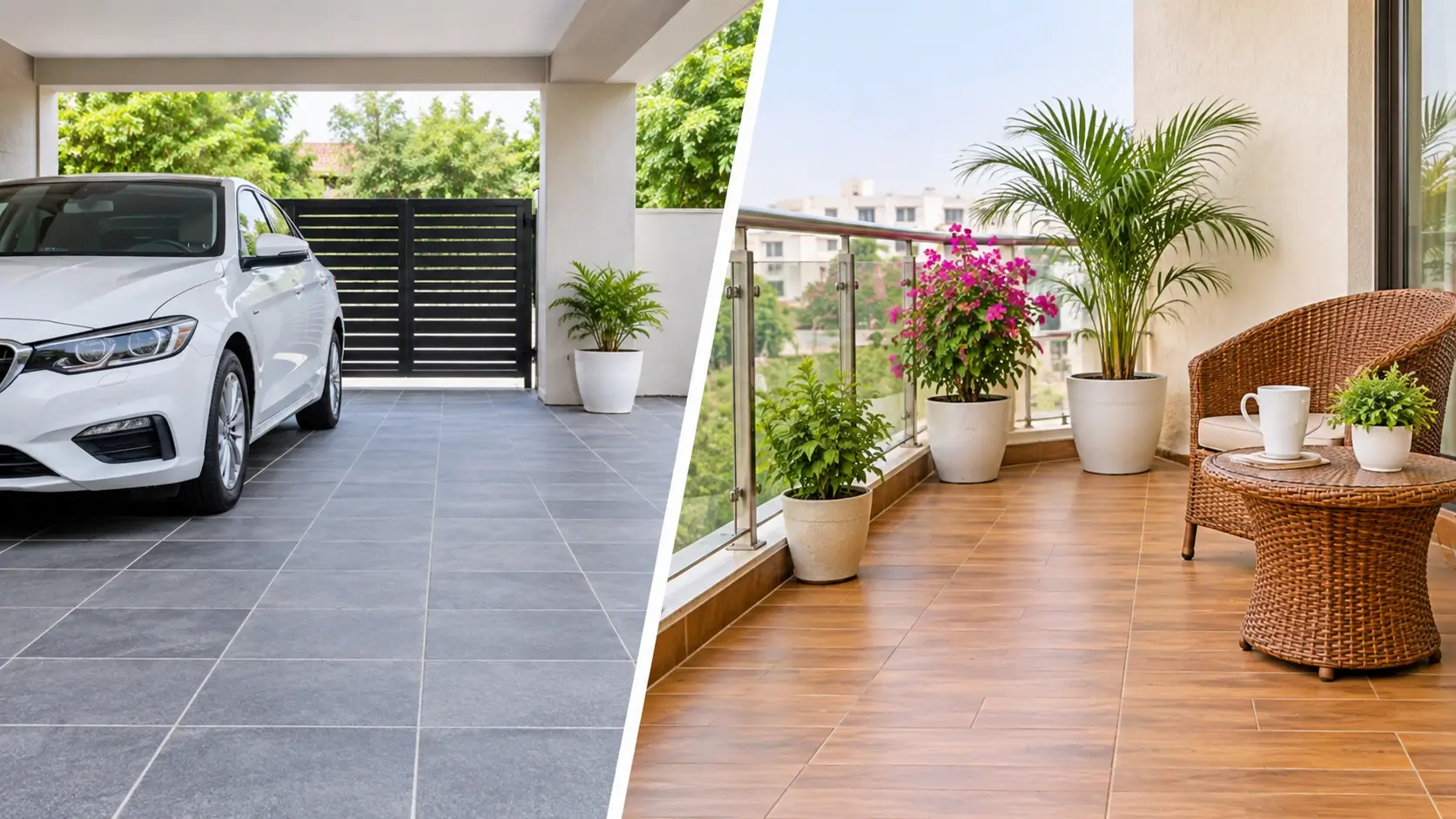
Choosing tiles for your home is not just about picking a beautiful colour or design. You also need to think about where you plan to install them. A tile that works well in your living room may not perform well in an outdoor parking area or balcony. Parking spaces and balconies have different needs. A parking area must handle the weight of vehicles and regular movement. A balcony needs tiles that can manage rain, sunlight, and daily foot traffic. Both spaces also need a safe and easy-to-maintain floor.
Many homeowners make the mistake of choosing the same tiles for every outdoor area. This can create problems later. Tiles may crack under heavy vehicle weight or become slippery during the rainy season. Let’s understand the difference between parking and balcony tiles. We will also look at their strength, safety, design, maintenance, and cost to help you make a practical decision.
Why Should You Choose Different Tiles for Parking and Balcony Areas?
Parking spaces and balconies serve different purposes. Therefore, their flooring requirements also differ. A car parking area experiences regular pressure from vehicle tyres. It may also face oil stains, dust, and water from washing vehicles. The floor needs strong tiles that can handle these conditions.
A balcony usually experiences foot traffic. It also faces changing weather conditions. Rainwater, direct sunlight, and dust can affect its flooring over time. For example, imagine installing ordinary decorative balcony tiles in your car parking area. They may look attractive initially. However, they may crack when a heavy vehicle moves over them. Similarly, installing rough and heavy-duty parking tiles on a small balcony may not give you the appearance you want. The right approach is to select tiles according to the purpose of each space.
Parking Tiles: What Should You Look For?
Parking tiles need to handle more pressure than regular home flooring. They should offer strength, durability, and good grip.
Here are the important features to check before buying parking tiles.
1. High Strength and Load-Bearing Capacity
The most important feature of parking tiles is strength. A parking floor needs to support the weight of cars and two-wheelers. You should choose modern tiles that the manufacturer recommends for vehicle movement. Please verify the product specifications and installation requirements before purchase. Do not assume that every thick tile can handle vehicle weight. The quality of the tile and the condition of the base also matter.
2. Anti-Skid Surface
Water, mud, and dust can make parking floors slippery. This becomes a problem when you walk around your vehicle or move your car during the rainy season. Anti-skid parking tiles offer better grip than smooth and glossy tiles. Look for a suitable textured surface that provides traction without making regular cleaning difficult.
3. Resistance to Stains
Parking areas often collect oil marks, tyre marks, and dirt. These stains can make the floor look old and dirty. Choose tiles with a surface that resists stains and allows easy cleaning. This will help you maintain the parking area without spending too much time on daily maintenance.
4. Weather Resistance
Outdoor parking areas face rain, sunlight, and temperature changes. Your tiles should suit these conditions. Porcelain and other suitable outdoor-rated tiles can be good options. Always check the manufacturer’s specifications for water absorption and outdoor use.
Which Types of Tiles Are Best for Parking Areas?
Different tile materials offer different benefits. Your choice should depend on your parking requirements and budget.
1. Vitrified Tiles
Vitrified tiles are popular in Indian homes because they offer a hard and durable surface. Some varieties can work well in parking areas. However, not every vitrified tile is suitable for vehicle movement. Choose a product that specifically supports outdoor parking applications.
2. Heavy-Duty Porcelain Tiles
Porcelain tiles have low water absorption and come in several finishes. Certain heavy-duty varieties work well in outdoor spaces. When using them for parking, make sure they can hold weight and follow the fitting instructions. Vehicle-rated ceramic tiles may be able to handle more pressure than regular decorative tiles.
3. Concrete Pavers
Concrete pavers offer a practical option for driveways and open parking spaces. They come in different shapes and colours. They can handle outdoor conditions when you install them over a properly prepared base. They also allow you to replace individual damaged blocks without removing the entire floor.
Balcony Tiles: What Should You Look For?
A balcony is more than an open area attached to your home. Many families use it for morning tea, gardening, relaxing, or spending time with family. Therefore, balcony flooring should offer safety, weather resistance, and an attractive appearance.
Let’s look at the important features.
1. Slip Resistance
Safety should be your priority when choosing balcony tiles. Rainwater can make smooth tiles slippery. This creates a risk of falling, especially for children and older family members. Choose anti-skid balcony tiles with a suitable textured finish. Check the slip-resistance rating rather than judging the surface only by touch or appearance.
2. Water Resistance
Balconies receive rainwater, especially during the monsoon. Water can also collect around plant pots and washing areas. Choose outdoor-rated balcony tiles with low water absorption. Proper waterproofing and drainage also protect the balcony. Remember that even good-quality tiles cannot replace proper waterproofing.
3. Resistance to Sunlight
Direct sunlight can affect some flooring materials over time. It may also make certain surfaces uncomfortable to walk on during hot afternoons. Choose balcony tiles that the manufacturer recommends for outdoor use and exposure to sunlight.
4. Attractive Appearance
Unlike parking areas, balconies often form part of your home’s overall design. You can choose from wooden-look, stone-look, and natural-texture tiles. These designs can make even a small balcony look more welcoming. However, never choose a slippery glossy finish just because it looks attractive.
Which Types of Balcony Tiles Are Best?
Balcony tiles give you more freedom to experiment with colours and designs. However, you should always select products that suit outdoor conditions.
1. Ceramic Tiles
Ceramic tiles are available in a variety of hues, designs, and textures. They can work well on balconies when you select outdoor-suitable products. Check their strength and water absorption before purchasing. Avoid choosing ordinary indoor wall tiles for balcony flooring.
2. Porcelain Tiles
Porcelain tiles offer a good combination of appearance and practical performance. They come in stone, wood, and concrete finishes. Their low water absorption makes suitable outdoor varieties a useful option for balconies. Choose a textured finish for better grip during rainy weather.
3. Natural Stone Tiles
Natural stone can give your balcony a warm and natural appearance. Granite and other suitable stones are popular choices for outdoor flooring. However, different stones have different maintenance needs. Some require sealing and regular care. Always check their suitability for wet outdoor conditions.
Parking vs. Balcony Tiles: Key Differences
Let’s compare both parking and balcony tiles to understand which features matter most.
| Feature | Parking Tiles | Balcony Tiles |
| Main requirement | High strength | Outdoor suitability and safety |
| Load capacity | Must support vehicle weight | Must support regular foot traffic |
| Surface | Textured and suitable for vehicle movement | Anti-skid and comfortable |
| Water resistance | Important | Very important |
| Design | Functional and simple | Decorative and functional |
| Stain resistance | Important due to oil and tyre marks | Useful for dust and plant stains |
| Maintenance | Should allow easy cleaning | Should resist outdoor dirt |
| Common choices | Heavy-duty porcelain, suitable vitrified tiles, concrete pavers | Outdoor porcelain, ceramic and natural stone |
The biggest difference is the load requirement. Parking tiles must handle vehicle pressure, while balcony tiles need to provide a safe walking surface in changing weather conditions.
Important Things to Check Before Buying Tiles
Buying tiles without checking their specifications can lead to unnecessary expenses. Keep these points in mind before making your final decision.
1. Check the Tile Specifications
Ask the dealer for product details. Check the recommended application, water absorption, strength, and slip resistance. For parking areas, confirm that the product supports vehicle movement. For balconies, check whether the manufacturer recommends it for outdoor flooring.
2. Check the Tile Thickness and Size
Tile thickness matters, but it does not tell you everything about strength. A thicker tile is not automatically suitable for parking. Its material, construction, and installation also affect performance. Choose the size according to the space and installation requirements.
3. Pay Attention to Drainage
Water should not collect on your parking floor or balcony. Ask your contractor to provide the correct floor slope towards the drainage point. Poor drainage can create standing water and increase the risk of slippery surfaces.
4. Consider Your Maintenance Needs
Some tiles with different textures can get dirt stuck in their grooves. When they get wet, very smooth tiles may become dangerous. Pick a surface that is good for grip and cleans up easily. This will make it easier to do normal maintenance.
5. Compare the Total Installation Cost
Do not compare tiles only by their price per square foot. Your total cost may include adhesive, labour, surface preparation, waterproofing, and other installation materials. Ask for a complete estimate before finalising the product.
Conclusion
Choosing between parking and balcony tiles becomes easier when you understand the needs of each space. Parking areas require strong tiles that can handle vehicle weight, regular movement, stains, and outdoor weather. Balconies need outdoor-suitable flooring with good grip, water resistance, and an attractive finish. Heavy-duty porcelain tiles and suitable concrete pavers can work well for parking areas. For balconies, outdoor porcelain, suitable ceramic, and natural stone tiles offer different design choices.
Most importantly, never compromise on safety and installation quality to save a little money. Check the product specifications and discuss drainage, waterproofing, and surface preparation with your contractor. A little planning before buying tiles can help you create outdoor spaces that look good, stay safe, and serve your family for years.