

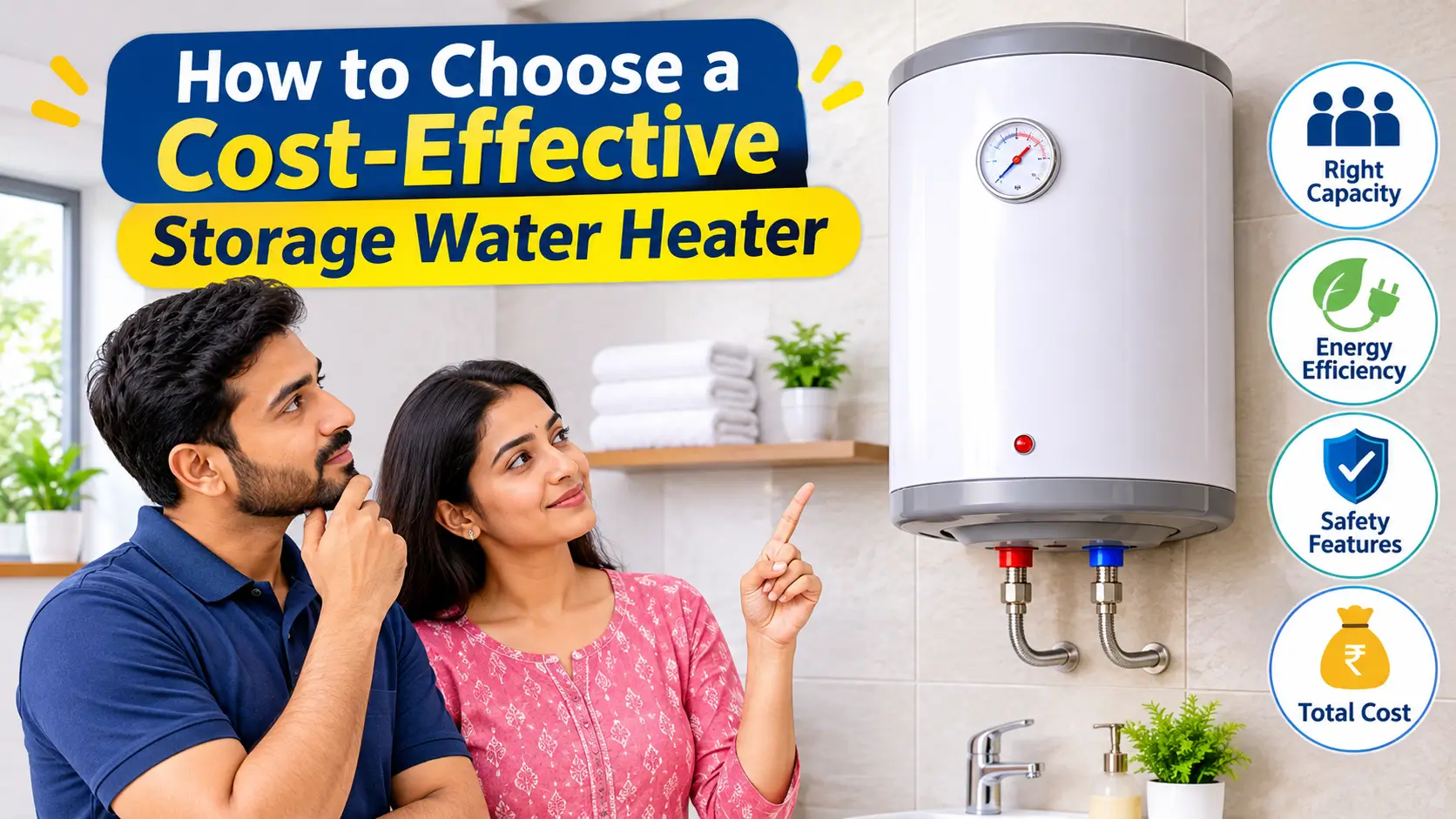
Choosing a storage water heater for your bathroom may look simple. However, the wrong choice can increase your electricity bill or leave your family waiting for hot water. A water heater that costs less at the time of purchase may also need more maintenance or consume more electricity over time. The best approach is to look beyond the price tag. You should consider your family size, daily hot water needs, electricity consumption, tank quality, and safety features. A suitable water heater can provide enough hot water without putting extra pressure on your monthly budget.
Here are the important things to check before buying a cost-effective storage water heater for your home.
1. Choose the Right Water Heater Capacity
Capacity is one of the first things you should check. Storage water heaters come in different sizes. Common options include 10-litre, 15-litre and 25-litre models. A small geyser may work well for one person. However, a larger family may need more hot water for bathing and other household needs. If you choose a model with very little capacity, you may have to wait for the water to heat again. Your choice should depend on how many people use the bathroom and how they use the water heater.
| Household size | General capacity to consider |
| One person | 6–10 litres |
| Two people | 10–15 litres |
| Three to four people | 15–25 litres |
| Five or more people | 25 litres or more |
These are general suggestions, not fixed rules. Your bathing habits and water usage can change the capacity you need.
Think About Your Daily Bathing Habits
For example, a person who takes a quick bucket bath may need less hot water than someone who prefers a long shower. Similarly, two family members who bathe one after another may need a larger tank or enough time between uses.
Just because it sounds better, don’t purchase a larger geyser. When holding water, a huge tank may lose more heat and take longer to warm up. Select a capacity based on your usual requirements.
2. Check the BEE Star Rating
Electricity consumption is an important part of the total cost of a geyser. You may save money by choosing an energy-efficient model. Look for the BEE star label when comparing storage water heaters. The label helps buyers understand the energy performance of the appliance. In general, a higher star rating indicates better energy efficiency under the applicable rating plan. For a family that uses hot water every day, this can make a difference over time.
Compare the Rating and Label Details
Do not look at the star rating alone. Check the label details and compare models with similar capacity. You should also check the applicable label period because rating plans can change. A water heater with a higher star rating may cost more initially. However, lower energy losses can help reduce running costs. Compare the purchase price with the expected electricity savings before making your decision.
3. Understand the Heating Time
Storage water heaters need time to heat the water inside the tank. The heating time depends on the tank capacity, heating element power, and the temperature of the incoming water. A 10-litre model may heat water faster than a 25-litre model with a similar heating setup. However, a faster heating time does not automatically mean lower electricity consumption.
Think about your family’s morning routine before choosing a model. For example, if four family members need hot water between 6 AM and 8 AM, you should select a capacity that supports their needs. A small geyser may force everyone to wait between baths.
4. Compare the Total Cost, Not Just the Purchase Price
Many buyers choose a geyser based only on its selling price. This can lead to a poor buying decision. The actual cost includes more than the amount you pay at the shop. You should also consider electricity use, installation charges, maintenance, and possible repair costs. Before buying, compare these factors:
- Purchase price: Check the prices of models with similar capacity and features. A very cheap model may not offer the same energy rating or tank protection as another option.
- Electricity consumption: Compare the BEE label and energy-related details. A more efficient model may help reduce long-term running costs.
- Installation charges: Ask whether the price includes installation, pipes, and other fittings. Additional work can increase your final bill.
- Maintenance and repairs: Check the warranty and availability of service support in your area. Time and trouble can be avoided in the future by having easy access to services.
A slightly more expensive geyser may offer better value if it has useful safety features, good energy performance, and reliable service support.
5. Check the Inner Tank Material
The inner tank holds hot water throughout the day, and its quality is vital because repeated contact with water and heat can degrade the tank over time. Different manufacturers utilise different tank materials and protective coatings; some versions employ coated steel tanks, while others use stainless steel tanks. Instead of believing that one material is always the best solution for every home, check the product specs and warranty conditions.
Look for Corrosion Protection
If your home receives hard water, pay extra attention to the manufacturer’s guidance on water quality and tank protection. Hard water can leave mineral deposits inside the appliance. These deposits may affect performance over time.
Some manufacturers also offer protective coatings or components designed to reduce corrosion. Check to see what the warranty covers and whether it covers the inner tank. A longer tank warranty can provide extra peace of mind. However, read the terms carefully because different parts may have different warranty periods.
6. Do Not Ignore Safety Features
A storage water heater combines electricity, water, and heat. So, safety should always remain a priority. Before buying, check whether the model includes important safety features such as:
- Thermostat: It helps control the water temperature and prevents unnecessary heating once the selected temperature is reached.
- Thermal cut-out: This safety feature can cut off power if the appliance becomes too hot.
- Pressure relief valve: It helps release excess pressure when required. This is especially important in a closed storage water heater.
- Suitable electrical protection: Your home should have proper earthing and suitable circuit protection for the geyser.
Also, check for the relevant BIS certification and product details. BIS lists Indian standards for stationary storage-type electric water heaters. Always ask a qualified electrician or authorised installer to handle the electrical connection. Never try to repair the geyser yourself if you notice an electrical problem or water leakage.
7. Choose a Suitable Shape and Size
Bathroom space also matters when choosing a storage water heater. Most homes use vertical storage geysers, but some bathrooms may need a horizontal model. Measure the available wall space before ordering. Check the appliance dimensions and leave enough room for pipes, fittings, and future servicing.
A large geyser may not fit comfortably in a small bathroom. You should also check whether the wall can safely support the appliance when it is full of water. Ask the installer to check the mounting surface and recommend a suitable installation position.
8. Check the Warranty and Service Network
A good warranty can protect you from certain repair expenses. However, you should understand what it covers before buying. Most manufacturers provide separate warranty terms for the product, heating element, and inner tank. The coverage period can differ from one model to another.
Check these points:
- How long does the product warranty last?
- Does the manufacturer offer a separate inner tank warranty?
- What warranty applies to the heating element?
- Is authorised service available in your city?
- Does the warranty require installation by an authorised technician?
Keep your purchase bill and warranty details safe. These documents can help when you need service.
9. Avoid Paying for Features You Do Not Need
Some storage water heaters offer digital displays, remote controls, Wi-Fi features, and different temperature settings. These features may be useful for certain households, but not every buyer needs them. If you only want a geyser for regular bathing, focus on capacity, energy efficiency, safety, and tank quality first. A simple model with the right specifications may offer better value than an expensive model with features you rarely use.
10. Simple Tips to Reduce Geyser Running Costs
Buying an efficient geyser is only one part of saving electricity. Your daily habits also affect energy consumption.
- Switch it on when needed: If your routine allows, heat water before bathing instead of keeping the geyser running unnecessarily.
- Avoid very high temperature settings: Choose a comfortable temperature according to your needs. Follow the manufacturer’s instructions.
- Fix water leaks: A leaking hot water line can waste both water and the energy necessary to heat it.
- Arrange regular checks: Ask an authorised technician to inspect the appliance when needed, especially if you notice unusual noise, leakage, or poor heating.
Follow the manufacturer’s maintenance instructions. Do not open the appliance or handle its electrical parts yourself.
Conclusion
Choosing a cost-effective storage water heater requires more thought than comparing prices. You should select the right capacity for your family and check the BEE star rating before making a purchase. Tank quality, safety features, warranty, and service support also matter.
A 15-litre geyser may suit a small household, while a larger family may need a 25-litre model or more. Your bathing habits should guide the final choice. Most importantly, calculate the long-term value instead of choosing the cheapest option. A well-matched and energy-efficient geyser can provide comfortable hot water while helping you manage household expenses.