

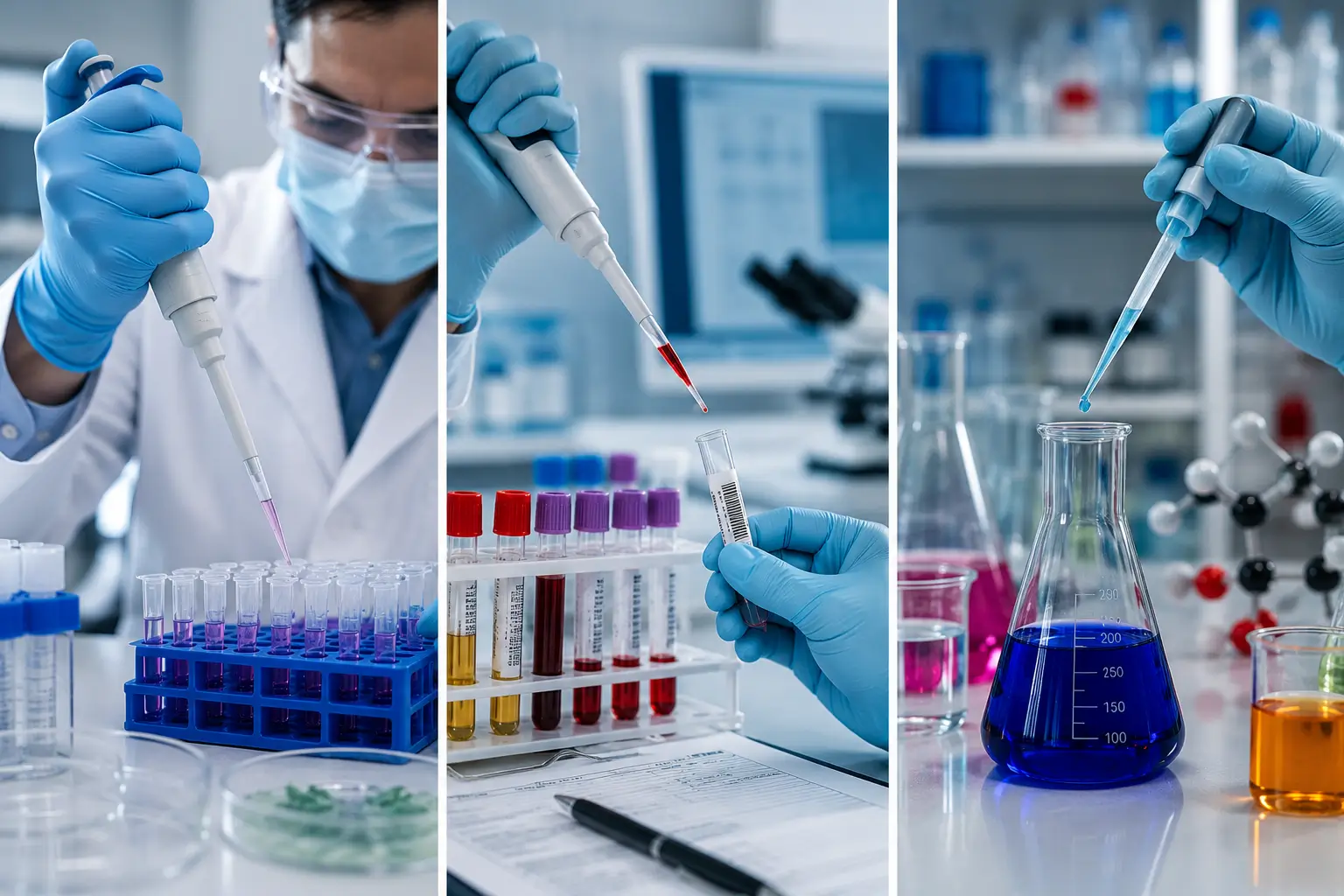
A laboratory may contain expensive instruments, advanced computers, and highly specialised equipment, but some of the most important tools are surprisingly simple. A pipette is one such tool.
If you have ever seen a laboratory worker transfer a small amount of liquid from one container to another, there is a good chance they used a pipette. This simple-looking instrument helps scientists measure and transfer liquids with much better control than ordinary pouring.
The uses of pipettes cover a wide range of scientific work. Researchers use them in chemistry, microbiology, biotechnology, pharmaceuticals, food testing, environmental testing, and medical laboratories.
The type of pipette can also vary depending on the work. Micropipettes handle very small volumes, while volumetric and graduated pipettes help with other measurement requirements. Electronic pipettes can make repetitive liquid-handling tasks easier and more consistent.
What Is a Pipette?
A pipette is a lab tool used to measure and move small amounts of liquid accurately.
For example, suppose a scientist needs to add 2 mL of a chemical solution to a sample. Pouring the liquid directly may not provide enough control. A suitable pipette allows the user to transfer the required volume more accurately.
Different pipettes suit different needs: micropipettes measure variable, tiny amounts of liquid, whereas volumetric pipettes accurately transfer one specific, fixed volume. The right choice depends on the required volume, accuracy, liquid properties, and laboratory procedure.
7 Common Uses of Pipettes in Scientific Laboratories
1. Sample Preparation
One of the most basic uses of pipettes is sample preparation. Before scientists can analyse a sample, they often need to mix it with another liquid, dilute it, or transfer a measured quantity into a test tube or other container.
A pipette helps the laboratory worker transfer a controlled amount of liquid during this process. This becomes especially important when a small difference in volume can affect the final test result.
For example, a researcher preparing a biological sample may need to add a specific amount of buffer or reagent. Using the correct pipette helps maintain consistency between different samples.
2. Serial Dilution
Serial dilution is another common application of pipettes, particularly in microbiology and biochemistry. In this process, a concentrated solution gets diluted step by step. The researcher transfers a measured amount of one solution into another container containing a known amount of diluent.
Because each step depends on the previous one, accurate volume transfer matters. A small pipetting mistake at the beginning can affect later concentrations. That is why researchers choose suitable pipettes and use careful techniques when performing serial dilution experiments.
3. Molecular Biology and PCR
Modern molecular biology depends heavily on accurate liquid handling. Researchers working with DNA, RNA, enzymes, and other biological materials often deal with very small quantities. Micropipettes allow them to transfer these small volumes with greater control.
One important application is PCR, or polymerase chain reaction. PCR requires several components to be combined in carefully measured amounts. A micropipette helps researchers add these components to a reaction mixture. In enzyme tests and DNA research, exact measurements are vital—even a drop’s difference can change the entire result.
4. Cell Culture
Pipettes are also widely used in cell culture laboratories. Scientists growing cells in laboratory containers regularly need to add or remove growth media, transfer cell suspensions, and introduce other solutions.
The work requires careful handling because contamination can damage a cell culture and ruin an experiment. Depending on the application, researchers use different pipettes and sterile tips to reduce contamination risks. Pipettes therefore support routine cell culture work as well as more advanced biological research.
5. Pharmaceutical Research and Drug Development
The pharmaceutical industry uses pipettes in many stages of research and testing. Researchers may use them to prepare drug solutions, combine compounds, perform assays, and study how substances interact with biological samples.
Accurate liquid handling becomes particularly important when researchers compare different concentrations of a compound. A consistent pipetting process allows scientists to compare samples more confidently and reduce avoidable measurement errors. Pipettes therefore remain useful even in laboratories that also rely on highly advanced automated instruments.
6. Clinical and Diagnostic Testing
Pipettes play an important role in medical and diagnostic laboratories. Laboratory professionals may use them to measure and transfer samples such as blood, serum, or other biological fluids during testing procedures.
A diagnostic test often involves several reagents and controlled volumes. Incorrect liquid handling can affect the reliability of the test. For this reason, laboratories need suitable pipettes, compatible tips, and proper handling procedures. It is also important to remember that pipette selection depends on the particular diagnostic procedure. Not every pipette suits every type of clinical sample.
7. Environmental Testing
Pipettes are useful beyond medical and research laboratories. Environmental laboratories analyse samples from sources such as water, soil and industrial waste. These samples may contain chemicals or microorganisms that researchers need to measure or study.
During testing, laboratory staff may need to add reagents, prepare dilutions or transfer a measured portion of the sample. A pipette gives the user better control over these small liquid quantities. Accurate liquid handling can therefore contribute to reliable environmental analysis, including laboratory testing of water and other environmental samples.
Types of Pipettes Used in Laboratories
Different laboratory tasks require different types of pipettes.
1. Micropipettes
Micropipettes are designed for handling small volumes. They are commonly used in molecular biology, microbiology, cell culture, and other life-science applications.
2. Volumetric Pipettes
Volumetric pipettes measure and transfer one exact volume. This makes them crucial for precise analytical chemistry tests.
3. Electronic Pipettes
Electronic pipettes use automated controls to handle liquid transfers accurately, making them ideal for high-volume, repetitive lab work.
4. Graduated and Mohr Pipettes
Graduated pipettes have markings that allow users to measure different volumes. Mohr pipettes are one specialised type used for measured liquid delivery.
The important point is that one pipette cannot handle every laboratory task. Researchers should select equipment based on required volume, accuracy, and liquid being handled.
How to Choose the Right Pipette
Choosing a pipette should not simply depend on its price or appearance.
First, consider the volume you need to transfer. A micropipette designed for a small volume may not be suitable for a procedure requiring a much larger volume. Next, consider the required accuracy. Highly sensitive experiments need equipment that can deliver consistent results.
The nature of the liquid also matters. Some chemicals may react with certain materials. It is recommended to consider volume range, required precision, and chemical compatibility when selecting pipettes.
The type and quality of the pipette tip also matter. A poorly fitting or unsuitable tip can affect liquid transfer and may increase the risk of contamination.
Pipetting Best Practices
Using a good pipette does not automatically guarantee accurate results. The user also needs to handle it correctly.
1. Use the correct tip
Choose a tip that fits the pipette properly and suits the application always. A poor fit can cause leakage or inaccurate liquid transfer.
2. Keep the pipette calibrated
Routine calibration and maintenance ensure pipettes remain accurate, protecting the reliability of critical experimental data.
3. Check chemical compatibility
Do not use a pipette with a liquid if its materials are not compatible with that chemical. Aggressive chemicals can damage certain components.
4. Replace damaged tips
Worn or damaged tips can affect accuracy and increase contamination risks. It is also advised to avoid damaged tips and to use the correct tip type for the pipette.
Why Accurate Pipetting Matters
A pipette may look like a small part of a laboratory experiment, but its effect can be much bigger. Imagine preparing ten samples for the same experiment. If each sample receives a slightly different amount of reagent, comparing the results becomes more difficult.
Accurate pipetting helps laboratories maintain consistency. This becomes especially important in areas such as pharmaceutical research, molecular biology, clinical testing, and analytical chemistry, where researchers often work with small quantities and sensitive procedures. Good pipetting practice therefore supports both accuracy and reproducibility.
Conclusion
Pipettes are fundamental lab tools that allow scientists to transfer precise liquid amounts reliably. The main uses of pipettes include sample preparation, serial dilution, chemical analysis, PCR and molecular biology, cell culture, pharmaceutical research, clinical testing, environmental analysis, food testing and laboratory education.
Even with advanced equipment, accurate liquid handling remains a basic requirement for reliable scientific work. By selecting the appropriate pipette and maintaining good pipetting practices, laboratories can reduce avoidable errors and produce more consistent results.