

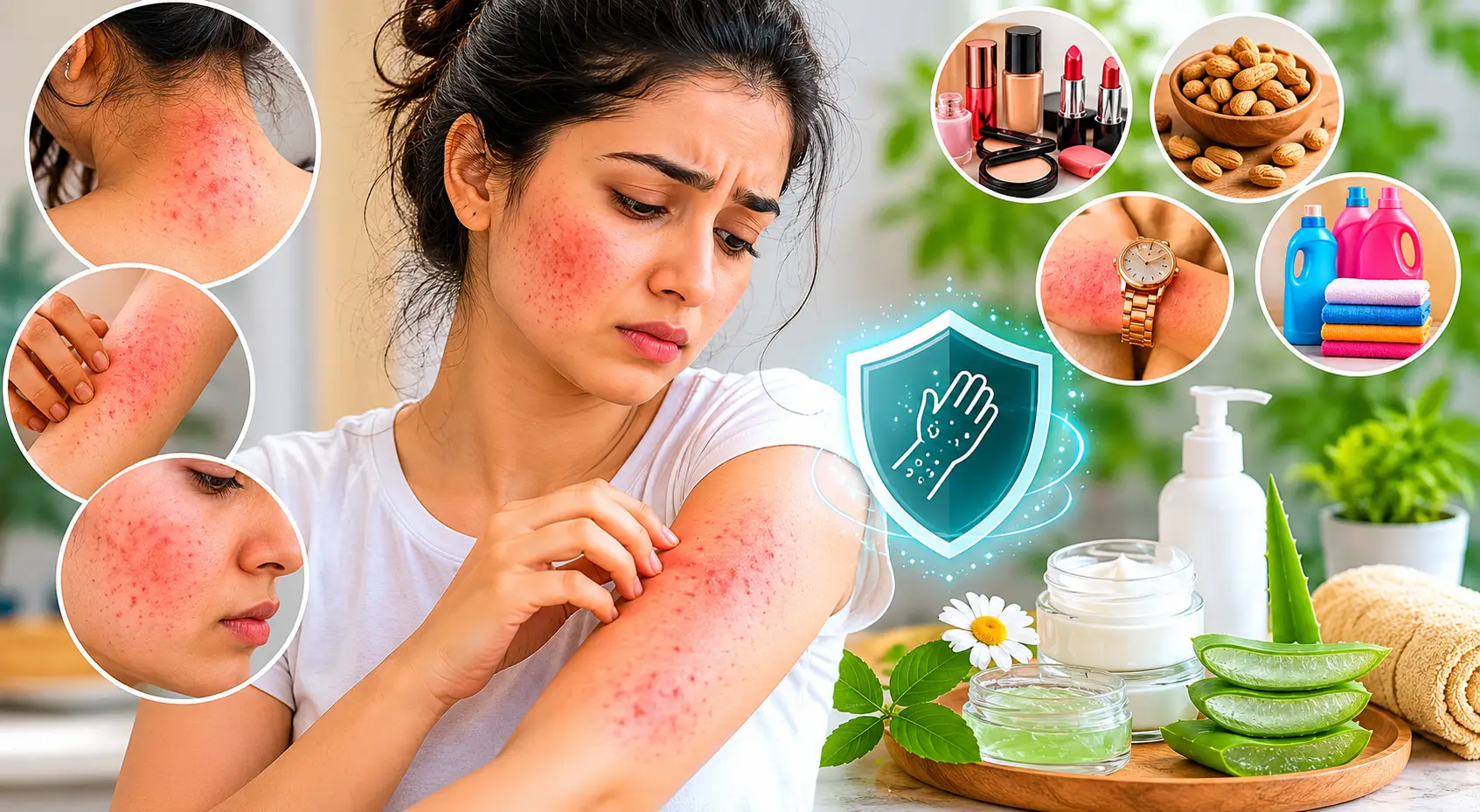
Skin allergy is the most common skin problem faced by people of all ages. Sometimes it starts as mild itching, redness, or small rashes. In other cases, the reaction can become uncomfortable and affect daily life.
Many people confuse skin allergies with fungal infections, heat rashes, or normal itching. Because of this, they often use the wrong treatment, and the condition becomes worse. The good news is that most skin allergies can be managed if you identify the trigger early and take proper care of your skin.
In this guide, we will understand skin allergy in simple language, including its causes, symptoms, treatment options, and prevention tips.
Table of Contents
What Is a Skin Allergy?
A skin allergy happens when your immune system reacts to a substance that is usually harmless. This substance is called an allergen.
When the skin comes into contact with an allergen, the body may react with itching, redness, swelling, or rashes. The reaction can happen within minutes, hours, or sometimes even days after exposure.
Common Symptoms of Skin Allergy
When you have a skin allergy, your body is overreacting to something it considers harmful. Since every immune system is unique, symptoms can range from minor irritation to significant discomfort.
- Itching (Pruritus): The first sign of an allergic reaction is itching. It can range from a mild tickle to intense, uncontrollable urges to scratch the affected area.
- Redness (Erythema): This happens when blood vessels near the skin’s surface dilate due to the inflammation caused by the allergic response, giving the skin a flushed or bright red appearance.
- Skin Rash: This is a broad term for a noticeable change in the skin’s texture or colour. It might look like a flat, red patch or a cluster of irritated skin.
- Dry or Flaky Skin: Some allergic reactions strip the skin of its natural moisture, leading to tightness, cracking, or the appearance of white, flaky scales on the surface.
- Swelling (Edema): The skin may appear puffy or raised because fluid builds up in the underlying tissues as part of the body’s inflammatory response.
- Burning or Stinging Sensation: Instead of itching, some people feel a hot, painful, or prickly sensation on the surface of the skin, especially if the protective barrier has been compromised.
- Hives (Urticaria): These are distinct, raised welts that can appear suddenly. They are often very itchy, can change shape, and might fade and reappear in different areas.
What Causes Skin Allergy?
Skin allergy totally depends on the person, and it is different for different people.
1. Cosmetics and Skin Care Products
Many everyday skincare and hygiene products can cause skin issues because your immune system reacts negatively to certain chemical ingredients.
- Face Creams: Many products designed for anti-aging or acne contain strong ingredients or heavy moisturisers that can easily irritate sensitive skin.
- Hair Dyes: These often contain strong chemicals, such as paraphenylenediamine (PPD), which are well-known to cause allergic contact dermatitis on the scalp, ears, and neck.
- Perfumes: These are complex mixtures of many chemicals. Alcohol and various synthetic scent compounds can easily cause redness or itching when applied to the skin.
- Makeup Products: Foundations, blushes, and eye makeup often contain colours, binders, or stabilisers. These ingredients can sometimes cause swelling or rashes, especially on the sensitive skin of your face.
- Sunscreens: Both chemical and physical filters in sunscreens can lead to reactions; some people are sensitive to specific UV-blocking chemicals like oxybenzone or to the fragrances added to mask the scent of those chemicals.
- Fragrances and Preservatives: These are the most common triggers across the beauty industry. Preservatives like parabens or formaldehyde-releasing agents are added to prevent bacterial growth but are frequent causes of allergic reactions in people with reactive skin.
2. Metals
Jewellery items containing nickel are a frequent culprit for contact dermatitis. When nickel comes into contact with sweat on your skin, it can release metal ions that trigger an immune response.
Common areas where skin allergy reactions occur are discussed below:
- Earrings: Rashes often develop on the earlobes, where the metal post of the earring makes direct, prolonged contact with the skin.
- Necklaces: You may notice itching, redness, or a rash forming in a circle around the base of the neck where the chain rests.
- Watches: Sensitivity to the metal casing or the clasp of a watch band often results in an itchy, irritated patch of skin on the wrist.
- Belt Buckles: Constant friction against the skin, especially when wearing a belt tight against your abdomen, can cause a localised rash or bumps right at the site of the buckle.
3. Detergents and Cleaning Products
Cleaning products are designed to break down grease and dirt. But the same harsh chemicals that clean your home can also cause damage to your skin. This irritates, especially for those who do chores regularly without protection.
4. Food Allergies
For some people, certain foods can trigger an immune system reaction. When you are sensitive to a food, even a small amount can cause your body to react.
Here is a breakdown of common food triggers and the symptoms they cause:
1. Common Trigger Foods
- Peanuts: One of the most well-known causes of strong allergic reactions.
- Shellfish: Includes items like shrimp, crab, and lobster.
- Eggs: Many people, especially children, may have an allergy to egg proteins.
- Milk: Specifically, the proteins found in cow’s milk can cause issues for some individuals.
- Certain Fruits: Some people experience itching in the mouth or throat after eating specific raw fruits.
2. Symptoms of Food Allergies
- Swelling: This often happens in the lips, tongue, face, or throat area.
- Hives: These are raised, itchy welts that can appear anywhere on the body shortly after eating.
- Digestive Issues: Some may experience stomach pain, nausea, or vomiting.
- Skin Reactions: Aside from hives, some may notice general skin redness or an itchy rash.
If you suspect you have a food allergy, it is important to pay close attention to which foods cause you discomfort and speak with a doctor to get a proper diagnosis.
5. Medicines
Medications are essential for treating various health conditions. But it sometimes causes skin reactions as a side effect. These reactions occur when your immune system mistakenly identifies a drug as a harmful substance.
Here are the details regarding medication-related skin sensitivities:
- Antibiotics: This group is one of the most frequent causes of drug-induced skin reactions. Specifically, penicillin-based antibiotics and sulfonamides are well-known to cause rashes, itching, or hives in some patients.
- Painkillers: Some painkillers can cause skin rashes, swelling, or serious allergic reactions.
6. Dust, Pollen, and Pet Dander
Environmental allergens are substances found in your surroundings that your immune system may mistakenly identify as threats. When you come into contact with them, your body releases chemicals like histamine, which can trigger reactions in both your skin and your respiratory system.
Types of Skin Allergy
There are several types of skin allergies, and each one looks and feels a little different. Knowing these differences can help you figure out what is happening and how to treat it.
- Contact Dermatitis: This happens when your skin touches something it is allergic to or something that causes irritation.
- Symptoms: Redness, persistent itching, and a localised rash that appears only where the substance touched the skin.
- Common Triggers: Soaps, perfumes, various cosmetics, and metals like nickel.
2. Eczema (Atopic Dermatitis): A chronic, long-term condition that weakens the skin’s ability to protect itself from irritants.
- Symptoms: Very dry skin, intense and severe itching, and patches of inflamed or irritated skin.
- Who it affects: While highly common in children, it is a condition that can persist or first develop in adults.
3. Hives (Urticaria): Sudden outbreaks of raised, itchy, red welts on the surface of the skin.
- Common Triggers: Exposure to certain foods, medications, insect bites, or even high levels of physical and emotional stress.
- Key Characteristic: These welts can be transient, frequently changing shape, size, and location on the body in a short amount of time.
4. Angioedema: Unlike hives, which affect the surface, this condition involves swelling that occurs deep beneath the skin.
- Common Areas: It frequently causes puffiness or swelling around the eyes, lips, face, and tongue.
- Medical Warning: Because this type of swelling can affect the airways or throat, severe instances should be treated as a medical emergency.
How Is a Skin Allergy Diagnosed?
Doctors use a step-by-step process to find the exact cause of a skin allergy. They usually check a few different things to make sure they have the right diagnosis.
- Physical Examination: A doctor will carefully inspect the appearance, location, and pattern of the rash, swelling, or irritation to rule out other skin conditions.
- Medical History Review: This is a vital part of the process. Your doctor will ask detailed questions about your daily routine, including:
- Products you frequently use (soaps, cosmetics, perfumes).
- Any recent changes in your environment or diet?
- Your work environment and potential exposure to chemicals or metals.
- Family history of allergies or asthma.
- Patch Testing: This is the gold standard for diagnosing Contact Dermatitis. Small amounts of suspected allergens are placed on patches and applied to your skin (usually on the back) for 48 hours to see if a localised reaction develops.
- Allergy Testing (Skin Prick Test): In some cases, a small amount of an allergen is placed on the skin, and the area is lightly pricked. This is often used to identify triggers for hives or immediate allergic reactions.
- Blood Tests: These tests check your blood for certain antibodies. This helps show if your immune system is reacting to specific things.
Skin Allergy Treatment Options
To manage a skin allergy, you need a plan that soothes your skin and stops future reactions. Doctors will create a treatment plan based on the type of allergy you have and how bad your symptoms are.
- Antihistamine Medications: These medicines block histamine, which is a chemical your body releases during an allergy. They work well to stop itching, swelling, and hives.
- Topical Creams: When a reaction is localised, doctors often prescribe medicated creams. These range from over-the-counter options to prescription-strength corticosteroids, which are designed to decrease inflammation and redness rapidly.
- Moisturisers: With eczema, the skin’s natural barrier is often weak. Using a thick, fragrance-free, and hypoallergenic moisturizer every day helps keep your skin hydrated, calms irritation, and protects it from things that cause flare-ups.
- Trigger Avoidance: This is the cornerstone of long-term success. While medications can mask symptoms, they cannot cure the underlying sensitivity. Identifying the specific allergen—whether it is a certain metal, a chemical in your laundry detergent, or a food item—and strictly avoiding it is the most reliable way to prevent the cycle of irritation from returning.
If these steps don’t help, see your doctor again. They may need to change your treatment plan or do more tests to make sure you are managing the allergy the right way.
Home Remedies for Mild Skin Allergy
These simple home-care tips can help soothe mild skin irritation and aid in your recovery.
- Cold Compress: Applying a clean, cool, damp cloth to the affected area for 10–15 minutes can provide immediate, temporary relief from intense itching and help reduce redness.
- Gentle Moisturising: Choose moisturisers or emollients that are free of fragrances and hypoallergenic. Putting them on after a lukewarm shower helps keep your skin hydrated and makes its protective barrier stronger, which is very helpful for skin that is dry or inflamed.
- Resist the Urge to Scratch: It is hard to do, but scratching makes inflammation much worse. It damages the top layer of your skin and lets bacteria in, which increases the risk of infection. Keep your fingernails short to help prevent damage.
When Should You See a Doctor?
While many skin reactions are mild and resolve with basic care, certain symptoms indicate that you need a professional medical assessment. Consulting a doctor is important to ensure you receive an accurate diagnosis and appropriate treatment.
You should seek medical evaluation if you experience any of the following:
- Prolonged Symptoms: The irritation or rash persists for several days despite your efforts to manage it at home.
- Rapid Progression: The rash or area of inflammation is spreading quickly across your body.
- Ineffectiveness of Home Care: If home treatments like cold compresses and moisturisers aren’t working or if the condition gets worse, you should contact your doctor.
- Increased Pain: The area becomes significantly painful, tender, or uncomfortable rather than just itchy or mildly irritated.
- Signs of Infection: You notice indicators that the skin has become infected, such as the presence of pus, oozing, increasing warmth, significant swelling, or if you develop a fever.
A healthcare professional can perform a proper evaluation, which may include reviewing your medical history, conducting a physical exam, or performing specific allergy tests to pinpoint the exact trigger. Identifying the root cause is the most effective way to prevent future episodes and ensure you are using the right long-term management strategy.
Emergency Warning Signs
Some skin allergy reactions can quickly become life threatening. This is called anaphylaxis and requires emergency medical help because it makes it hard to breathe and affects blood circulation.
You must seek immediate emergency medical care (such as calling emergency services) if you or someone else experiences:
- Difficulty Breathing: Feeling like you cannot get enough air, wheezing, or having a noticeable shortness of breath.
- Swelling of the Lips, Tongue, or Throat: Rapid puffiness in these areas can obstruct your airway, making it difficult to swallow or breathe.
- Tightness in the Throat: A feeling of constriction or a “lump” in your throat that interferes with normal breathing or speaking.
- Severe Dizziness or Fainting: A sudden drop in blood pressure can lead to symptoms like lightheadedness, confusion, or even fainting.
- Sudden Widespread Hives: The rapid development of hives across large parts of the body, often accompanied by the symptoms above, is a strong indicator of a severe systemic reaction.
How to Prevent Skin Allergy?
Building proactive habits into your daily routine is the most effective way to manage and reduce the frequency of allergic skin reactions. These are some steps to prevent skin allergies.
- Know Your Triggers: Keep a list of any products, foods, or materials that have irritated your skin in the past. Knowing your own history is the best way to start avoiding those triggers in the future.
- Read Product Labels: Make a habit of checking the ingredient lists on soaps, lotions, and cosmetics.
- Patch Test New Products: Before applying a new cosmetic or skincare item to your entire face or body, test a small amount on a discreet area, such as the inside of your forearm. Wait at least 24 to 48 hours to ensure there is no redness, itching, or swelling.
- Keep Skin Moisturised: A hydrated, healthy skin barrier is more resilient against external irritants. Use a gentle, fragrance-free moisturiser daily to keep your skin supple and intact.
- Protect Your Hands: Always wear gloves when working with household cleaners, detergents, or other harsh chemicals. This simple physical barrier prevents unnecessary chemical contact that leads to irritation.
Daily Skin Care Tips for Sensitive Skin
Consistency is key to skin health. You can better support your skin’s natural barrier by maintaining a gentle, daily routine, which helps to minimise the frequency and severity of irritations.
- Choose Mild Soaps: Harsh antibacterial soaps or those with high alkalinity can cause damage to your skin. It is best to use a gentle, soap-free cleanser to maintain your skin’s health.
- Avoid Strong Fragrances: Scents are a leading cause of contact dermatitis. Choosing fragrance-free products for your laundry, body wash, and lotions significantly reduces your daily exposure to potential allergens.
- Stay Hydrated: Drinking enough water helps maintain overall skin health and hydration from the inside out, which is vital for keeping your skin barrier robust.
- Change Sweaty Clothes Quickly: Sweat can be a significant irritant and can interact with substances on your skin to trigger reactions. If you exercise or spend time in the heat, showering and changing into clean, dry clothes as soon as possible helps minimise contact time with sweat-borne irritants.
- Use Sensitive-Skin Sunscreen: Sunscreens can be complex mixtures. Look for mineral-based formulas (using zinc oxide or titanium dioxide) rather than chemical-based ones, as these are generally better tolerated by those with reactive skin.
Conclusion
Skin allergy can be anything from a little bit of itching to a serious problem that needs a doctor. The best thing you can do is figure out what causes your skin to react and try your best to stay away from those things. Taking good care of your skin, using moisturiser regularly, and treating symptoms right away will help keep your skin feeling better and prevent future flare-ups.
If home treatments are not providing relief, or if your symptoms are severe. It is important to see a dermatologist. An early professional diagnosis can lead to a more effective and straightforward treatment plan.
Read More: How to Remove Dark Spots on Face Naturally at Home