

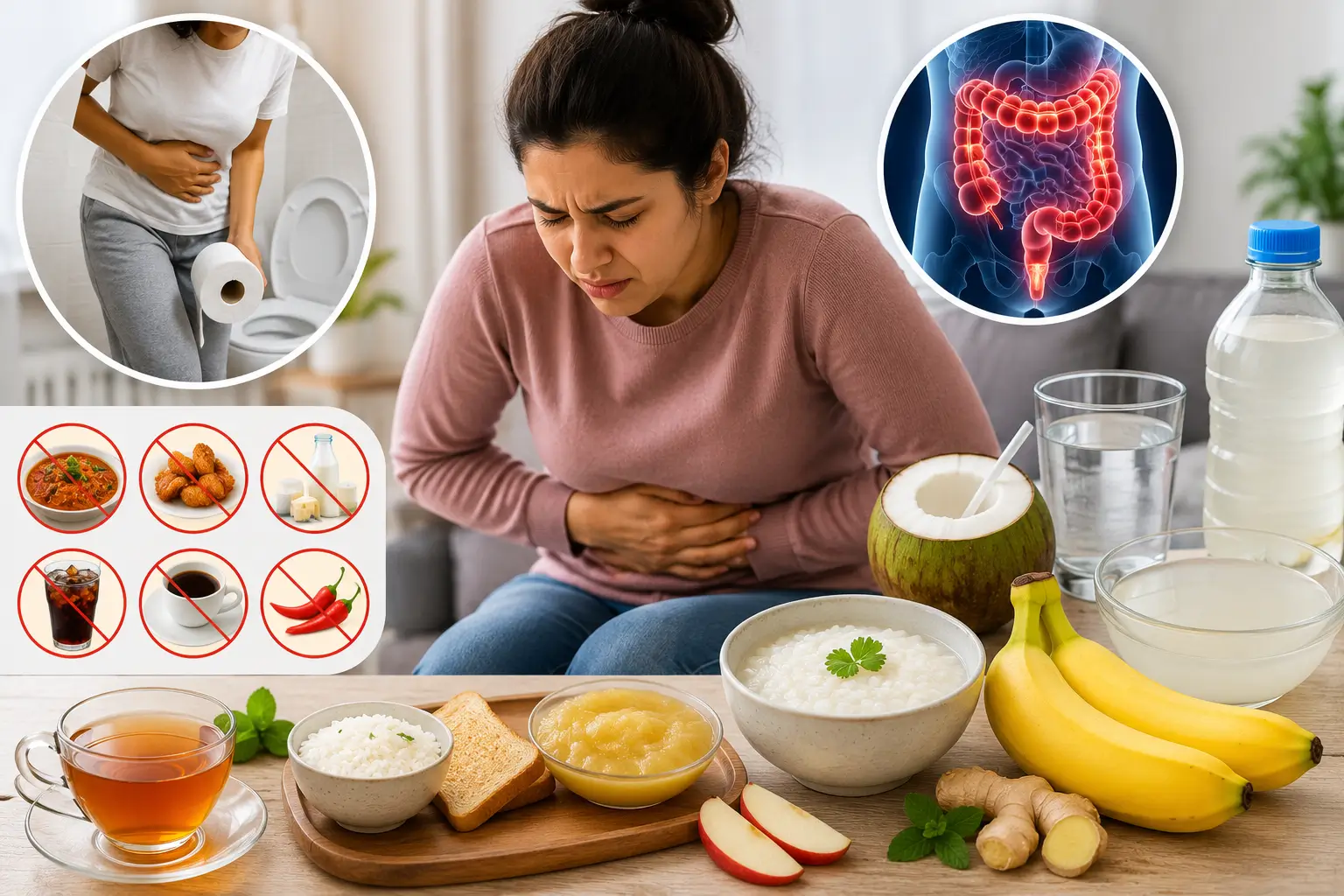
Diarrhea is a very common health problem. It means having loose or watery stools. It can happen suddenly and make you feel weak and tired. Most of the time, diarrhea goes away on its own in a few days. You can feel better faster by eating the right foods and resting.
This article explains why it happens, what the signs are, and how you can take care of yourself at home. It also tells you when you should see a doctor.
Table of Contents
What Is Diarrhea?
Diarrhea occurs when you pass loose, watery stools more frequently than usual. Most cases are temporary and result from infections, contaminated food, or digestive disturbances. Diarrhea is not usually serious in healthy adults, but it can become dangerous if it causes dehydration.
Common Symptoms of Diarrhea
Symptoms of diarrhea include having loose or watery bowel movements many times a day. You might also feel stomach cramps, bloating, or nausea. Sometimes you may feel a sudden, urgent need to use the bathroom, or you might feel weak and tired from not having enough water in your body, which is called dehydration. Depending on the cause of your illness, you may also have a fever or feel like throwing up.
What Causes Diarrhea?
Many things can cause diarrhea. Viruses are a very common cause, such as norovirus or rotavirus. You can catch these through dirty food, water, or being near sick people. Food poisoning is another cause, which happens after eating bad food. It can make you feel sick, cause stomach pain, or give you a fever very quickly. Bacterial infections also cause diarrhea. These often come from eating raw or undercooked food, drinking dirty water, or not washing your hands when preparing food.
Sometimes your stomach gets upset because of what you eat or the medicine you take. Your body may have trouble with certain things, like milk or processed foods. Some medicines, like antibiotics, can also make your stomach feel bad. Also, some people have long-term health problems that make their stomachs hurt or cause diarrhea often.
How to Stop Diarrhea Fast?
The most important way to recover from diarrhea is to stay hydrated. Since your body loses too much water and important minerals, you must replace them. You should drink plenty of water, coconut water, or clear soups. Oral Rehydration Solution, often called ORS, is also very helpful. It is usually best to take small, frequent sips rather than drinking a large amount at once, as this is easier for your stomach to handle.
Use ORS for Better Recovery
ORS is a special drink that helps your body get back the fluids, sodium, and potassium you have lost. It is very useful for children, older adults, and anyone who has diarrhea very often. You can easily buy ORS at pharmacies or find it in hospitals.
Eat Easy to Digest Foods
To help your stomach recover, it is best to eat foods that are easy to digest. You should choose meals that are gentle on your system. Many people follow the “BRAT” diet for this reason. This diet includes bananas, rice, applesauce, and plain toast. These specific foods are helpful because they are soft and bland, which makes them easy for your body to process. Eating them may help make your stools firmer and reduce the frequency of bowel movements while you heal.
Best Foods to Eat During Diarrhea
Choosing the right foods helps your stomach heal. Bananas are a good choice because they provide potassium, which replaces the nutrients your body loses. Plain white rice is also very gentle and helps reduce stomach irritation. You can also eat boiled potatoes to get energy without making your digestion work too hard. In many Indian homes, simple, plain khichdi is a great option because it is easy to prepare. Plain toast or bread is also easy for your stomach to handle. Finally, some people find that eating curd helps because it contains good bacteria that support gut health; however, since some people struggle to digest dairy when they have diarrhea, you should be careful to see how your body reacts to it.
Foods to Avoid During Diarrhea
To help manage and soothe digestive discomfort, it is best to avoid foods that are known to irritate the digestive tract. Here are the specific categories to limit:
- Spicy Foods: These foods often have ingredients that can irritate your stomach. They can cause swelling or a burning feeling inside your digestive system.
- Oily Foods and Fried Snacks: These foods are usually full of bad fats. Your body has a hard time breaking them down. This can make you feel bloated and slow down your digestion.
- Excessive Dairy Products: These can cause gas or make you feel uncomfortable. This is more likely if you cannot digest dairy well or if your stomach is already irritated.
- Alcohol: This can bother the lining of your stomach and upset the healthy balance inside your gut.
- Soft Drinks: Carbonation and high acidity in these beverages can increase pressure, gas, and bloating in the digestive system.
- Very Sugary Foods: Eating too much sugar can upset the good bacteria in your gut. This can cause more stomach irritation or cramping.
Loose Motion Home Remedies
You can help your stomach feel better and heal faster by doing a few simple things at home.
- Coconut Water: This is an excellent source of electrolytes, helping to replenish the fluids and essential minerals that may be lost if you are experiencing diarrhea.
- Ginger Tea: Ginger is well known for helping calm an upset stomach. It works to reduce swelling and can help you feel more comfortable if you have digestive pain.
- Rice Water: Many cultures use the starchy water from boiled rice as a natural remedy. It is very gentle on your stomach and can help you have fewer loose stools.
- Rest: Getting enough rest is the most important part of getting better. When you rest, your body can use its energy to heal and get your stomach working the right way again.
Can Medicines Stop Diarrhea?
You can buy medicine for stomach issues at the store, but you should be careful. You do not always need medicine to get better, and sometimes it can even stop your body from healing the right way.
- Temporary Symptom Relief: Medicine from the store can help you feel better, but it only hides the problem. It does not fix the real reason why you are sick.
- The Role of Diarrhea: In cases of certain infections, your body intentionally uses diarrhea as a natural mechanism to expel harmful organisms or toxins; stopping this process prematurely can trap those pathogens inside your system.
- Professional Guidance: Always talk to a doctor if you feel very sick, if the pain does not go away, or if you notice scary signs like a high fever, blood in your stool, or feeling very dehydrated.
Signs of Dehydration during Loose Motion
When you have diarrhea, the biggest danger is losing too much water. Your body loses liquids and important minerals faster than you can put them back in. It is very important to watch how much fluid you have in your body and look out for these warning signs.
- Dry Mouth: If your mouth feels dry or sticky for a long time, it is often one of the first signs that your body needs more water.
- Excessive Thirst: An intense, insatiable urge to drink indicates that your body is actively trying to correct a fluid deficit.
- Dark Urine: Concentrated, dark-colored urine suggests that your kidneys are conserving water because the body lacks sufficient fluid levels.
- Dizziness and Weakness: As fluid volume drops, your blood pressure may decrease, leading to lightheadedness, vertigo, or a generalised feeling of physical fatigue.
- Reduced Urination: If you find yourself urinating much less than usual, or if you have not gone to the bathroom for several hours, it is a clear sign that your body is significantly dehydrated.
When Should You See a Doctor for Diarrhea?
Most stomach problems get better on their own after a little while. However, sometimes they can become serious, and you need to see a doctor to stay safe. You should call a doctor if you have any of these problems:
- Prolonged Duration: Diarrhea that persists for more than 2–3 days indicates that the issue may not be a simple, self-limiting case and requires professional evaluation.
- Signs of Severe Dehydration: If you feel confused, cannot keep any liquids down, or feel extremely tired and weak, you need to get help from a doctor right away. These are signs that your body has lost too much fluid and needs medical care immediately.
- Presence of Blood: If you ever see blood in your stool, you must see a doctor right away. This is a very important warning sign. A doctor needs to check you to make sure no serious infection or other health problem is causing it.
- High Fever: If you have a high fever that does not go away, it might mean you have a more serious infection inside your body. You may need special medicine from a doctor that you cannot get at home to help you recover.
- Severe Abdominal Pain: If you have very bad, strong pain in your belly that makes it hard to do anything, this is not normal for a regular stomachache. You should see a doctor quickly to make sure it is not something serious, like an issue with your appendix or a blockage in your bowels.
- Worsening Symptoms: If your condition shows a downward trend rather than showing signs of improvement, it is time to consult a healthcare provider to adjust your management plan.
If you notice any of these warning signs, it is important to see a doctor right away. Getting help quickly is the best way to make sure you get better safely and avoid any long-term health problems.
Common Symptoms In Children During Diarrhea
Children have smaller bodies, so they can get dehydrated very quickly. If a child is having stomach trouble, you need to watch them very closely to make sure they stay safe.
- Fluid Intake: Watch closely how much the child drinks and how often they do it. Instead of giving them a big drink all at once, which might make them throw up, give them small sips of water, special rehydration drinks, or clear broth very often.
- Urination: Write down how many times the child needs a diaper change or uses the bathroom. If you notice far fewer wet diapers or your child is not peeing very much, this is one of the main signs that their body does not have enough water.
- Activity Level: Observe any changes in behaviour. An unusual decrease in energy, excessive lethargy, or extreme fussiness can indicate that the child’s body is struggling to maintain balance.
- Signs of Dehydration: Look for physical signs that the child is losing too much fluid. Check if their mouth is dry or sticky. Notice if they have no tears when they cry, or if their eyes or the soft spot on top of a baby’s head look sunken or lower than normal.
How Long Does Diarrhea Usually Last?
Knowing how long it usually takes to get better helps you know what to expect. Most cases of diarrhea go away on their own after a short time by following this pattern:
- Standard Recovery Window: Most of the time, diarrhea gets better on its own in 1 to 3 days. Your body just needs that time to get rid of whatever was making you sick.
- Variable Infection Lengths: While most cases resolve quickly, certain types of infections may take slightly longer to run their course, requiring more patience and continued focus on hydration and rest.
- Persistent Diarrhea: If your symptoms last longer than two weeks, it is no longer just a short-term problem. At this point, you must see a doctor. They need to figure out why this is happening and if you need special tests or medicine to get better.
Knowing how long these illnesses usually last helps you decide if you can wait it out or if it is time to call your doctor for help.
How to Prevent Diarrhea?
It is much easier to stop a stomach bug from happening than it is to treat one. If you make healthy habits part of your everyday life, you are much less likely to get sick.
- Wash Hands Regularly: Washing your hands with soap and water for at least 20 seconds is the best way to stop germs from spreading. Make sure to do this every time before you eat and after you use the bathroom.
- Drink Safe Water: Always drink water that is clean, boiled, or comes from a sealed bottle. This helps you avoid getting sick from germs that can be found in unsafe water.
- Practice Food Safety: Ensure that all food is cooked to an appropriate internal temperature, stored in a refrigerator or at safe temperatures to prevent bacterial growth, and disposed of immediately if there are any signs of spoilage.
- Wash Fruits and Vegetables: Always wash fruits and vegetables well under running water. This cleans off dirt and germs that could make your stomach hurt.
- Be Careful While Traveling: When you travel to a new place, your stomach might not be used to the local germs, which can cause traveler’s diarrhea. To stay healthy, focus on eating food that is freshly cooked and still hot. Avoid using ice cubes if you are not sure where the water came from, and be very careful with raw foods, such as salads or fruit that you cannot peel yourself.
These simple habits help protect your digestive system while you are away from home.
Common Myths About Diarrhea
It is important to know the truth about digestive health so you can get better safely. Here are the facts about three common myths:
Myth 1: Stop Eating Completely
The Reality: That is not true. Even if your stomach feels sensitive, not eating at all can actually make it take longer to get better. It is important to keep drinking fluids and to start eating simple, light foods like bananas, rice, applesauce, or toast to give your body the energy it needs to heal.
Myth 2: Antibiotics Cure All Diarrhea
The Reality: Antibiotics only work against bacteria. Because many cases of diarrhea are caused by viruses, food, or medicine, antibiotics often do not help. In fact, they can make things worse by killing the good bacteria in your gut. Always talk to a doctor before using them, and never try to get them on your own.
Myth 3: Diarrhea Is Always Serious
The Reality: Most of the time, diarrhea is just a short-term problem that goes away in a few days if you get enough rest and drink plenty of fluids. You should only be concerned if you have serious warning signs, such as a high fever, blood in your stool, or signs that your body is severely dehydrated.
Understanding these facts helps you stay calm and focused on the best ways to get better, rather than worrying unnecessarily.
Quick Recovery Checklist
When you have diarrhea, the main goal is to help your body recover while avoiding anything that might make your stomach feel worse. Keep these steps in mind to help manage your symptoms:
- Prioritise hydration: To remain hydrated, drink plenty of liquids like water, broth, or electrolyte drinks to replace what your body is losing.
- Eat bland foods: Eat simple, gentle foods that are easy on your stomach, like crackers, plain rice, bananas, or toast.
- Rest your body: Give your body time to rest and heal by avoiding any hard or tiring physical activity.
- Avoid irritants: Avoid spicy, fatty, or high-fiber foods, as well as caffeine and alcohol, because these can easily irritate your stomach.
- Monitor your progress: Keep an eye out for warning signs like a high fever or signs that your body is not getting enough fluids. If you do not feel better after a couple of days, be sure to talk to a doctor.
Conclusion
Diarrhea is usually a short-term problem, but it can get uncomfortable quickly and lead to dehydration if you do not take care of yourself. The best thing to do is to keep drinking plenty of fluids, eat simple foods that are easy on your stomach, avoid anything that might make it worse, and get plenty of rest.
Read More: Viral Fever: Symptoms, Causes, and How to Recover Safely