

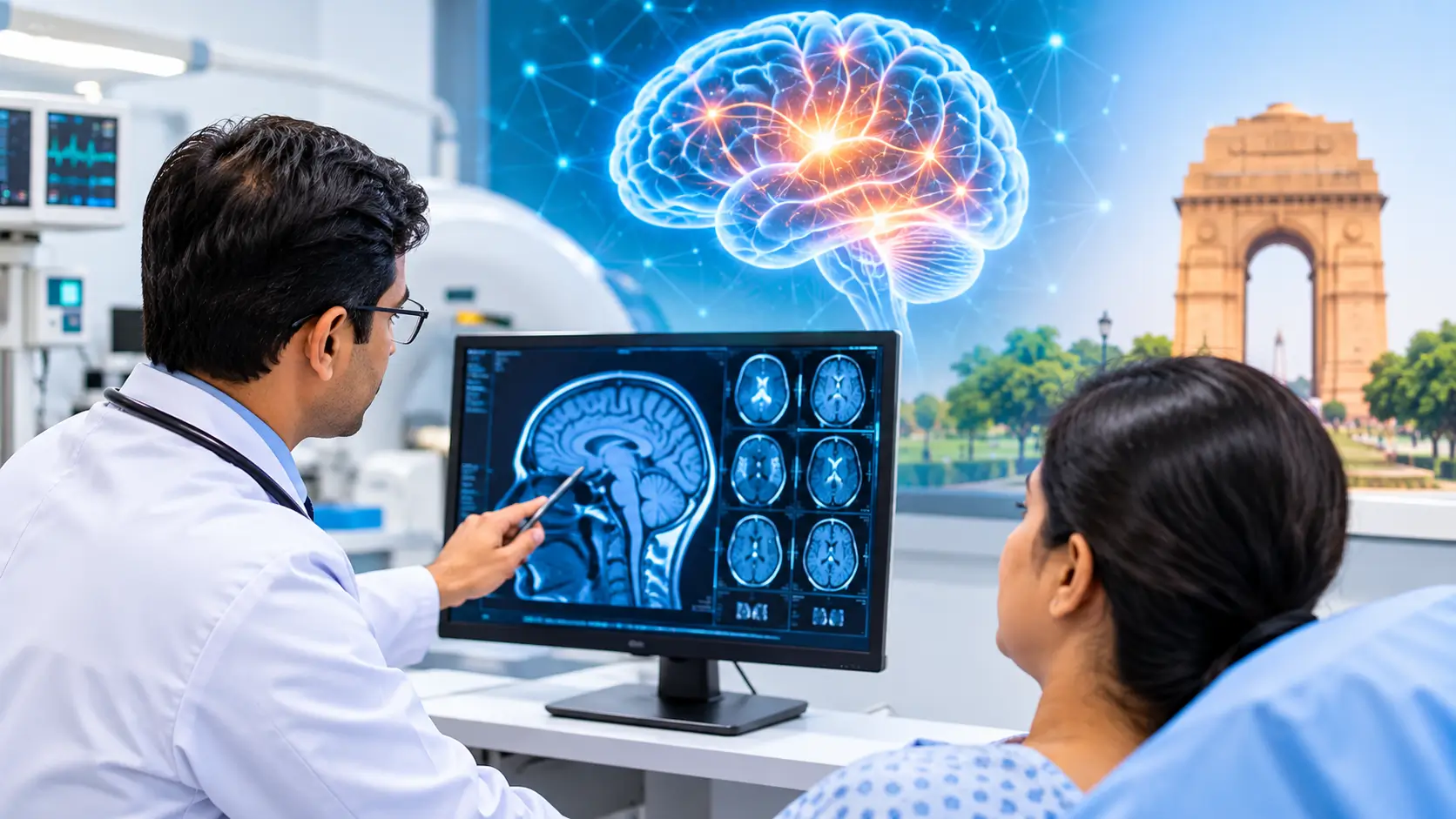
Almost everything we do is controlled by the human brain. It facilitates thinking, walking, speaking, remembering, and reacting to our surroundings. Even routine daily tasks might become challenging when anything affects the brain, spinal cord, or nerves. Neurological conditions include stroke, epilepsy, Parkinson’s disease, migraine, nerve damage, and several other disorders. Many of these conditions need long-term care. Some also require urgent treatment.
There are a number of hospitals in Delhi that offer advanced diagnostic tools and specialised neurological services. These services help doctors figure out what’s wrong with a patient and come up with the best way to treat them. There are many ways that technology continues to help neurological treatment, from high-resolution brain scans to stroke care and recovery.
What Is Neurological Care?
Neurological care focuses on conditions that affect the brain, spinal cord, and nerves. A neurosurgeon performs surgery when a patient needs an operation involving the brain, spine, or nervous system. For example, a person who experiences repeated seizures may need a neurological assessment. Someone who develops sudden weakness on one side of the body may need emergency stroke care.
Doctors select treatment according to the symptoms, test results, medical history, and overall health of the patient. Technology helps them make better-informed decisions, but the doctor’s clinical judgement remains essential.
1. Advanced Brain Imaging for Better Diagnosis
New imaging tests are an important step forward in neurological care. Without just looking at the body’s symptoms, these tests help doctors look at the brain and other parts of the nervous system.
a) MRI and CT Scans
An MRI scan creates finely detailed images of the brain and spinal cord using radio waves and magnetic fields. It can be used by medical professionals to investigate conditions such as brain tumours, inflammation, and some seizure causes.
X-rays are used in a CT scan to produce images of the body. Because it enables them to promptly screen for brain bleeding and other critical issues, doctors frequently utilise it in emergency situations. Neither test suits every situation. The doctor chooses the right scan based on the symptoms and the medical question that needs an answer.
How These Tests Help Patients
Imagine that a person has persistent headaches along with vision changes. A doctor may recommend an examination and suitable tests to find the cause. The results can help the medical team decide whether the patient needs medication, further investigation, or specialist treatment.
Delhi hospitals offer different imaging and diagnostic services. Patients should confirm which tests a hospital provides and whether they need an appointment or referral.
2. Faster Stroke Diagnosis and Treatment
Stroke is a medical emergency. It occurs when a part of the brain loses its blood supply or when a blood vessel in the brain bleeds. Quick medical attention can make a major difference. Delayed treatment may increase the risk of lasting disability or death.
Recognising Stroke Symptoms
Keep in mind the following common warning signs:
- Face: One side of the face may droop.
- Arms: The person may struggle to raise one arm or experience sudden weakness.
- Speech: Their speech may become unclear or difficult to understand.
- Time: Seek emergency medical help immediately.
A person may also experience sudden vision problems, loss of balance, confusion, or a severe unexplained headache. Do not wait for symptoms to disappear. Call emergency services or get the person to an emergency department without delay.
How Technology Supports Stroke Care
Brain imaging helps doctors figure out what kind of stroke someone is having and how to treat them. For some people who have had an ischaemic stroke, doctors may think about using medicines that break up clots or a treatment called mechanical thrombectomy, which removes a clot from a blood vessel.
These treatments have strict eligibility requirements and time limits. A specialist team must assess the patient before choosing an option. Delhi has hospitals with dedicated stroke services. For example, the official website of V.M.M.C. and Safdarjung Hospital describes stroke beds and intensive care facilities within its neurology department. Patients should check current services and emergency arrangements directly with the hospital.
3. Better Testing for Epilepsy and Seizures
Epilepsy causes a tendency to experience repeated seizures. A seizure can affect movement, awareness, behaviour, or sensations. Not every seizure looks like a person falling to the ground and shaking. Doctors study the patient’s symptoms and medical history before making a diagnosis. They may also recommend an electroencephalogram, commonly called an EEG.
What Is an EEG?
An EEG records electrical activity in the brain through small sensors attached to the scalp. It can help doctors identify patterns linked to seizures. Some patients need a longer recording. Hospitals may use video-EEG monitoring to record brain activity alongside the patient’s behaviour. This can help specialists assess certain difficult-to-diagnose seizures and plan treatment.
AIIMS lists epilepsy among the conditions managed by its neurology department. Its specialist services also cover several other brain and nerve disorders. Treatment may include medication, lifestyle advice, or further specialist assessment. Some people with difficult-to-control epilepsy may qualify for surgery or other advanced treatments after detailed evaluation.
4. New Approaches to Parkinson’s Disease and Movement Disorders
Parkinson’s disease affects movement. A person may develop shaking, stiffness, slow movement, or balance problems. Medication remains an important part of treatment. Doctors may also recommend physiotherapy and other support to help patients maintain daily activities.
Deep Brain Stimulation
DBS, or deep brain stimulation, is a specialised treatment for some people with movement disorders, such as some Parkinson’s disease patients. Doctors connect electrodes to a device that sends electrical signals and put them in certain parts of the brain.
DBS does not get rid of Parkinson’s. But for some people, it may help with some movement problems. Before recommending it, doctors have to look at the patient’s symptoms, general health, past treatments, and how likely it is to help.
Not every hospital offers DBS, and not every patient qualifies. Ask the treating specialist about the expected benefits, possible risks, follow-up visits, and long-term costs.
5. Robotic and Image-Guided Neurosurgery
Neurosurgery often involves delicate structures. Surgeons must plan carefully when treating brain tumours, spinal conditions, and certain blood vessel problems. Image-guided surgery uses scans and computer-based systems to help surgeons understand the location of important structures. Depending on the procedure, these systems can help the team plan an approach and guide instruments more precisely.
Some centres also use specialised robotic systems for selected surgical tasks. However, robotic technology does not replace the surgeon’s training or decision-making. Patients should ask which technique suits their condition and why. They should also discuss the surgeon’s experience, possible complications, recovery time, and alternative treatments.
A hospital’s possession of advanced equipment does not automatically make it the best choice for every patient. The right expertise and suitable treatment planning matter just as much.
6. Neurological Rehabilitation After Injury or Illness
Treatment does not always end when a patient leaves the hospital. People who experience a stroke, head injury, or certain neurological disorders may need ongoing rehabilitation. Rehabilitation helps patients improve movement, communication, balance, and everyday skills. The exact plan depends on the person’s needs and recovery goals.
7. Personalised Treatment and Digital Health Support
Doctors increasingly use a patient’s medical history, examination findings, and test results together to plan care. This approach helps them consider individual needs instead of relying on one standard treatment for everyone.
Digital health tools can also help with communication and follow-up visits. For the right follow-up care, patients may use online appointment systems, electronic reports, or teleconsultations, depending on the hospital. People who live far away from Delhi can save time by using these services. A remote consultation, on the other hand, can’t take the place of an emergency check or all physical tests. When a patient needs to see the doctor in person, they should do what the doctor says.
New technologies, including computer-assisted analysis, may also support research and some clinical workflows. Their usefulness depends on the task and the evidence behind each application. Patients should ask their doctor how a particular technology affects their diagnosis or treatment.
8. How to Choose a Neurology Hospital in Delhi
It takes more than comparing ads or tools to find the right hospital. The patient’s health, urgency, budget, and treatment needs will determine the best choice.
Consider these points before making a decision.
- Check the relevant speciality. Look for a neurologist or neurosurgeon who regularly treats the condition involved. A movement disorder, complex epilepsy, and brain tumour may require different specialists.
- Confirm diagnostic and emergency facilities. Patients with serious symptoms may need imaging, intensive care, or help from a specialist right away. Get in touch with the hospital to find out what services it can offer.
- Understand the full cost. Make sure you know how much it costs for appointments, tests, drugs, hospital stays, rehab, and follow-up visits. Before planning treatment, check to see if your insurance covers it and if there are any approval requirements.
- Ask about the treatment plan. Ask for a clear explanation of the diagnosis, the treatment options, any risks, and how the person is expected to recover. One more thing you can do is ask if getting another expert’s opinion would help.
Conclusion
Innovative neurological care is assisting medical professionals in the investigation of brain and nerve diseases, the management of emergencies, the planning of specific procedures, and the promotion of recovery. However, no single technology can solve every neurological problem. The right treatment depends on the patient’s condition and a careful medical assessment. If you or a family member has neurological symptoms, consult a qualified doctor instead of trying to diagnose the problem at home. Seek emergency care for sudden stroke symptoms, a first seizure with ongoing danger, or any other severe and sudden neurological change.