

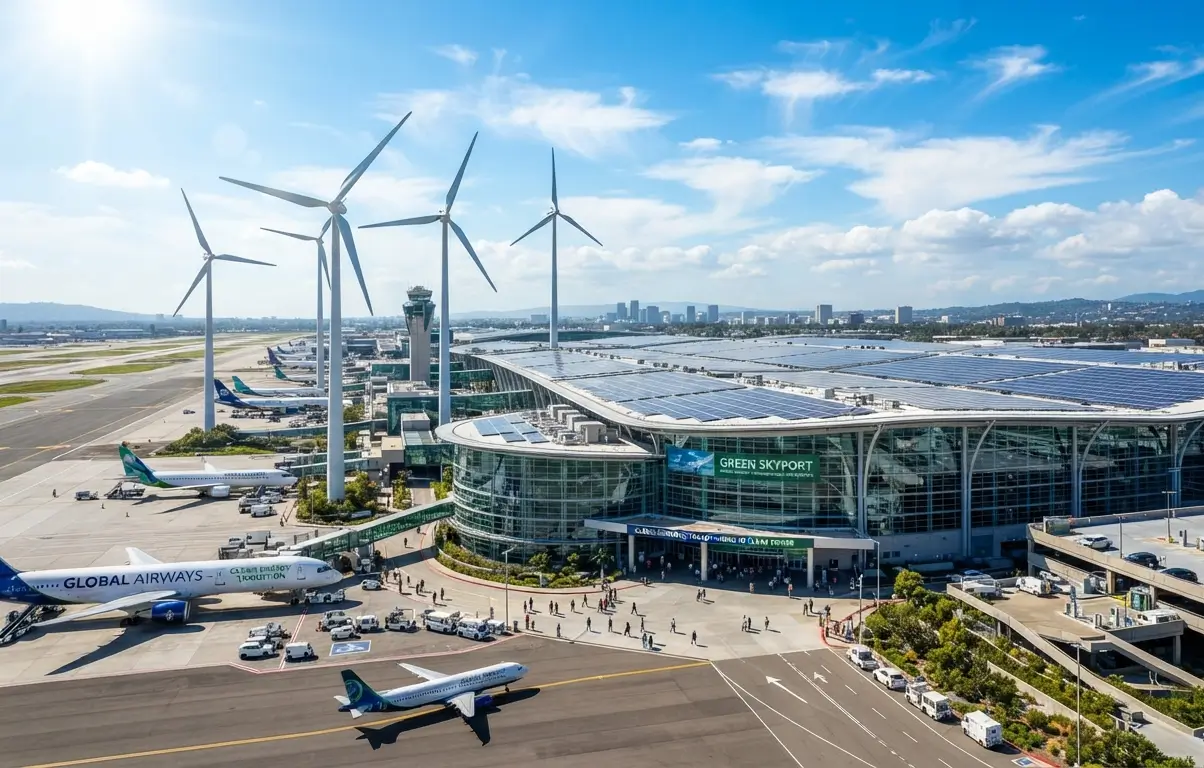
Airports use a large amount of electricity every day to keep everything running. Terminals need constant lighting and air conditioning, baggage systems run all day, and security equipment requires steady power. Facilities like ground vehicles, shops, restaurants, and offices also depend heavily on electricity. Because of this large energy demand, airports around the world are looking for cleaner ways to produce and buy electricity.
The shift is already happening. Airports are already installing solar panels on rooftops and suitable land. Some are buying electricity from wind farms. Others are using electric ground vehicles and providing electricity to aircraft parked at gates. Airports are also improving building efficiency so they need less power in the first place.
The important point is that clean power at airports is not only about installing solar panels. It involves changing the way an airport produces, buys, stores, and uses energy. The ICAO has also developed guidance and case studies covering renewable energy, smart buildings, green mobility, and other environmental measures at airports.
What Does Clean Power Mean for an Airport?
Clean power generally means electricity produced with low or no direct greenhouse gas emissions during generation. Solar and wind power are common examples. The airport can also reduce energy use and replace fossil-fuel-powered equipment with electric alternatives.
For example, a traditional diesel-powered ground vehicle can be replaced with an electric vehicle. An aircraft parked at a gate can use ground electricity instead of running its auxiliary power unit for certain needs. Airport buildings can use efficient lighting, cooling, and heating systems.
Why Are Airports Moving Towards Renewable Energy?
Airports operate for long hours, and many operate around the clock. Their terminals and support systems therefore require a steady supply of electricity. At the same time, airports face growing pressure to cut their own carbon emissions. To help with this, the International Civil Aviation Organization (ICAO) works on environmental guidelines that promote renewable energy and other steps airports can take to reduce their environmental impact.
Clean electricity can help airports reduce emissions linked to their buildings and ground operations. There can also be a practical business reason. Energy efficiency can reduce electricity demand while on-site renewable generation can provide another source of power. However, airports still need reliable electricity because critical systems cannot simply stop when renewable generation falls. That is why most airports need a combination of renewable generation, energy efficiency, grid electricity, and other supporting systems.
Solar Power Is Becoming a Major Part of Airport Energy Plans
Solar power suits many airport environments because airports often have large rooftops, parking areas, and other spaces that can support solar installations. However, airports cannot install solar panels anywhere they want. Glare and reflection can create aviation safety concerns. Schiphol says it works with air traffic control when selecting locations for solar panels because glare can create problems for pilots. This shows why airport solar projects require more planning than a normal rooftop solar installation.
Schiphol Shows How Solar Can Work Alongside Other Renewable Sources
Amsterdam Schiphol has installed solar panels on several airport buildings. Its large solar installation on the P3 long-stay car park uses around 6,000 panels and supplies electricity for the parking facility. Schiphol also uses wind power and thermal energy as part of its wider sustainability programme.
The airport group has used Dutch wind power for its airports in the Netherlands since 2018. The lesson is simple: airports do not have to depend on one clean energy source. They can combine different sources based on their location and energy needs.
Cochin Airport Shows What Solar Power Can Achieve
India has an important example in Cochin International Airport. Cochin International Airport became the world’s first fully solar-powered airport in 2015. According to CIAL, the airport’s green energy projects now have a combined installed capacity of 50 MWp and include solar installations at and around the airport as well as a hydroelectric project.
CIAL says its solar plants generate around 200,000 units of electricity per day while the airport’s daily consumption is around 160,000 units. The airport describes itself as power positive based on this generation and consumption balance.
This example is particularly useful because it shows that a large airport can use renewable energy as part of its main power strategy rather than treating sustainability as a small side project.
Delhi Airport Is Combining Solar and Renewable Electricity
Delhi Airport provides another example from India. Delhi International Airport Limited says it has installed a 7.84 MW solar power plant in the airport’s airside area. It also sources additional renewable electricity through open access arrangements. Delhi Airport currently states that its operations are powered by 100% renewable electricity and that its electricity-related emissions have been reduced to zero.
The airport is also using electric vehicles and developing charging infrastructure. It has introduced other measures such as fixed electrical ground power and pre-conditioned air systems at selected aerobridges. These systems can reduce the need for aircraft to use their own auxiliary power units while parked. This is an important distinction. Clean airport power is not limited to powering the terminal. It can also support cleaner ground operations.
Wind Power Can Supply Airport Electricity
Solar power gets a lot of attention, but wind power also plays an important role. An airport does not necessarily need to build a wind farm inside the airport boundary. It can purchase renewable electricity from suitable external projects through long-term arrangements or other electricity procurement systems.
Royal Schiphol Group says its airports in the Netherlands have operated using Dutch wind power since 2018. This approach can be useful when an airport does not have enough suitable land for large renewable energy projects. An airport can use renewable electricity without producing all of it on-site.
Airports Are Electrifying Ground Operations
Clean power becomes more useful when airports replace fuel-powered equipment with electric alternatives. Airports use many vehicles and machines on the ground. These include baggage tractors, passenger buses, maintenance vehicles, catering vehicles, and other equipment.
Schiphol is expanding the use of electric vehicles and electric transportation between gates and aircraft. It also uses electric ground power equipment in some areas.
Aircraft Can Also Use Electricity While Parked
An aircraft normally needs electricity and climate control even when it is sitting at the airport. Instead of relying on its own auxiliary systems or diesel-powered equipment in every situation, airports can provide electricity and conditioned air from ground systems.
Schiphol has installed fixed electrical ground power and pre-conditioned air systems at a number of aircraft stands. Delhi Airport has also introduced bridge-mounted equipment that includes fixed electrical ground power and pre-conditioned air at selected aerobridges. These systems help airports reduce emissions from ground operations while aircraft remain parked.
Changi Airport Is Expanding Rooftop Solar
Singapore’s Changi Airport is another example of large-scale solar planning. Changi Airport Group partnered with Keppel to develop a rooftop solar photovoltaic system across terminal buildings. The project has a planned capacity of 38 MWp and was designed around airport-specific requirements, including aviation safety and fire safety.
This highlights another important issue. Airports cannot simply copy a normal commercial rooftop solar project. They must consider aircraft operations, airport safety, fire protection, and other technical requirements.
Energy Efficiency Is Just as Important as Renewable Energy
Generating clean electricity is only one side of the solution. Airports can also reduce the amount of electricity they need. Efficient lighting, better cooling systems, improved building design, and smarter energy management can reduce demand.
This matters because every unit of electricity that an airport avoids consuming reduces the amount of energy it needs to generate or purchase. Delhi Airport, for example, uses green building standards and energy management systems as part of its wider environmental programme.
What Challenges Do Airports Face?
The transition to clean power is not always easy. Airports need reliable electricity 24 hours a day. Solar generation changes with daylight and weather. Wind generation also varies. Airports therefore need strong electricity networks and careful energy planning.
Space is another challenge. Airports have large areas, but not every location is suitable for solar panels because of aviation safety requirements. Schiphol specifically notes the need to consider solar glare when selecting locations.
Electric vehicles also increase electricity demand. Schiphol says the energy transition is increasing demand for electricity and that its airport energy networks need expansion to support this change. So airports must plan renewable generation and electricity infrastructure together.
What Does This Mean for Indian Airports?
India has strong potential for airport clean-energy projects because many parts of the country receive good sunlight. The examples of Cochin and Delhi show two different approaches. Cochin has developed a large renewable generation system, while Delhi combines on-site solar with renewable electricity sourced through other arrangements.
Other Indian airports can learn from these models while adapting them to their own location, airport design, electricity demand and safety requirements. A traveller may simply see a normal terminal. Behind the scenes, however, the electricity used for lighting, cooling, baggage handling, charging and other services can increasingly come from cleaner sources.
Conclusion
Airports around the world are slowly changing from large electricity consumers into more energy-efficient and renewable-powered infrastructure hubs. Solar power, wind electricity, energy-efficient buildings, electric ground vehicles, and aircraft ground-power systems are all becoming parts of this transition. Examples such as Cochin Airport, Delhi Airport, Schiphol, Heathrow, and Changi show that airports are using different approaches based on their local conditions and operational needs.
The bigger change is not about one technology. It is about connecting renewable electricity with efficient buildings, cleaner ground transport, and better energy management.
The experience of existing airports can provide useful lessons as more airports look at renewable energy and cleaner operations in India. The airport of the future will still need to be reliable and safe, but its energy system can become much cleaner and more efficient.