

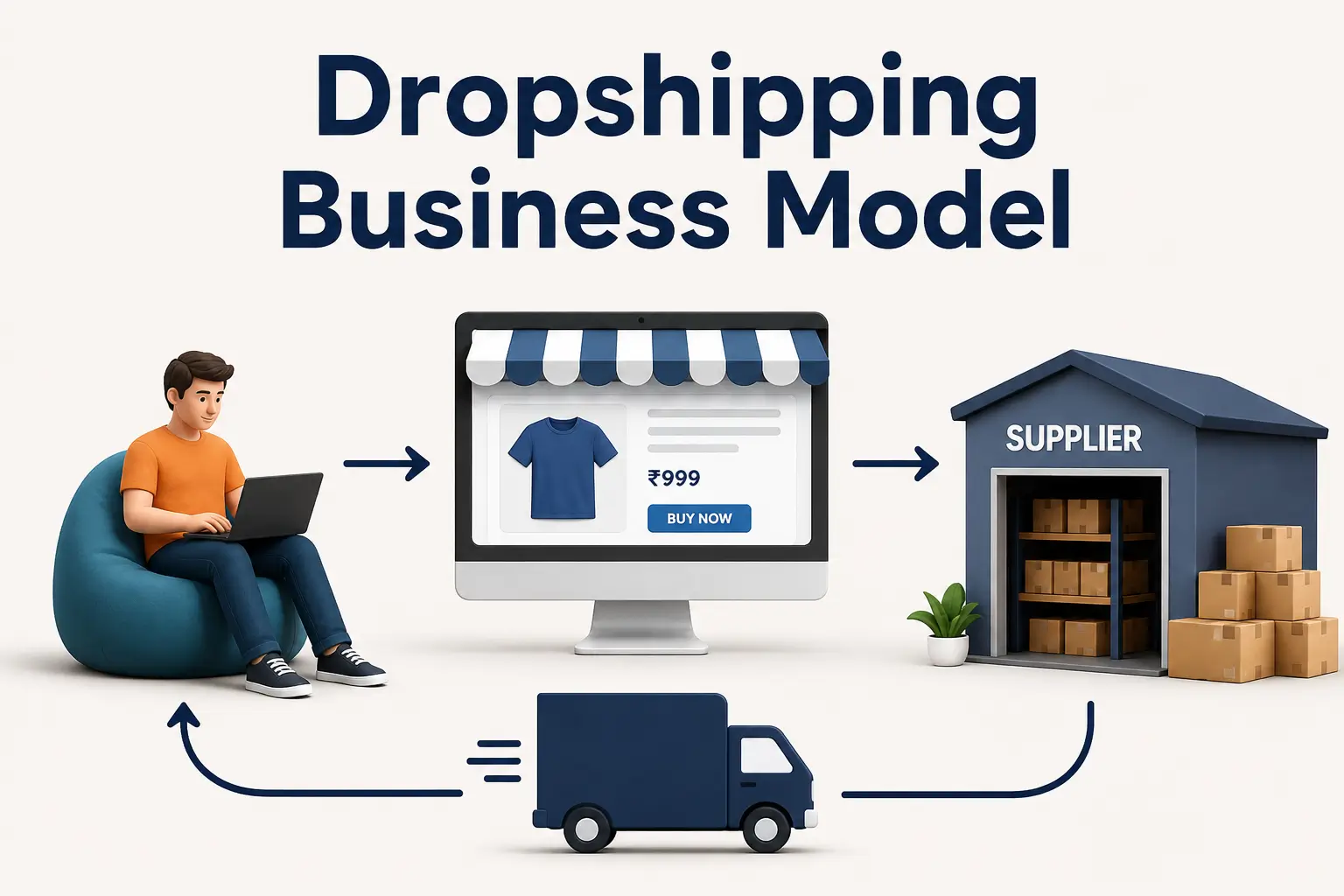
Starting a business often sounds expensive. You may think you need a shop, warehouse, staff, and a large amount of stock before you can start selling products. A Dropshipping Business works differently. In this business model, you sell items to customers without keeping any stock in a warehouse. When any customer places an order on your site, you buy the item from a supplier, and the supplier ships the order straight to the customer. This simple idea has made dropshipping popular among people who want to explore online business with lower upfront inventory costs.
But dropshipping is not a shortcut to easy money. You still need to find products, attract customers, handle orders, manage customer questions, and deal with returns or delivery problems. For someone in India, it is important to understand the complete business model before spending money on a website, advertising or products.
What Is a Dropshipping Business?
A dropshipping business is an online selling model where the seller does not normally keep the products in stock.
Instead, three main parties take part in the transaction:
- Customer – The person who buys the product.
- Dropshipping seller – The person who markets and sells the product.
- Supplier – The person or company that stores and ships the product.
How Does Dropshipping Work?
Step 1: Choose Products: You first decide what products you want to sell. You may choose products for home improvement, fashion, accessories, fitness, pet care, stationery, or other categories. The important thing is to find products that people actually want to buy.
Step 2: Find a Supplier: Next, you find a supplier who can provide the products and ship orders to your customers. Before working with a supplier, check product quality, shipping time, packaging, return policies, and communication. Don’t choose a supplier only because the product price looks cheap.
Step 3: Create Your Online Store: You need a place for customers to view your products and place orders. You can build your own online store or use existing e-commerce platforms. Your store should clearly display product details, prices, shipping info, payment methods, and return policies.
Step 4: Promote Your Products: Customers won’t automatically find your store after you launch it. You need to bring visitors through methods such as search engine optimisation, social media content, paid advertising, influencer marketing, or other suitable channels. Marketing often becomes one of the highest costs in a dropshipping business.
Step 5: Receive Customer Orders: When someone buys from your store, you receive the order details and payment according to your payment setup. You then send the order information to your supplier.
Step 6: Supplier Ships the Product: The supplier prepares the product and ships it to your customer. You remain responsible for keeping the customer informed and helping them if a problem occurs.
Why Are People Interested in Dropshipping?
The biggest attraction comes from the inventory model. A traditional retailer may purchase 500 products and store them before selling them. That requires money and storage space. With dropshipping, you generally don’t purchase the product until you receive an order.
This can reduce the amount of money you need to put into inventory at the beginning. However, lower inventory requirements don’t mean that dropshipping needs no investment. You may still spend money on a website, domain, marketing, product samples, payment processing, business registration, and other expenses.
Benefits of a Dropshipping Business
1. Lower Inventory Investment
You don’t normally need to purchase large quantities of stock in advance. This can make the model attractive to beginners who don’t want to invest heavily in inventory. It also reduces the risk of being stuck with hundreds of unsold products.
2. No Large Warehouse
Since the supplier stores the products, you don’t necessarily need your own warehouse. You can manage many parts of the business from a small office or home, depending on the nature of your operation.
3. Easy Product Testing
You don’t need to buy products in advance to try them out. If an item doesn’t sell, you can just stop advertising it and try something else. This makes it easy for beginners to learn what people want to buy.
4. Location Flexibility
Much of the work happens online. You can manage your store, marketing, and customer communication from different locations as long as you have reliable internet access and a suitable business setup.
5. Wide Product Selection
You can potentially offer many products without physically storing all of them. However, don’t add hundreds of random products simply because your supplier offers them. A focused store often makes it easier to build trust and communicate with a specific audience.
Challenges of Dropshipping
Dropshipping also has some serious challenges. Understanding them before starting can save you money and frustration.
- Lower Control Over Product Quality: You don’t physically handle most products before shipping them. If the supplier sends a poor-quality item, the customer will usually blame your store. This is why ordering samples before selling a product can be a smart step.
- Shipping Problems: A supplier may delay an order, use poor packaging, or provide limited tracking information. Customers don’t care which supplier caused the problem. They expect the seller to solve it. Therefore, supplier reliability matters greatly.
- Returns and Refunds: Customers may return products for several reasons. You need a clear return and refund policy before you start selling. You should also understand how your supplier handles returned products.
- High Competition: Dropshipping has a relatively easy entry barrier. That means many sellers may promote the same or similar products. If your only advantage is a low price, another seller may easily compete with you.
You need to build a better shopping experience through product selection, useful information, branding, service, or other genuine advantages.
How to Choose Products for Dropshipping
Do not select products only because someone claims they are “viral.” Instead, consider practical factors such as demand, competition, selling price, product size, shipping difficulty, and potential customer problems.
- Solve a Real Problem: Products that solve simple problems can be easier to explain to customers. For example, a useful home organiser may appeal to people who struggle with limited storage space. When a product solves a clear problem, your marketing message becomes easier to create.
- Avoid Very Fragile Products: Glass items and highly fragile products can create shipping problems. Damage during delivery can lead to refunds, replacements, and unhappy customers. Beginners may find simple, durable products easier to manage.
- Check Product Size and Weight: Big or heavy items cost more to ship. Smaller products are usually cheaper and easier to send. Always figure out your total shipping and product costs before deciding on a selling price.
How to Find a Good Dropshipping Supplier
Your supplier becomes an important part of your business. Before finalising one, ask several questions.
1. Check Product Quality
Order samples and inspect the product yourself. Look at material quality, finishing, packaging, and actual appearance. Don’t depend entirely on supplier photographs.
2. Check Delivery Time
Ask how long the supplier normally takes to process an order. Then understand the expected delivery time to different customer locations. Avoid making delivery promises that your supplier cannot consistently meet.
3. Check Communication
A supplier should respond when you have an order problem. If they take several days to answer simple questions before you start working together, that can become a bigger problem later.
4. Understand Return Policies
Ask what happens when a customer receives a damaged, incorrect, or defective product. Get the terms clearly before accepting customer orders.
How Much Does It Cost to Start a Dropshipping Business?
There is no single fixed investment amount. Your cost depends on how you build and market the business. Possible expenses include:
| Expense | Why You May Need It |
| Domain | Website address |
| Online store | Product display and order management |
| Product samples | Quality testing |
| Marketing | Bringing customers to your store |
| Payment processing | Accepting online payments |
| Business setup | Legal and tax requirements |
| Packaging | Depends on your supplier arrangement |
| Customer support | Handling customer questions |
| Software | Store and order management |
The biggest mistake beginners make involves assuming that “no inventory” means “no investment.” You can reduce inventory costs, but you still need to invest time and money in building the business.
Is Dropshipping Profitable in India?
A dropshipping business can make money, but profitability depends on several factors. Your product selection, supplier quality, customer acquisition cost, selling price, repeat orders, and return rate can all affect your results. Some products may generate good sales but little profit because advertising costs are high. Another product may have fewer orders but better margins. The goal should not simply be to get more orders.
Dropshipping vs Traditional Retail
| Factor | Dropshipping | Traditional Retail |
| Inventory | Supplier usually holds stock | Seller holds stock |
| Warehouse | Usually not required | Often required |
| Upfront stock investment | Lower | Higher |
| Product control | Lower | Higher |
| Packaging control | Depends on supplier | Higher |
| Shipping control | Limited | Greater |
| Product testing | Easier | More expensive |
| Business flexibility | High | Moderate |
| Customer experience control | Lower | Higher |
Neither model is automatically better. Dropshipping reduces some inventory-related challenges, while traditional retail gives you more control over the product and customer experience.
Dropshipping Mistakes Beginners Make
1. Choosing Products Only Because They Look Popular
A product may appear popular on social media but still fail to generate profitable sales. Study customer demand and competition before investing in advertising.
2. Using Poor Product Photos
Customers cannot touch the product online. Good photographs and clear descriptions help them understand what they are buying. Use accurate product information and avoid misleading claims.
3. Ignoring Customer Support
A customer may ask about delivery, returns, or product usage. Quick and polite responses can help build trust. Good customer service also helps you identify repeated problems with your products.
4. Depending Completely on One Supplier
If your supplier suddenly runs out of stock, your store may stop receiving orders. As your business grows, consider developing reliable backup suppliers where practical.
5. Spending Too Much on Advertising Too Early
Beginners sometimes spend a large amount on advertisements before knowing whether customers actually want the product.
How to Start a Dropshipping Business in India
You can follow a simple process.
- Choose a Niche: Pick a category rather than trying to sell everything. For example, you could focus on home organisation products instead of selling unrelated products across ten categories.
- Research Customers: Understand who might buy your products. Think about their needs, budget, and common problems.
- Find Reliable Suppliers: Compare the product quality, prices, delivery times, and return policies of different suppliers. Always order samples before making any big commitments.
- Set Up Your Store: Set up a neat online shop with clear product details and easy-to-use menus. Make sure your shipping and return rules are easy to find and understand.
- Decide Your Pricing: Figure out all your costs before setting your price. Don’t forget to include ads, payment fees, refunds, and any other expenses.
- Start Marketing: Choose marketing channels that match your target customers. Track which channels bring sales and which ones simply consume money.
- Improve Based on Results: Once you receive real customer feedback, improve your product selection, website, pricing, and customer service.
A dropshipping business usually improves through testing and learning rather than one perfect launch.
Conclusion
A Dropshipping Business can provide an accessible way to explore online selling without maintaining a large inventory. The model works by connecting customers with suppliers. You focus on selecting products, building your store, attracting customers, and managing the overall buying experience, while the supplier handles product storage and shipping.
However, dropshipping does not remove the normal challenges of running a business. You still need reliable suppliers, useful products, proper pricing, good marketing, and responsive customer service. If you want to start, avoid rushing into expensive advertising or buying complicated systems. Start with a focused product category, test products carefully, and understand your complete costs.
Most importantly, measure your real profit after all expenses, not just your sales. A simple, well-managed store with reliable suppliers and satisfied customers can provide a much stronger foundation than a large store filled with products that nobody wants to buy.