

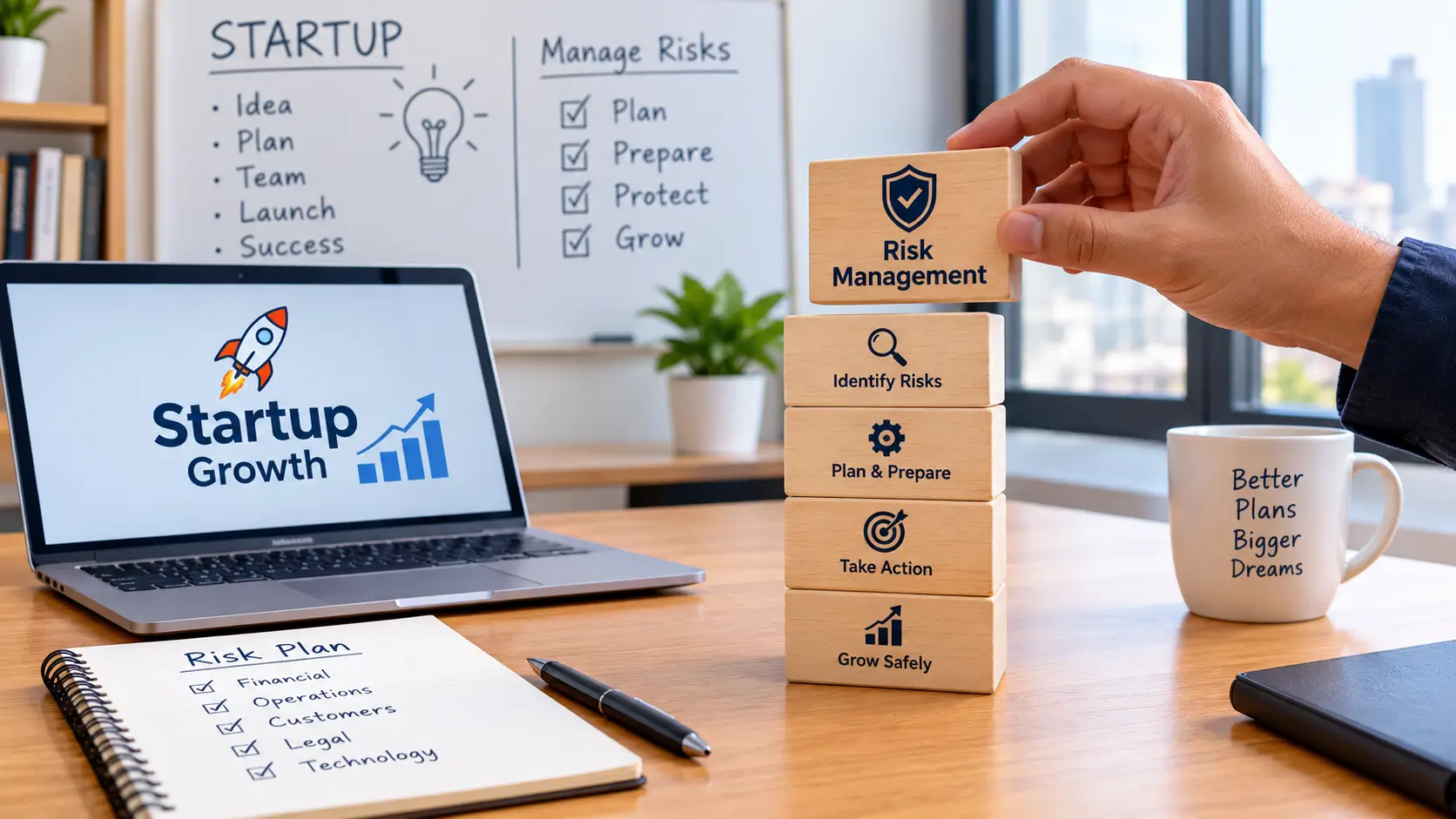
You might have a great idea, a well-thought-out business plan, and the drive to make your dream come true. But every new business has risks. Some businesses lose customers, get in trouble with the law, or have to deal with tough competition. These problems can affect even a business with a promising product or service. A small mistake can create serious trouble when a startup has limited money, a small team, and few customers.
This is why every founder needs a startup risk management strategy. It helps you identify possible problems before they become serious. It also helps you prepare practical solutions and make better business decisions. You do not need a large team or an expensive consultant to start managing risks. You can begin with a simple plan, regular financial reviews, and clear steps for handling unexpected situations.
What Is Startup Risk Management?
Startup risk management means identifying problems that could affect your business and taking steps to reduce their impact. These risks may involve money, customers, employees, technology, legal rules, or daily operations. A startup cannot prevent every problem, but it can prepare for many of them.
You can reduce this risk by finding another supplier before you need one. You can also avoid depending too heavily on a single source. That is the basic idea behind risk management. You identify a possible problem, understand its consequences, and prepare a sensible response.
Why Does Every Startup Need a Risk Management Strategy?
Many founders focus on sales, marketing, product development, and fundraising. These activities matter, but ignoring risks can put the entire business in danger. A clear strategy has many advantages.
1. It Helps You Protect Your Money
Most startups work with limited funds. Unexpected expenses can quickly reduce the money available for salaries, rent, marketing, and product development. A risk management plan helps you understand your regular expenses and prepare for emergencies. It also encourages you to avoid unnecessary spending when your income falls.
2. It Helps You Make Better Decisions
Founders often make decisions under pressure. They may hire more employees, open another office, or spend heavily on advertising because they expect rapid growth. Risk assessment helps you examine the possible benefits and disadvantages before making these decisions.
3. It Builds Customer Trust
Customers expect companies to keep their data safe, send items on time, and fix issues when they happen. Customers are more likely to stick with a new business that is honest about customer complaints and keeps personal information safe.
4. It Prepares Your Business for Unexpected Problems
A startup may face a sudden drop in sales, a supplier failure, a cyberattack, or the departure of an important employee. A risk management strategy gives your team a clear idea of what to do when such problems occur. This can reduce confusion and help the business recover faster.
Common Risks Every Startup Should Identify
Before creating a plan, understand the risks that could affect your particular business. Different startups face different challenges, so focus on the ones that matter most to your operations.
1. Financial Risks
One of the main issues facing early-stage companies is financial risk. Your startup may struggle if customers pay late, expenses rise, or sales fall below expectations.
For example, suppose your business earns ₹2 lakh in monthly revenue but spends ₹2.2 lakh on salaries, rent, software, and other costs. Your business faces a monthly cash shortfall even though customers continue to buy from you.
How to manage it: Every month, write down your income and expenses. Make a cash flow forecast and guess how long the business can run on the money you have on hand. When deciding how much to spend, don’t base your choices on optimistic sales forecasts.
2. Market and Customer Risks
A product may look useful to you but fail to attract enough paying customers. Your target audience may not need it, or customers may prefer an existing competitor.
How to manage it: Research your target customers before investing heavily in product development. Speak with potential buyers and ask about their problems, budgets, and current solutions. Start with a small test to check whether people will actually pay for your product.
3. Operational Risks
Operational risks come from problems that happen in the normal course of business. Some of these are deliveries that are late, broken equipment, bad inventory management, and relying too much on one provider.
How to manage it: Document important business processes and identify the tasks that could stop your operations. Maintain backup suppliers where practical. Review recurring problems and fix their underlying causes instead of repeatedly dealing with the same issue.
4. Legal and Compliance Risks
India’s new businesses must follow the laws and rules that are specific to their type of business and industry. Depending on what you do, these could include tax forms, employment rules, contracts, licenses, or rules about protecting data. Not filing something that needs to be filed or signing a deal that isn’t clear can lead to legal and financial problems.
How to manage it: Identify the registrations, licences, filings, and contracts your business needs. Keep important documents organised and track due dates. Consult a qualified professional when you need advice on tax, legal, or regulatory matters.
5. Cybersecurity and Data Risks
Online payment systems, cloud storage, email services, and customer databases are frequently utilised by startups. Phishing emails, weak passwords, and negligent data management might reveal sensitive information.
How to manage it: Keep track of crucial tasks and distribute knowledge among team members. Clearly define staff duties and keep hiring and training procedures realistic. Make backup plans for positions that the company cannot afford to vacate.
6. People and Team Risks
A startup may depend heavily on one founder or employee. If that person leaves, becomes unavailable, or holds all the important business knowledge, daily work may suffer.
How to manage it: Document important tasks and share knowledge across the team. Define employee responsibilities clearly and maintain a practical hiring and training process. Create backup arrangements for roles that the business cannot afford to leave vacant.
How to Build a Startup Risk Management Strategy Step by Step
You can build a useful risk management strategy by following a few practical steps. Start small and improve the plan as your business grows.
Step 1: Identify Your Business Risks
Write down the problems that could affect your startup. Consider your finances, customers, employees, suppliers, technology, and legal responsibilities.
Ask yourself questions such as:
- What could cause our sales to fall?
- What would happen if our biggest customer left?
- Could we pay our regular expenses if revenue dropped?
- Which supplier or employee does the business depend on most?
- What would happen if we lost access to important business data?
Discuss these questions with your co-founders and team members. People who handle daily operations may notice risks that founders overlook. Do not try to predict every possible problem. Focus first on realistic risks that could seriously affect your business.
Step 2: Assess Each Risk
After identifying risks, estimate how likely each one is and how much damage it could cause. You can use a simple rating system with three levels: low, medium, and high. For example, a short delay from a backup supplier may create a low risk. Losing your main supplier during a busy sales period may create a high risk. Consider both the chance of the problem occurring and its possible impact. This approach helps you decide which risks need immediate attention.
Step 3: Prioritise the Most Serious Risks
Your startup may not have enough time or money to address every risk at once. Focus on the problems that could cause the greatest damage.
A simple risk register can help you organise your priorities.
| Risk | Likelihood | Impact | Planned Action |
| Cash shortage | Medium | High | Prepare a cash flow forecast |
| Loss of a major customer | Medium | High | Develop more customer relationships |
| Supplier delay | Medium | Medium | Identify backup suppliers |
| Employee data loss | Low | High | Maintain secure backups |
| Missed compliance deadline | Low | High | Track filing dates and responsibilities |
Review the table regularly. A risk that seems unlikely today may become more serious after a change in your business.
Step 4: Create a Plan for Each Major Risk
For every high-priority risk, decide how you will reduce its chances or limit its impact. For example, if your startup depends on one major customer, you can develop a plan to attract additional customers. If you worry about cash shortages, you can review expenses and maintain an emergency reserve based on your business needs.
Your plan should answer three questions:
- What action will reduce this risk?
- Who will take responsibility?
- What will the team do if the problem occurs?
Make the steps easy to understand and use. A short plan that everyone on your team can understand is better than a long paper that no one reads or follows.
Step 5: Protect Your Startup’s Cash Flow
Since a business needs money to cover its ongoing costs, cash flow merits special consideration. Keep track of your anticipated earnings, due dates, salary, rent, taxes, loan repayments, and other expenses. Verify whether clients frequently make late payments and whether you can cut back on wasteful spending.
When your funds permit, create an emergency fund. Your monthly expenses, income stability, and financial resources all play a role in determining the appropriate amount. Don’t assume that your expenses will always be covered by future revenues.
Step 6: Assign Clear Responsibilities
The entrepreneur shouldn’t be solely responsible for risk management. Assign team members accountability for the risks associated with their task. An operations manager might keep an eye on supplier issues, whereas a finance manager might keep an eye on cash flow. A person in charge of technology can examine backup plans and access rights. In a small startup, one person may handle several responsibilities. The important point is to make ownership clear so that nobody assumes someone else will take action.
Step 7: Prepare an Emergency Response Plan
Some problems need immediate action. A data breach, sudden cash shortage, or major delivery failure can affect customers and daily operations. Decide in advance who should respond, who needs to receive updates, and which services or activities the business should protect first.
For instance, if your online store stops accepting payments, your team should know how to contact the payment provider, inform affected customers when necessary, and track pending orders. Keep essential contact details and recovery instructions accessible. Test important backup and recovery arrangements instead of assuming they will work.
Step 8: Review and Update Your Strategy
Your startup will change as it gains customers, hires employees, launches products, and enters new markets. These changes can create new risks or make existing ones more serious. Review your risk register at regular intervals. A monthly review may suit a fast-changing startup, while some risks may require more frequent checks.
Also review the plan after a major event, such as a failed product launch, a large unexpected expense, or a change in legal requirements. Learn from actual problems and update your approach.
Common Startup Risk Management Mistakes to Avoid
Even a simple plan can fail when founders ignore important details.
1. Ignoring Small Warning Signs
A few late customer payments may not seem serious. However, repeated delays can create a cash flow problem. Look for patterns and take action before they become harder to manage.
2. Depending on One Customer or Supplier
A single large customer can provide useful revenue, but too much dependence can leave your business exposed. Build other customer relationships and explore backup suppliers wherever practical.
3. Making Plans Without Assigning Responsibility
A risk register does little good if nobody owns the next action. Assign a responsible person and set a clear deadline for each important task.
4. Creating a Plan and Never Reviewing It
A startup risk management strategy should change with the business. Update your priorities when your finances, customers, team, or market conditions change.
How Can Startups Measure Risk Management Success?
You do not need complicated software to check whether your plan works. Track a few measures that relate directly to your business risks.
These may include:
- Cash runway: Estimate how long your available funds can cover expenses at the current spending rate.
- Customer concentration: Check how much revenue comes from your largest customers.
- Late payments: Track overdue invoices and the time customers take to pay.
- Operational disruptions: Record delivery delays, service outages, and repeated process failures.
- Open risk actions: Check how many planned actions remain incomplete.
These measures will vary by business type. Choose indicators that help you notice problems early and make better decisions.
Conclusion
Building a startup risk management strategy does not require complicated systems or a large budget. It requires a clear understanding of your business, an honest assessment of possible problems, and practical steps to handle them. Don’t forget that risk management can’t get rid of all doubt. It might help you get ready for problems and deal with them with more confidence. For Indian owners of new businesses, the best time to get ready for business risks is before they become big issues. A simple plan that you go over often can help you keep your resources safe and make your business stronger.