

Energy plays an important role in almost every part of our daily life. We use electricity to run our homes, charge our phones, operate businesses, travel from one place to another, and power industries. For many years, the world has depended heavily on coal, oil, and natural gas to meet its energy needs. These fuels have helped countries grow, but they also create pollution and release greenhouse gases.
This has increased interest in green energy. Green energy comes from natural sources that can replenish themselves, such as sunlight, wind, water, and certain forms of biomass. India has a large opportunity in this area. The country receives plenty of sunlight in many regions and has strong potential for solar and wind power. As technology improves and more people understand the benefits of renewable energy, green power can become an increasingly important part of India’s energy future.
What Is Green Energy?
Green energy refers to energy that comes from natural sources and generally causes much less environmental harm than fossil fuels.
Common examples include:
- Solar energy from sunlight
- Wind energy from moving air
- Hydropower from flowing water
- Geothermal energy from heat inside the Earth
- Certain forms of biomass energy from organic material
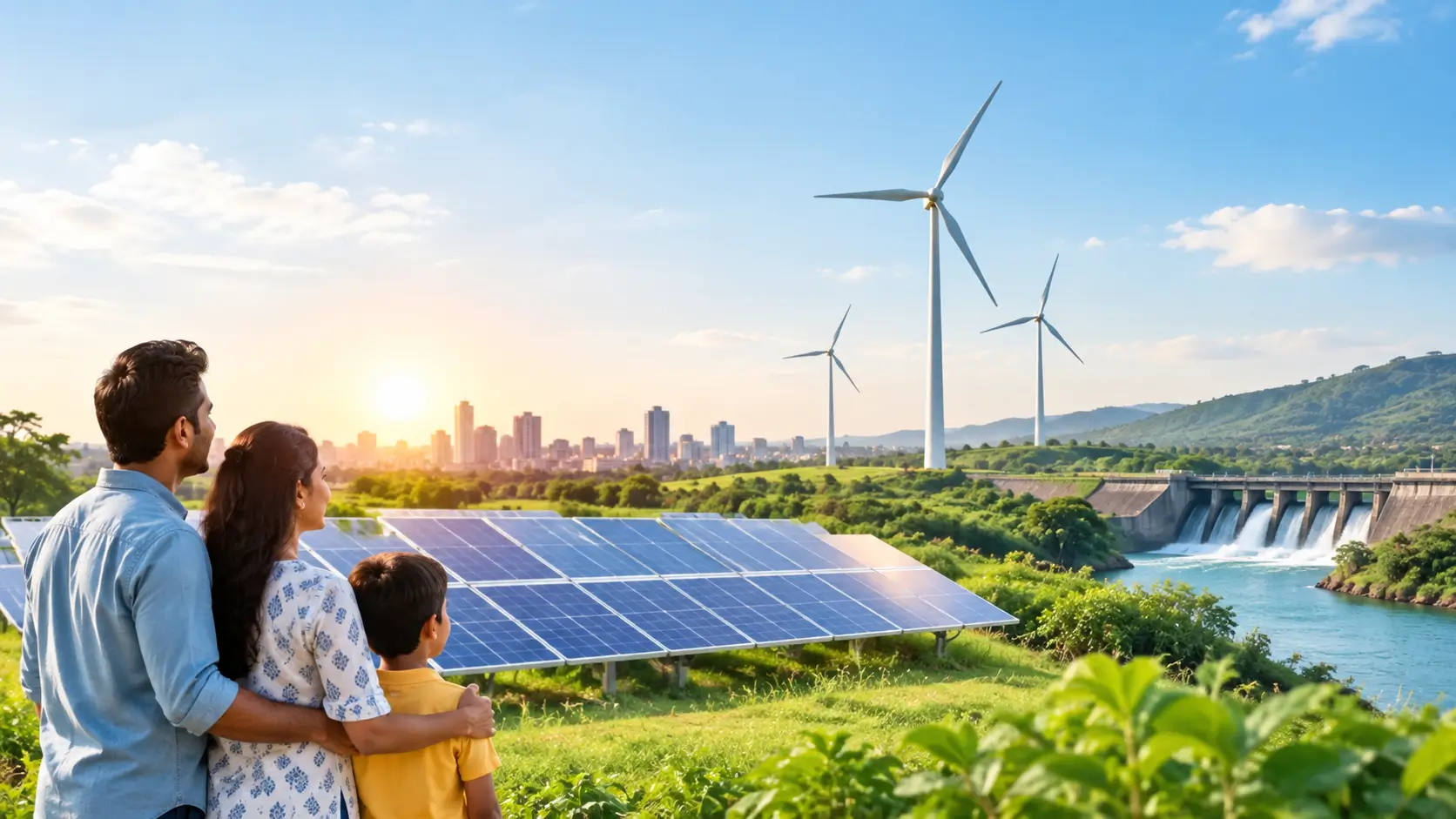
These sources work differently, but they share an important feature. Nature can replenish them, unlike fossil fuels such as coal and oil that take millions of years to form. For example, a solar panel can produce electricity from sunlight without burning fuel. A wind turbine can generate electricity when moving air turns its blades.
Why Is Green Energy Becoming More Important?
The growing demand for energy has created several challenges. Cities are expanding, industries are growing, and more households are using electrical appliances and devices. At the same time, people have become more aware of air pollution, climate change, and the environmental effects of burning fossil fuels.
Green energy offers one way to address these concerns. It can help countries diversify their energy sources instead of depending too heavily on coal, oil, or natural gas. It can also support cleaner electricity generation when renewable sources replace more polluting forms of power.
India’s Growing Energy Needs
India needs large amounts of energy to support homes, businesses, transport, agriculture, and industries. The country also has a wide range of renewable energy resources. Different parts of India offer opportunities for solar, wind, hydropower, and other renewable projects.
Solar energy has become especially important because sunlight is available across much of the country. Rooftop solar also gives households and businesses an opportunity to generate some of their own electricity instead of depending completely on grid power.
Major Types of Green Energy
1. Solar Energy
Solar energy uses sunlight to produce electricity or heat. Solar panels installed on rooftops, commercial buildings, farms, and large solar parks can convert sunlight into electricity. For homeowners, rooftop solar can be an interesting option because it allows unused roof space to become a source of electricity. The amount of electricity a solar system produces depends on factors such as system size, sunlight, location, panel orientation, shading, and weather conditions.
2. Wind Energy
Wind turbines use moving air to generate electricity. India has several areas with suitable wind resources, particularly in parts of states such as Tamil Nadu, Gujarat, Karnataka, Maharashtra, and Rajasthan. Large wind farms can produce electricity for the grid, while improved technology continues to support the development of wind power.
3. Hydropower
Hydropower generates electricity using flowing or falling water. India has used hydropower for many years, and it remains an important renewable electricity source. However, large hydropower projects can affect local ecosystems, land, and communities. That means planners need to consider both energy benefits and environmental impacts.
4. Biomass Energy
Biomass energy uses organic materials such as agricultural waste and other plant-based materials to produce energy. India has a large agricultural sector, which creates opportunities to use certain types of agricultural waste productively. Proper planning matters because biomass projects need reliable sources of suitable material and must manage emissions and waste responsibly.
Benefits of Green Energy
Green energy can offer several benefits for India and individual consumers.
1. Lower Environmental Impact
Renewable energy can reduce the need to burn fossil fuels for electricity generation. Solar and wind projects do not burn coal or oil while generating electricity. This can help reduce certain forms of air pollution and greenhouse gas emissions compared with fossil-fuel-based generation. However, renewable energy equipment still requires raw materials, manufacturing, transportation, and construction. So it is better to view green energy as a cleaner energy option rather than an impact-free one.
2. Reduced Dependence on Fossil Fuels
Countries that depend heavily on imported fuels can face problems when global energy prices change. Increasing renewable energy production can reduce some of this dependence over time. India can use its own sunlight, wind, water, and other renewable resources to produce more domestic energy.
3. New Jobs and Business Opportunities
The growth of renewable energy can create work across many areas. Solar projects need people for manufacturing, sales, installation, maintenance, engineering, project management, and other services. The same applies to wind power and other renewable energy sectors. This growth can also create opportunities for small businesses that provide installation, cleaning, maintenance, electrical work, and related services.
How Green Energy Can Help Households
Green energy is not only about large power plants. A homeowner can explore options such as rooftop solar panels, depending on the property’s design, electricity needs, budget, and local rules. For example, a family with a suitable rooftop may install a solar system to generate electricity during daylight hours.
The actual financial benefit depends on several factors, including the system cost, electricity consumption, solar generation, financing, maintenance, applicable policies, and local electricity rates. Consumers should therefore calculate the expected cost and benefits instead of assuming that every solar system will produce the same savings.
Challenges of Green Energy
Green energy has many advantages, but it also comes with challenges.
1. Solar and Wind Depend on Weather
Solar panels need sunlight, while wind turbines need suitable wind conditions. Solar power production falls during cloudy weather and stops at night. Wind generation can also change when wind conditions change. This creates a need for good electricity planning, energy storage, grid management, and other supporting systems.
2. Initial Investment
Installing renewable energy systems can require a significant upfront investment. Although operating costs can be manageable after installation, consumers need to consider the initial equipment and installation costs. Financing options, government programmes, and changing equipment prices can affect the overall economics of a project.
3. Land and Infrastructure
Large renewable energy projects need suitable land and supporting infrastructure. Developers need to consider transmission lines, roads, environmental conditions, local communities, and land use. Good planning can help reduce unnecessary conflicts and environmental damage.
The Role of Energy Storage
Energy storage can become increasingly important as renewable power grows. A battery can store electricity produced at one time and make it available later. This can help manage the difference between when renewable energy is generated and when people need electricity.
For example, a solar system can produce electricity during the afternoon while a household may need more electricity in the evening. Energy storage can help bridge part of that gap. Battery technology continues to develop, but storage also adds cost and requires proper installation and management.
What Does the Future of Green Energy Look Like?
The future of green energy will likely involve a combination of different technologies rather than one single solution. Solar power, wind energy, hydropower, biomass, energy storage, improved electricity grids, and energy-efficient technology can all play different roles. Electric vehicles can also increase electricity demand while reducing direct dependence on petrol and diesel for transportation.
Businesses may use renewable energy to reduce their dependence on conventional electricity sources. Homes may use rooftop solar and energy-efficient appliances to manage electricity consumption. The transition will take time. Countries need investment, skilled workers, suitable infrastructure, clear policies, and responsible planning.
How Individuals Can Support Clean Energy
People do not need to make major changes overnight. Simple steps can help reduce unnecessary energy use. Using efficient appliances, switching off unused devices, improving building insulation where suitable, and making better use of natural light can reduce electricity consumption.
Homeowners can also explore rooftop solar if their property is suitable. Before investing, compare different installers, understand the equipment being offered, check warranties, and calculate the expected costs carefully. Small decisions across millions of households can contribute to larger changes in energy demand.
Conclusion
Green energy is becoming an important part of the world’s energy future, and India has a strong opportunity to expand its use. Solar, wind, hydropower, and other renewable sources can help diversify the country’s energy supply while reducing dependence on fossil fuels. Green energy can also create new jobs, support businesses, and give households more options for producing electricity.
At the same time, renewable energy does not solve every energy problem by itself. India will need better infrastructure, energy storage, skilled workers, responsible project planning, and efficient use of electricity. The shift toward cleaner energy will take time, but the direction is clear. As technology improves and renewable energy becomes more accessible, green energy can play a bigger role in powering homes, businesses, industries, and India’s future.