

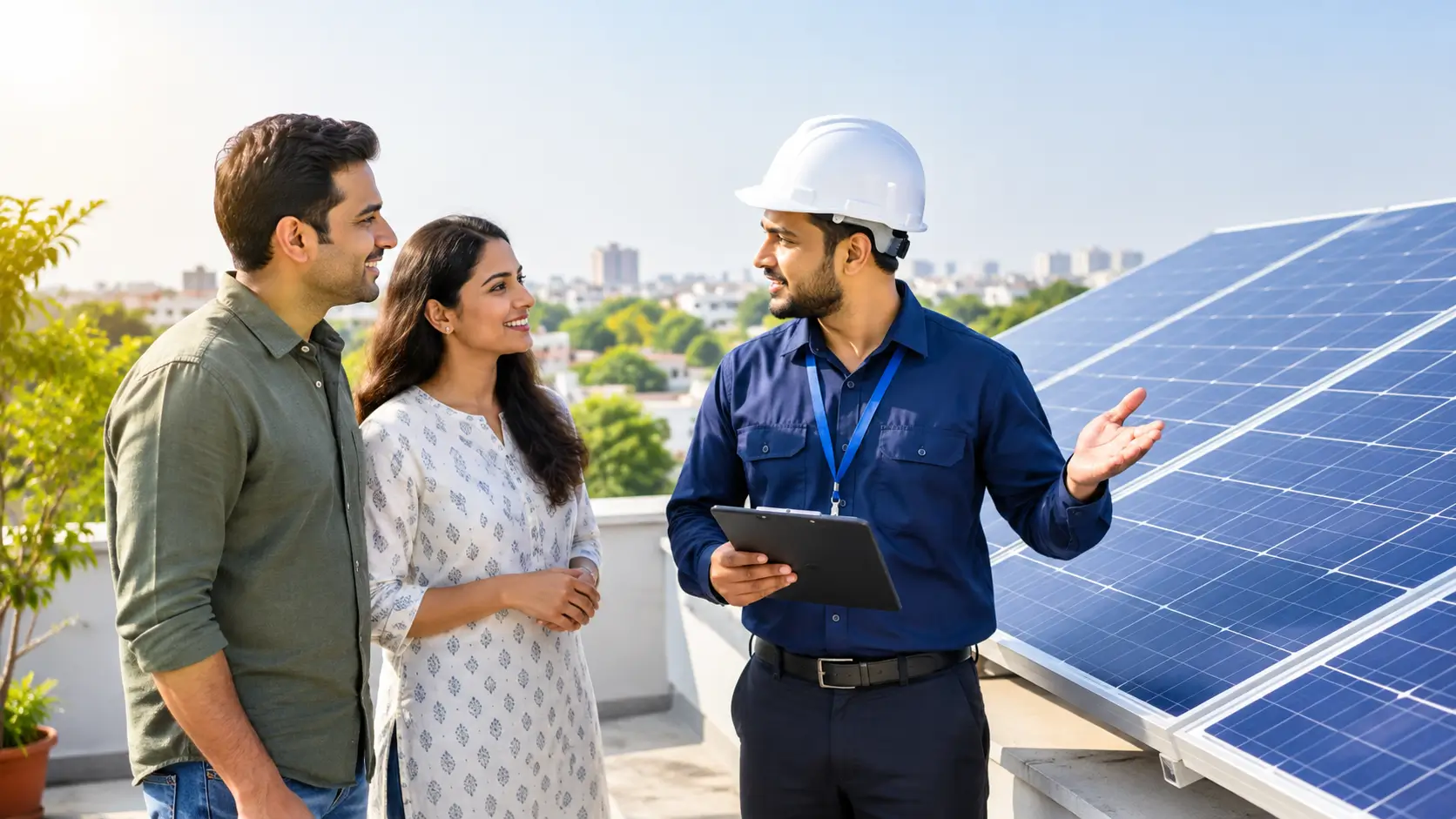
Installing solar panels on your home is a big decision. It can help you use clean energy and reduce your dependency on electricity from the power. But choosing the right solar panel company can be just as important as choosing the solar panels themselves.
Many companies offer solar products and installation services in India. Their prices, products, warranties, installation quality, and customer support can differ. A cheaper quotation may look attractive at first, but it may not always give you the best value over the long term.
For example, imagine two companies quote different prices for the same size solar system. One company offers a lower price but provides limited warranty support. The other charges slightly more but offers better installation, clear warranty terms, and dependable after-sales service. The second option may prove more useful over the years.
1. Understand Your Solar Requirements First
Understand what you want from your solar system before contacting solar companies. Your electricity usage, available rooftop space, and budget will affect the type and size of system you need. Look at your recent electricity bills to understand your average monthly consumption. You should also check whether your roof receives enough sunlight and has enough usable space for solar panels.
A good solar panel company should assess your requirements before giving you a final recommendation. Be careful if a company immediately suggests a system without asking about your electricity usage or checking your property.
2. Check the Company’s Experience
Experience matters when you are making a long-term investment. A company that has handled many residential solar installations may understand common problems related to rooftops, wiring, installation, and local conditions. This does not mean a new company cannot provide good service. However, you should take extra care to check its work, team, and customer feedback. Ask the company how long it has been working in the solar industry and how many residential projects it has completed.
A genuine company should be able to explain its previous work. You can ask for examples of residential installations similar to yours. If possible, speak with previous customers and ask about their experience. Try to find out whether the company completed the installation on time, whether the system worked as expected, and how the company handled questions after installation.
3. Compare Solar Panel Quality
Solar panels are one of the most important parts of your system. Do not choose them only because they have a lower price. Ask the company about the solar panel brand, model, specifications, and warranty. You should understand what you are buying before you pay. Different solar panels can have different efficiency levels, construction quality, and warranty terms. You do not need to become a solar expert. Simply ask the company to explain the important specifications in simple language.
4. Look at the Complete System
Solar panels are not the only part of a solar power system. Depending on your setup, the system may also include an inverter, mounting structure, cables, protection equipment, and other components. Ask the company to provide a clear list of everything included in the quotation. This can prevent unpleasant surprises later. A quotation that looks cheaper may not include some items that another company includes in its price.
5. Compare Multiple Solar Companies
One of the simplest ways to make a better decision is to compare several companies. Do not depend on the first quotation you receive. Contact at least a few reputable solar companies and ask them for detailed proposals. When comparing quotations, look beyond the total price.
| Factor | What to Check |
| Solar panels | Brand, model, and warranty |
| Inverter | Brand, capacity and warranty |
| Installation | What installation work is included |
| Warranty | Product and system warranty terms |
| Maintenance | Available service after installation |
| Price | Total cost and payment terms |
| Approvals | Who handles required paperwork |
A proper comparison helps you understand why one company charges more or less than another.
6. Do Not Choose Based Only on Price
Price is important, but it should not be the only deciding factor. A very low quotation can sometimes leave out important equipment, installation work, or services. Always ask what the quoted price includes. For example, Company A may quote ₹2 lakh while Company B quotes ₹2.25 lakh. If Company B includes better equipment, stronger warranty support, and more installation work, the higher price may provide better value. Ask both companies to provide detailed written quotations. This makes comparison much easier.
7. Check Warranty Terms Carefully
Solar Panels are designed for long-term use, so warranty support matters. However, do not assume that every warranty covers everything. Different components can have different warranty conditions. Ask about the warranty for:
- Solar panels
- Inverter
- Mounting equipment
- Other major components
- Installation work, if covered
Also ask what you need to do if something stops working during the warranty period. A company that clearly explains its warranty process can give you more confidence. Sometimes the manufacturer provides the product warranty while the installer provides installation-related support. Ask the company who you should contact when you face a problem. This simple question can save you confusion later.
8. Check Installation Quality
Good solar panels will not perform well if the installation is poor. The installer should use suitable mounting structures and install the system properly. Wiring and electrical protection also require proper attention. Ask whether the company uses its own installation team or outside contractors. You can also ask about the installation process and how long the work normally takes for a project similar to yours.
9. Ask About After-Sales Service
Your relationship with the solar company should not end after installation. Solar systems can operate for many years, and you may need help with monitoring, maintenance, or technical problems. Before choosing a company, ask how customers can contact the support team. Find out whether the company provides maintenance services and how it handles service requests. A company that responds properly after installation can be much more valuable than one that only focuses on making the sale.
10. Check Customer Reviews Carefully
Online reviews help you understand other customers’ experiences. Look at reviews across different platforms instead of relying on testimonials displayed only on the company’s website. Pay attention to repeated complaints. For example, if several customers mention delayed installation or poor customer support, you should investigate further. At the same time, do not reject a company because of one negative review. No business will satisfy every customer. Look for overall patterns.
11. Ask About Subsidies and Government Schemes
Solar subsidies and government programmes can change over time and may have specific eligibility conditions. If you plan to use a government subsidy, ask the company whether it can help with the required process. Do not rely only on verbal promises. Ask for clear information about eligibility, documentation, application steps, and what the quoted price includes. You can also verify important subsidy information through official government sources before making your payment.
12. Understand Net Metering
If you plan to connect your rooftop solar system to the electricity grid, ask the company how the connection and metering process works in your area. The exact process can depend on your electricity distribution company and local rules. A reliable solar installer should explain the process and tell you which documents or approvals you may need. Do not assume that every solar installation follows exactly the same process across India.
13. Read the Contract Before Paying
Never try to rush into a solar installation just because a salesperson offers a limited-time deal. You should always read the agreement carefully before making a major payment. Check the total cost, equipment included, installation work, payment schedule, warranty information, and responsibilities of both sides. Ask questions about anything you do not understand. A good company should be comfortable explaining its terms instead of pressuring you to sign quickly.
14. Watch for Warning Signs
Some signs should make you slow down and investigate further. Be careful if a company:
- Refuses to provide a detailed quotation
- Avoids explaining warranty terms
- Makes unrealistic savings promises
- Pressures you to pay immediately
- Cannot explain which products it will install
- Gives unclear information about after-sales service
These signs do not automatically prove that a company is unreliable, but they should encourage you to ask more questions.
Conclusion
Choosing the best solar panel company requires more than comparing prices. You need to look at product quality, installation standards, warranty coverage, customer reviews, and after-sales service. Start by understanding your electricity needs. Then compare quotations from several companies and ask each one to explain exactly what it includes. Most importantly, do not make a decision only because one company offers the lowest price. A solar system is a long-term investment, so reliability and support matter just as much as the initial cost. Take your time, ask questions, and read the agreement before making a payment.
Frequently Asked Questions
1. What solar system size do you recommend and why?
The company should explain its recommendation based on your electricity usage and available rooftop space.
2. Which solar panel brands and models will you install?
Get the exact product information in writing rather than accepting a general statement about product quality.
3. What does the quoted price include?
Ask about equipment, installation, paperwork, and other charges.
4. What warranty will I receive?
Understand the warranty for each major component and who will handle warranty claims.
5. What happens if the system develops a problem?
Ask about customer support, maintenance, and response times.
6. Who will handle the required approvals?
Get a clear answer about the responsibilities of the homeowner and installer.