

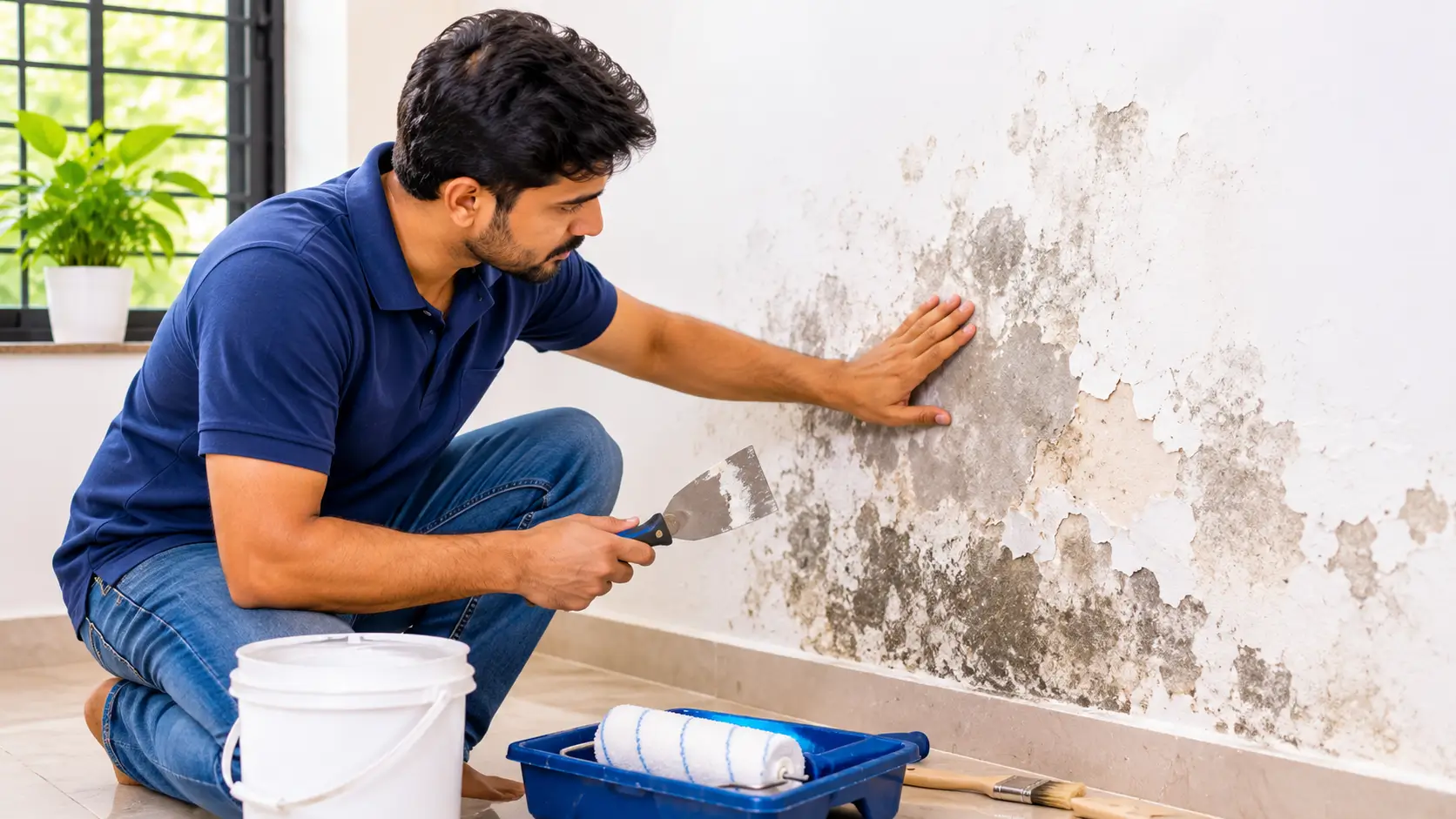
Monsoon brings relief from summer heat, but heavy rainfall can create problems inside your home. One common issue is wall dampness. You may notice wet patches, peeling paint, white powder on the walls, or a musty smell in your rooms. Many Indian homeowners face this problem after the rainy season. Water can enter through terrace cracks, damaged external walls, leaking pipes, or gaps around windows. Sometimes, moisture also rises from the ground through walls.
Ignoring dampness can damage paint, plaster, and other parts of your home. It can also encourage mould growth and affect indoor air quality. The good news is that you can fix wall dampness with the right approach. However, you must first identify where the moisture comes from. Simply applying fresh paint over a damp wall will not solve the problem.
Let’s understand the common causes and the best ways to repair wall dampness after monsoons.
1. Identify the Main Cause of Wall Dampness
Before starting any repair work, find out why your wall has become damp. Different causes need different solutions.
a) Roof or terrace leakage
Cracks in the terrace surface can allow rainwater to enter the building. Water may travel through the roof slab and appear as damp patches on the ceiling or upper parts of walls. If you notice water stains below the terrace, inspect the roof for cracks, damaged waterproofing, and blocked drainage points.
b) External wall seepage
Rainwater can enter through cracks in external walls. Damaged plaster, poor sealing around windows, and gaps near balconies can also allow moisture to enter. You may notice damp patches on the inside of an external wall, especially after heavy rainfall.
c) Plumbing leakage
A leaking water pipe can keep a wall damp even after the monsoon ends. Look for wet patches near bathrooms, kitchens, and plumbing lines. If the damp area continues to grow without rain, a hidden pipe leak may be the reason.
d) Rising dampness
Sometimes, moisture travels upwards from the ground through walls. This problem affects the lower parts of ground-floor walls. You may notice peeling paint, damaged plaster, or white salt deposits near the floor.
2. Remove Loose Paint and Damaged Plaster
Once you identify and repair the moisture source, inspect the affected wall. If the paint has started peeling or the plaster has become loose, remove the damaged material carefully. Use a suitable scraper and avoid damaging healthy parts of the wall.
Do not apply new paint directly over loose plaster. It will not provide a lasting finish. For larger damaged areas, ask a professional mason to inspect the wall. The worker can remove weak plaster and check whether moisture has damaged the surface below.
3. Allow the Wall to Dry Properly
Drying is an important part of damp wall repair. If you cover a wet wall with putty or paint, moisture can remain trapped underneath. Keep the affected area open and allow proper air circulation. Open windows when outdoor conditions allow. You can also use a fan or dehumidifier to improve drying.
Avoid rushing this step. Drying time depends on the amount of moisture, wall thickness, weather, and ventilation. A wall may look dry on the surface while moisture remains inside. For serious dampness, ask a waterproofing professional to check the wall before you start repainting.
4. Apply the Right Waterproofing Treatment
Waterproofing helps stop moisture from entering walls. However, you must choose a treatment that matches the source of the problem.
a) External wall waterproofing
If rainwater enters through an outside wall, inspect the exterior surface first. Repair visible cracks and damaged plaster. A suitable exterior waterproof coating may help protect the wall from rain. Follow the product instructions and prepare the surface properly before application. Do not apply a coating without checking the condition of the wall. A damaged surface may need repairs before waterproofing.
b) Terrace waterproofing
If water enters through the roof, focus on the terrace. Check cracks, joints, drainage outlets, and areas around water tanks or pipes. A waterproofing contractor can recommend a suitable treatment based on the terrace condition. Some systems use liquid waterproof coatings, while others use membranes or other methods. Make sure the contractor addresses drainage and water collection. Waterproofing alone cannot solve every problem if water continues to collect on the terrace.
c) Bathroom and kitchen leakage
If dampness appears near a bathroom or kitchen, inspect the plumbing and waterproofing around wet areas. A plumber can check hidden pipes and fittings. If water enters through the bathroom floor or wall joints, you may need a suitable repair to the waterproofing system.
5. Repair Cracks Before Repainting
Small cracks can allow water to enter walls during heavy rainfall. Inspect both the inside and outside of the affected area. For minor surface cracks, use a suitable crack filler or repair product according to its instructions. Prepare the surface and allow the material to dry before applying paint.
However, do not treat every crack as a simple paint problem. Wide, growing, or diagonal cracks may indicate a deeper building issue. If you notice major cracks or repeated damage, consult a qualified civil engineer or building professional. Avoid covering serious cracks with putty.
6. Use Damp-Resistant Primer and Suitable Paint
After you repair the source of moisture and allow the wall to dry, you can prepare it for painting. Choose a primer and paint that suit the wall condition. Some products offer better resistance to moisture or fungal growth. Check the manufacturer’s instructions to understand where you can use them.
For exterior walls, select paint designed for outdoor exposure. For interior walls, use a suitable interior paint. Remember that damp-resistant paint cannot stop water from entering through a leaking roof or pipe. Always complete the actual repair before repainting.
7. Check Windows, Doors and Balcony Joints
Rainwater can enter through small gaps around windows and doors. These areas develop damp patches during the monsoon. Inspect the edges of window frames, balcony doors, and wall joints. Look for cracked sealant or gaps where rainwater can enter.
Replace damaged sealant with a suitable weather-resistant product. Make sure the installer seals the joints properly without blocking drainage openings. Also check balcony slopes and drain outlets. Water should flow towards the drain instead of collecting near the wall.
8. Improve Ventilation Inside Your Home
Poor ventilation can increase indoor moisture. Bathrooms, kitchens, and rooms with limited airflow may develop condensation and mould. Open windows when weather conditions allow. In kitchens and bathrooms, use an exhaust fan to get rid of damp air.
Avoid drying large amounts of wet clothes inside closed rooms. If a room stays humid for long periods, consider using a dehumidifier. Good ventilation can reduce indoor moisture, but it cannot repair water entering through walls or roofs.
9. Remove Mould Carefully
Wall dampness sometimes develops black, green, or dark patches. Wall dampness patches may indicate mould growth. Mould can irritate the eyes, skin and breathing system, especially in people with allergies or asthma. Do not ignore a musty smell or recurring mould patches. For small areas, follow local health and product-safety guidance when cleaning. Wear suitable gloves and eye protection. Keep children and pets away during cleaning.
Bleach should never be combined with ammonia or other cleaning supplies. These combinations can release dangerous gases. If mould covers a large area, keeps returning, or has spread inside walls or ceilings, contact a professional mould-removal service. Fix the moisture source before arranging final repairs.
10. Prevent Wall Dampness Before the Next Monsoon
Prevention can save you from repeated repair work. Inspect your home before the rainy season starts. Check the terrace for cracks and blocked drains. Clean rainwater outlets so water can flow away easily. Inspect external walls and repair damaged plaster.
Also check window seals, balcony joints, and plumbing connections. Fix small leaks before they cause larger problems. If your home has experienced repeated dampness, consider a professional inspection. A proper diagnosis can help you avoid spending money on treatments that do not address the actual cause.
Conclusion
Wall dampness after monsoons is a common problem in Indian homes. However, you should not treat wall dampness as just a paint issue. Moisture may enter through terrace cracks, external walls, leaking pipes, windows, or the ground. Regular home inspections can also prevent future damage. Check your terrace, external walls, windows, and drainage points before every monsoon. With the right repair and timely maintenance, you can protect your walls and keep your home cleaner and healthier.