

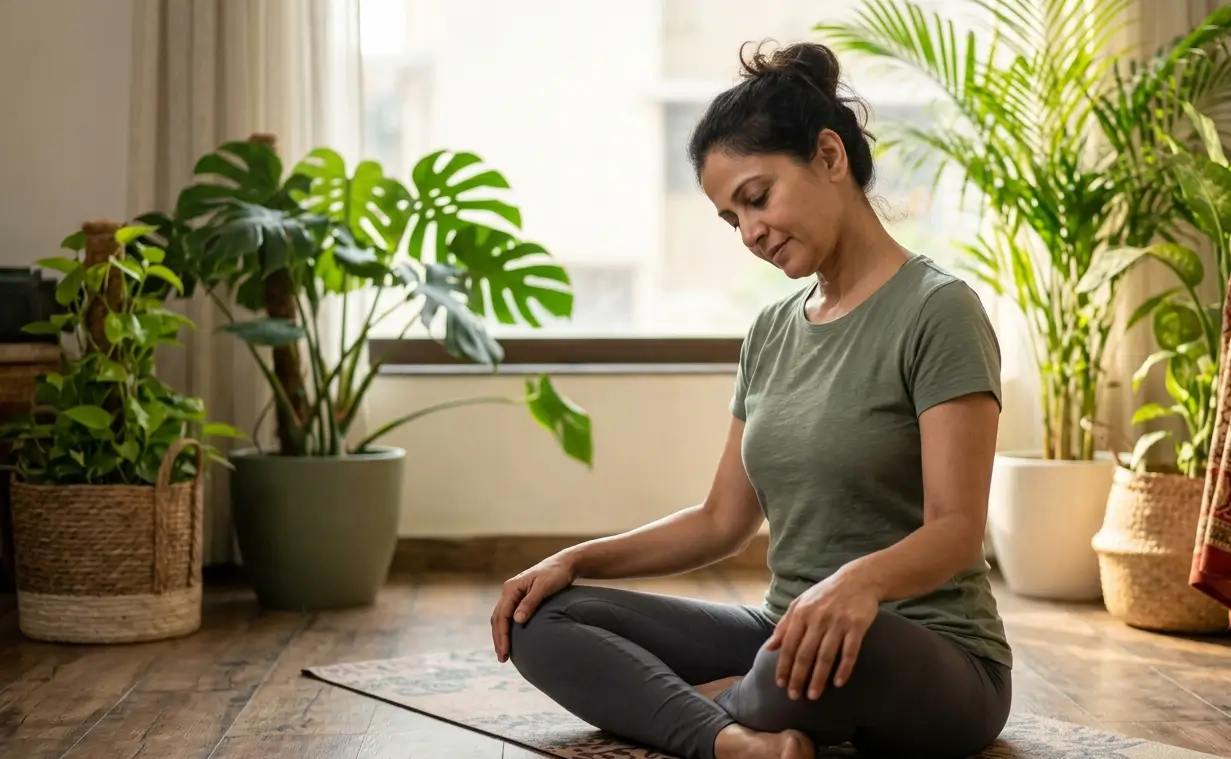
A stiff neck can make even a normal day uncomfortable. You may wake up with tightness after sleeping in the wrong position, spend hours looking at your laptop, or feel pain after using your phone for a long time. For many people, stress makes the problem worse because we often tighten our shoulders and neck without even noticing it.
This is where Yoga can become a simple part of your daily routine. You do not need to spend an hour on a yoga mat or join an expensive class. A few gentle movements, combined with slow breathing, can help you relax your body and take a break from the stress of work and daily life.
This simple routine fits easily into everyday Indian life. Many people spend long hours working on laptops, scrolling on smartphones during heavy traffic, and managing busy family responsibilities at home. Taking just a few minutes for yourself helps undo the daily strain on your neck and body.
How Yoga May Help With a Stiff Neck and Stress
Neck stiffness often develops when the muscles around the neck and shoulders remain tense for a long time. Poor sitting habits, prolonged screen use, stress, and lack of movement can contribute to this tight feeling. Gentle yoga movements encourage you to move your neck, shoulders, and upper body through comfortable ranges. Slow breathing can also help you relax instead of holding tension in your body.
Yoga does not work like an instant painkiller. You should think of it as a regular self-care practice that may help you become more aware of your posture, breathing, and muscle tension. If your neck pain keeps returning or becomes severe, you should not depend only on exercise. A doctor or qualified physiotherapist can help identify the actual cause.
Simple Yoga Exercises for a Stiff Neck
You can perform these movements at home, at work, or in another comfortable place. Start slowly and never force your neck into a position that causes pain.
1. Neck Side Stretch
Sit comfortably with your back reasonably straight. Keep your shoulders relaxed and slowly move your right ear towards your right shoulder. Do not lift your shoulder towards your ear. Stay in the comfortable position for a few slow breaths and then return to the centre. Repeat the same movement on the other side.
This simple movement can help you become aware of tightness around the sides of your neck. Avoid pulling your head down with your hand. Let the natural movement provide the stretch.
2. Gentle Neck Turns
Sit or stand comfortably and keep your shoulders relaxed. Slowly turn your head towards the right as far as feels comfortable, then return to the centre. Repeat the movement towards the left. Move slowly instead of trying to turn your head as far as possible. The aim is gentle movement, not competition. This exercise can fit easily into a short break from your laptop or phone.
3. Shoulder Rolls
Shoulder rolls provide an easy way to release some tension from your upper body. Sit or stand comfortably. Slowly move your shoulders upwards, then take them back and down in a smooth circular movement. Repeat several times and then change direction. Many people unknowingly keep their shoulders raised when they feel stressed. Shoulder rolls can remind you to relax them.
4. Cat-Cow Movement
The Cat-Cow movement can involve your neck, shoulders, and spine, so perform it gently. Come onto your hands and knees on a comfortable mat. Keep your hands under your shoulders and knees under your hips. Slowly move your spine through a comfortable range while coordinating the movement with your breathing. Do not throw your head backward or force your lower back into a deep position. If getting onto the floor feels uncomfortable, skip this movement and choose seated exercises instead.
5. Child’s Pose
Child’s Pose can provide a quiet break after a stressful day. Kneel on a comfortable mat and slowly move your hips towards your heels while bringing your upper body forward. Keep your neck relaxed rather than forcing your forehead towards the floor. If the position feels uncomfortable, place a cushion or folded blanket under your head or choose another gentle resting position. The most important part is comfort. Yoga should not become another source of physical strain.
Yoga Breathing for Stress Relief
Sometimes the neck is not the only place where you hold tension. Stress can affect your breathing, shoulders, and overall body posture. Simple slow breathing can help you create a calmer pause during a busy day.
Try Slow Belly Breathing
Sit comfortably and drop your shoulders. Take a slow, easy breath in through your nose, then breathe out gently. Keep breathing like this for a few minutes. You don’t need to count seconds or worry about complicated rules. Just keep your breaths slow, smooth, and relaxed. You can do this simple breathing exercise when you wake up, during a quick work break, or right before sleep.
Simple 10-Minute Yoga Routine
You do not need a complicated routine to get started. Try this simple sequence:
| Exercise | Approximate Time |
| Slow breathing | 2 minutes |
| Neck side stretch | 2 minutes |
| Gentle neck turns | 1 minute |
| Shoulder rolls | 2 minutes |
| Cat-Cow movement | 2 minutes |
| Quiet relaxation | 1 minute |
Treat these timings as a simple guide rather than a strict rule. If one movement feels uncomfortable, stop it and choose an easier movement. The goal is to build a comfortable habit that you can maintain.
How Indian Office Workers Can Add Yoga to Their Day
Many people say they do not have time for exercise. In reality, the bigger problem often comes from trying to find a large block of free time.
You can divide your routine into small sessions.
1. During Office Hours
After sitting at your desk for a long time, stand up and move your shoulders. Look away from the screen and gently turn your head from side to side. Do not wait until your neck becomes extremely stiff before moving.
2. During Your Commute
If you travel by bus, metro, or car, avoid spending the entire journey looking down at your phone. Give your neck a break and keep your head in a comfortable position. You should not perform neck exercises while driving.
3. After Returning Home
Instead of immediately sitting on the sofa and scrolling through your phone, spend 5 to 10 minutes doing gentle movements. This small habit can create a useful transition between office work and home time.
4. Before Bed
A few minutes of slow breathing and gentle stretching can help you wind down after a busy day. Keep the routine simple enough that you can repeat it regularly.
Yoga and Better Screen Habits
Yoga helps your neck feel better, but it cannot fix the problem if you keep sitting in bad posture all day. Your daily habits are just as important.
- Fix your screens: Keep your computer monitor at eye level so you don’t tilt your head down. Hold your phone higher up instead of looking down into your lap.
- Take active breaks: Stand up and move around every hour. Walk around the room, grab a glass of water, or change how you are sitting.
Making these quick, simple changes every day will protect your neck from pain.
Common Mistakes to Avoid
- Forcing a stretch: A stretch should always feel gentle. If you feel sharp or growing pain, stop right away instead of trying to push through it.
- Moving too fast: You stay safe when you move slowly and deliberately. Rapid neck movements can strain your neck if your muscles are already tense.
- Copying hard yoga poses: You don’t need fancy, difficult poses to get relief. Stick to simple movements and focus on steady breathing.
- Ignoring ongoing pain: Not all neck pain comes from bad posture or stress. If your pain does not go away, gets worse, or makes daily tasks hard, talk to a doctor.
When Should You Avoid Neck Exercises?
Gentle movement may suit many people, but it does not suit every situation. You should seek medical advice if you have severe neck pain, pain after an accident or injury, significant weakness or numbness, problems with balance, or other unusual symptoms.
You should also speak with a healthcare professional if your neck problem keeps returning despite rest and normal self-care.
If you already have a medical condition or have recently undergone treatment or surgery, ask your doctor or physiotherapist which exercises are suitable for you.
How to Make Yoga a Daily Habit
The best routine is one you can actually follow. Instead of deciding that you will practise for one hour every morning, start with five or ten minutes. Once the habit becomes comfortable, you can gradually spend more time if you want.
Choose a regular time. Morning, after work, or before bedtime can all work. Keep your yoga mat somewhere visible. When the mat stays hidden in a cupboard, it becomes surprisingly easy to forget about it. Most importantly, do not worry about doing everything perfectly. Regular gentle practice matters more than an occasional long session.
Conclusion
A stiff neck can make work, travel, and even simple household activities uncomfortable. Stress and long hours of screen use can also encourage us to keep our neck and shoulders tense. Yoga offers a simple way to add gentle movement and relaxation to your everyday routine. Neck stretches, shoulder rolls, gentle movements, and slow breathing can fit into even a busy Indian lifestyle.
You do not need expensive equipment or advanced yoga skills. Start with a few comfortable movements, pay attention to your body, and build the habit slowly. At the same time, remember that Yoga should not replace medical care when you have persistent or serious symptoms. If your neck pain does not improve or you notice unusual symptoms, speak with a qualified healthcare professional. A few minutes of mindful movement each day may seem small, but small healthy habits can become much easier to maintain when you make them part of your normal routine.