

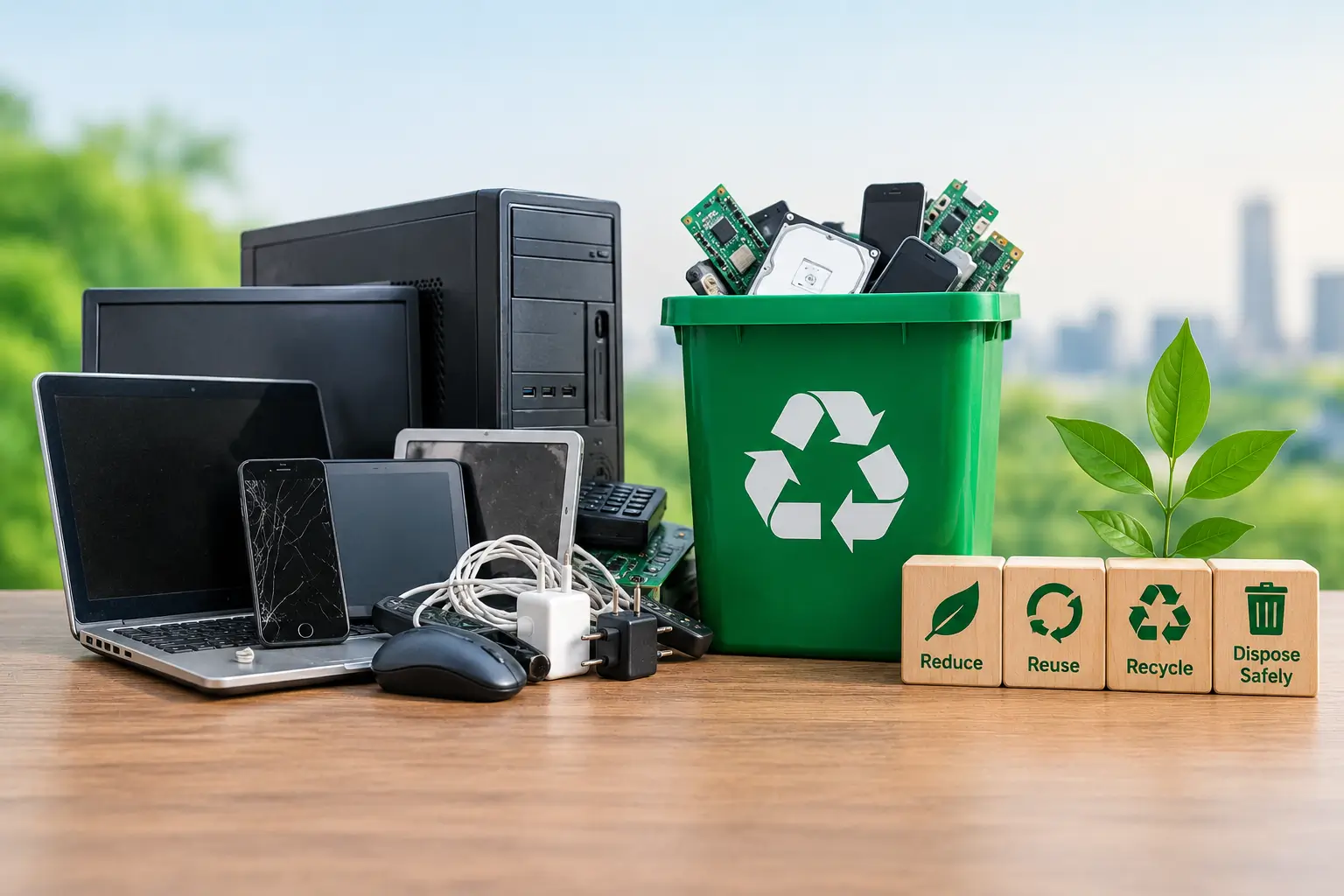
We replace our mobile phones, laptops, televisions, chargers, and other electronic products more often than before. But what happens to the old device after we stop using it? Many people keep old electronics in a cupboard for years. Others sell them to local scrap dealers or throw small electronic items into the household garbage. These actions may look harmless, but electronic waste needs proper handling.
Electronic waste, commonly called E-waste, includes electrical and electronic products that people discard because they no longer want to use them. The Government of India’s E-Waste Management Rules, 2022 regulate several activities related to covered electrical and electronic equipment and came into effect on April 1, 2023.
Understanding E-waste can help an ordinary household make better decisions when an electronic product becomes old, damaged, or unwanted.
What Is E-Waste?
E-waste means discarded electrical and electronic equipment and the components, parts, or spares that make such products work. In simple words, your old electronic products can become E-waste when you no longer intend to use them.
Common examples include:
- Old mobile phones and smartphones
- Computers and laptops
- Televisions
- Printers and scanners
- Keyboards and other computer accessories
- Chargers and certain electronic accessories
- Refrigerators and washing machines
- Other covered electrical and electronic equipment
The exact products covered under India’s E-Waste Management Rules depend on the categories and schedules specified under the rules. The rules also exclude some waste streams that fall under separate regulations, such as waste batteries covered by the Battery Waste Management Rules, 2022.
Why Is E-Waste Becoming a Bigger Concern?
Technology changes quickly. People buy new phones, upgrade computers, and replace home appliances as products become old or stop working. This creates a simple problem: the number of unwanted electronic products also increases.
An electronic device is not just a piece of plastic or metal. It contains different materials and components. Some materials have economic value and can be recovered through proper recycling. Other substances can create environmental and health concerns when people handle or dispose of them carelessly. That makes E-waste different from ordinary household garbage.
What Are the Main Types of E-Waste?
E-waste covers many different products because modern life depends heavily on electricity and electronics.
1. Small Electronic Devices
Mobile phones, tablets, cameras, routers, and other small devices can become E-waste when people stop using them. Many households have a drawer filled with old phones and chargers. Keeping a device for possible future use is not necessarily a problem, but once you decide to discard it, you should use an appropriate E-waste collection or recycling route.
2. Computers and IT Equipment
Old desktops, laptops, monitors, printers, keyboards, and related equipment can also enter the E-waste stream. Businesses often replace large numbers of computers at once. They therefore need proper systems for collection, data protection, reuse and recycling.
3. Large Electrical and Electronic Appliances
Products such as televisions, refrigerators and washing machines can also reach the end of their useful life. Because these products are large and contain several components, people should not simply leave them beside a roadside garbage point. Proper collection helps move them into suitable reuse, dismantling, or recycling channels.
Why Is E-Waste a Problem?
The biggest problem does not come simply from owning an old electronic product. The problem increases when people dispose of it through unsafe or unsuitable methods. Improper handling can release harmful substances into the surrounding environment. Informal processing can also expose workers to health and safety risks.
At the same time, electronic products contain materials that can have value. If people send them through proper recycling systems, recyclers can recover useful materials instead of allowing those resources to go to waste. CPCB‘s guidance also notes that informal recycling can use crude methods that damage the environment and result in the loss of recoverable materials.
How Does E-Waste Affect the Environment?
Poorly managed E-waste can affect soil, water, and air. For example, when electronic waste gets mixed with general waste and reaches an unsuitable disposal site, materials from electronic components may create contamination concerns.
Burning electronic waste is also not a safe household disposal method. Heating mixed electronic materials can release harmful pollutants. Another concern involves resource loss. Electronics contain materials that recyclers can recover. Recycling these materials can reduce the need to obtain the same resources from new sources. So proper E-waste management serves two purposes: it helps reduce environmental risks and supports resource recovery.
Can E-Waste Affect Human Health?
People who work with discarded electronics without suitable protection can face health and safety risks. The risk becomes more serious when people dismantle or process electronics using unsafe methods. This is one reason formal recycling and controlled processing matter. The safest approach is straightforward. Do not open, burn or break electronic waste just to recover parts or metals at home. Instead, use an appropriate collection or recycling channel.
What Is E-Waste Management?
E-waste management covers the activities used to handle electronic products after people decide they no longer need them. The process can include collection, transportation, sorting, reuse, refurbishing, dismantling, recycling, and safe treatment or disposal of materials that cannot be recovered. The aim is not simply to make old electronics disappear. A good system tries to keep useful materials in circulation while reducing environmental and health risks.
Reuse, Refurbishment and Recycling: What Is the Difference?
These three terms often create confusion.
- Reuse: Reuse means continuing to use a product instead of throwing it away. For example, if an old phone still works and meets your needs, you may continue using it or pass it to another person.
- Refurbishment: Refurbishment involves restoring a product or equipment so it can be used again. India’s E-Waste Management Rules, 2022 include provisions that encourage the reuse of covered electrical and electronic equipment through refurbishing.
- Recycling: Recycling happens when a product reaches a recycling facility, and materials are recovered from it. CPCB’s EPR framework recognises recovered end products such as gold, copper, aluminium and iron for the purpose of the EPR system.
These approaches can therefore happen at different stages. A working product may get reused or refurbished before it finally enters recycling.
What Should You Do With an Old Mobile Phone?
An old phone creates two separate concerns: E-waste and personal data. Before giving away or recycling a phone, back up important photos, contacts, and files. Sign out of accounts and perform the appropriate factory reset after checking that you have safely transferred the information you need.
Do not assume that deleting a few photos means the phone contains no personal information. After securing your data, look for an appropriate take-back, collection, or recycling option rather than putting the phone into your normal household garbage.
What About Old Laptops and Computers?
Old computers can contain personal and business information. A laptop may contain saved passwords, documents, photographs, emails, and other private files. Therefore, data protection should come before disposal. If the computer still works, consider whether another person can use it. If it has reached the end of its useful life, send it through a suitable E-waste recycling route.
Businesses should pay even more attention to data security because company computers may contain customer information, financial records, and internal documents.
How Does E-Waste Recycling Work?
The exact process depends on the product and recycling facility, but the basic idea is fairly simple. First, electronic waste reaches a collection or recycling channel. The material then goes through sorting and processing. Recyclers can dismantle suitable equipment and recover useful materials.
CPCB’s EPR system requires registered recyclers to maintain information about E-waste collected or procured, recycled quantities, and recovered end products. Materials that cannot be recovered through a particular facility should move through the appropriate authorised treatment or disposal route rather than being handled casually.
What Are India’s E-Waste Management Rules?
India currently regulates covered E-waste through the E-Waste (Management) Rules, 2022, along with subsequent amendments. The rules replaced the earlier 2016 rules and became effective on April 1, 2023. They cover manufacturers, producers, refurbishers, dismantlers, and recyclers involved in specified electrical and electronic equipment and E-waste activities. One important part of the system is Extended Producer Responsibility (EPR).
Under the EPR framework, producers have recycling obligations for covered products. CPCB operates an online E-Waste EPR Portal through which registered stakeholders manage registration and related EPR processes. This approach places responsibility on more parts of the electronics supply chain instead of leaving waste management entirely to consumers or local waste collectors.
What Can Ordinary Consumers Do?
Consumers do not need complicated equipment to manage E-waste responsibly.
- The first step is to avoid throwing electronic products into ordinary household garbage. Keep old electronics separately until you can send them through a suitable collection or recycling system.
- Second, use products for as long as they remain useful and safe. If a device can be repaired or reused, that may delay its entry into the waste stream.
- Third, protect your personal information before handing over phones, computers, or storage devices.
- Finally, avoid informal methods such as burning electronic waste or breaking devices apart at home.
Conclusion
E-waste has become a normal part of modern life because almost every household and business uses electronic products. The real challenge comes when old devices leave our homes without reaching the right collection, reuse, or recycling channel.
The best approach starts with a few simple habits, such as keeping your electronic devices for as long as you can and trying to fix or reuse them whenever possible. Before you get rid of any device, make sure to clear your personal information. Finally, always keep your old electronics separate from your regular household trash.
For an ordinary consumer, responsible E-waste management does not require complicated knowledge. It simply means understanding that an old electronic device should have a proper next step rather than ending up in an ordinary garbage pile.
Frequently Asked Questions
1. What is E-waste in simple words?
E-waste is discarded electrical and electronic equipment and relevant components that people no longer intend to use.
2. Is an old mobile phone E-waste?
Yes. When you decide to discard an old mobile phone, it can enter the E-waste stream.
3. Can E-waste be recycled?
Yes. Suitable electronic waste can go through recycling processes where useful materials can be recovered.
4. Should I throw an old charger in the garbage?
It is better to keep electronic items separate from ordinary household waste and use an appropriate E-waste collection or recycling option.
5. What should I do before recycling my old phone?
Back up the information you need, sign out of accounts, remove personal information and perform the appropriate factory reset before handing over the device.