

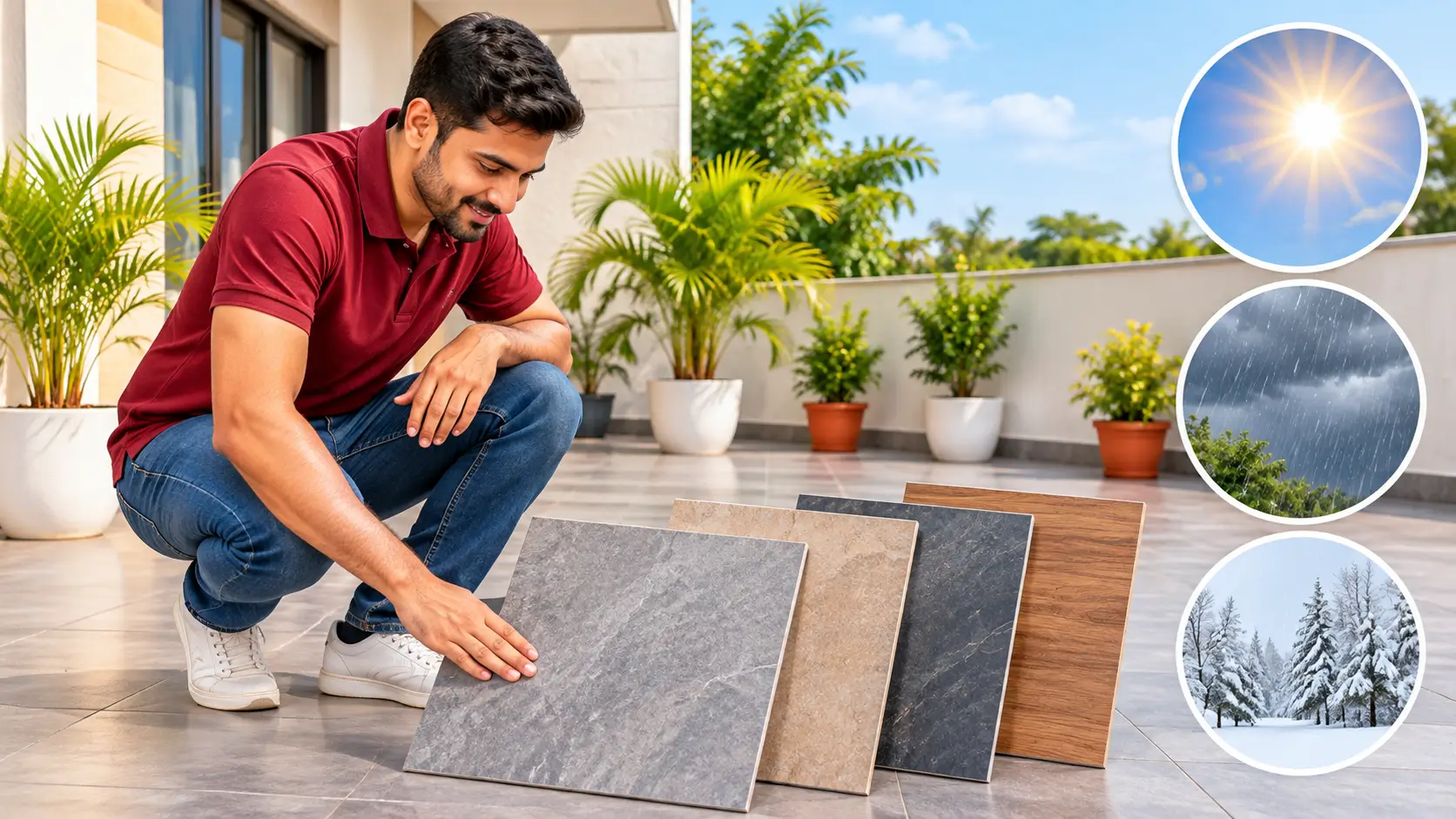
Outdoor spaces make a home more beautiful and useful. A well-designed balcony gives you a place to enjoy your morning tea. A tiled terrace can become a comfortable spot for family gatherings. Even a small garden or entrance looks better with the right flooring. However, outdoor areas face more challenges than indoor rooms. Strong sunlight, heavy rain, dust, and changing temperatures can affect the tiles over time. Water can also make the surface slippery. If you choose the wrong tiles, you may face cracks, stains, loose edges, or frequent repair work.
That is why you should consider more than colour and design when buying outdoor tiles. You need a surface that can handle local weather and daily use.
1. Understand Your Outdoor Space
Before visiting a tile showroom, think about where you plan to install the outdoor tiles. Different outdoor areas have different needs.
For example, balcony tiles may face rain and sunlight but usually experience light foot traffic. Garden pathways may need stronger tiles because people walk over them regularly. Driveways need flooring that can handle vehicle weight and movement.
Consider these common areas:
- Balcony: Choose tiles with good grip and moisture resistance.
- Terrace: Look for weather-resistant tiles that can handle direct sunlight and rain.
- Garden pathway: Select strong tiles with a textured surface for better grip.
- Entrance: Choose tiles that can handle regular foot traffic, dust, and dirt.
- Outdoor stairs: Give slip resistance extra attention because wet steps can cause accidents.
Once you understand the purpose after that you can narrow down your options for outdoor tiles.
2. Choose Outdoor Tiles That Handle Indian Weather
India experiences different weather conditions across its regions. Rajasthan and Delhi face strong summer heat. Mumbai and Kerala receive heavy monsoon rain. Hill stations such as Shimla and Manali experience much colder winters. Your outdoor tiles should suit the local climate.
a) Summer heat
Outdoor flooring can become hot when sunlight falls on it for several hours. Light-coloured outdoor tiles may absorb less heat than darker surfaces. However, the actual surface temperature also depends on the material, finish, and surrounding conditions. If your terrace or balcony receives direct sunlight, compare lighter shades and check samples in natural light.
b) Monsoon rain
Rainwater can make smooth tiles slippery. Choose outdoor floor tiles with a suitable textured or anti-skid finish. Also check their water absorption properties. Good drainage matters just as much as the tile itself. Water should not collect in corners or remain on the floor for long periods.
c) Cold weather
If you live in a region that experiences freezing temperatures, check the manufacturer’s frost-resistance rating. Water can enter porous tiles and cause damage when it freezes and expands. Porcelain tiles often offer low water absorption. However, you should still confirm that the manufacturer recommends the specific product for your outdoor conditions.
3. Check Water Absorption Before Buying
Water absorption is one of the most important features of outdoor tiles. It tells you how much water a tile can absorb through its body. Outdoor tiles with high water absorption can face problems in wet outdoor areas. Moisture may affect their long-term performance, especially in areas with harsh winter conditions. Porcelain tiles generally have a dense body and low water absorption.
Under the ISO classification, porcelain tiles have water absorption of 0.5% or less. This makes them a popular option for outdoor applications. Ask the seller for the product’s technical data sheet instead of relying only on verbal claims. You should also check whether the manufacturer recommends the tile for terraces, balconies, pathways, or other outdoor areas.
4. Give Slip Resistance High Priority
A beautiful floor has little value if it becomes unsafe during rain. Smooth and glossy tiles can create a slipping risk when water covers the surface. For outdoor flooring, consider matte or textured tiles with suitable slip-resistance test results.
What should you check?
Ask the seller for the tile’s slip-resistance rating and the test method used. Different testing systems use different measurements, so compare products using the same test method. Do not assume that every rough-looking tile offers good grip. The actual performance depends on the surface texture and test results. For areas around swimming pools or outdoor showers, choose a product specifically recommended for wet and barefoot use. Keep in mind that soap, algae, and dirt can also make outdoor floors slippery.
5. Compare Different Types of Outdoor Tiles
You will find several materials on the market. Each option has its own benefits and limitations.
a) Porcelain tiles
Porcelain tiles are a common option for outdoor flooring due to their minimal water absorption and solid body. Many outdoor collections also offer textured finishes that improve grip. They come in different colours and designs. You can find options that resemble natural stone, concrete, or wood. Check the manufacturer’s outdoor-use recommendation before buying. Not every porcelain tile suits every outdoor application.
a) Vitrified tiles
Vitrified tiles have a dense structure and come in many designs. Some products work well in outdoor areas when the manufacturer recommends them for that purpose. Look for a suitable surface finish and check the technical specifications. Avoid choosing a tile only because the seller calls it vitrified.
b) Ceramic tiles
Ceramic tiles come in many colours and patterns. Some products suit covered balconies and other outdoor areas. However, you should check their water absorption, strength and slip resistance before installation. Standard indoor ceramic floor tiles may not suit an exposed terrace or garden pathway.
c) Natural stone tiles
Natural stone can give outdoor spaces a classic appearance. Options such as granite and certain other stones can work well in outdoor settings. However, different stones have different levels of porosity and maintenance needs. Some may require sealing or special cleaning. Ask the supplier about the stone’s suitability for your climate and location.
6. Select the Right Tile Thickness and Strength
Thicker tiles are not always better. Choose a product that can handle the proposed load and installation. If you have a balcony with foot traffic and a driveway with cars, you will have separate requirements. Enquire with the tile provider about the breaking strength and applications of the tile. In places that receive heavy use, such as driveways, select products that are authorised for vehicle loads. Some outdoor porcelain paving is 20 mm thick. The manufacturer’s installation instructions must be followed for these outdoor products.
7. Pick a Practical Colour and Finish
Outdoor tiles face dust, mud, rainwater and everyday stains. Your colour and finish choice can affect how often you need to clean the floor. Light shades can make a small balcony feel more open. However, they may show mud and dirt clearly after rain. Very dark tiles can show dust and water marks. They may also feel hotter under direct sunlight. Grey, beige, brown, and stone-inspired shades often work well with outdoor spaces. You can also choose patterned tiles if you want to create a decorative entrance or garden pathway. Always check a physical sample in natural light before placing a large order.
8. Do Not Ignore Drainage and Installation
Even high-quality outdoor tiles can develop problems if workers install them incorrectly. Poor drainage can allow water to collect on the surface. Weak bonding can cause outdoor tiles to become loose or crack. Ask your contractor to check the base before installation. The floor needs a suitable slope towards the drainage point so rainwater can flow away.
Use tile adhesive and grout that the manufacturer recommends for the specific outdoor application. The installer should also follow the correct joint spacing and curing instructions. For terraces, proper waterproofing is especially important. Outdoor tiles and grout alone do not replace a suitable waterproofing system.
9. Check Cleaning and Maintenance Needs
Outdoor tiles collect dust, leaves, mud, and other dirt. Choose a surface that you can clean without much effort. Most suitable outdoor tiles need regular sweeping and occasional washing. Use a cleaning product that the manufacturer recommends.
Avoid harsh chemicals unless the supplier confirms that they are safe for the tile. Check whether natural stone needs sealing or any other special care. Also inspect grout joints and drainage points from time to time. Remove dirt and leaves before they block water flow.
10. Set Your Budget Before Visiting a Showroom
Outdoor tile prices vary according to material, size, thickness, design, and brand. Installation costs also depend on the condition of the surface and the work involved. Do not compare tiles only by their price per square foot. A cheaper product may not suit your outdoor area. A more expensive tile may also offer features you do not need. Ask for a complete estimate that includes tiles, adhesive, grout, labour, cutting and wastage. Buy a few extra tiles from the same batch for future repairs.
Conclusion
Choosing durable outdoor tiles requires more thought than selecting an attractive design. You need to consider weather, water absorption, slip resistance, strength, and maintenance. For many Indian homes, outdoor-rated porcelain tiles offer a practical option because of their dense structure and low water absorption. However, the right choice depends on your location and the purpose of the space.
Take time to compare technical details before buying. Also pay attention to drainage, waterproofing, and installation quality. A suitable tile combined with proper installation can help keep your balcony, terrace, garden, or entrance attractive and useful for years.