

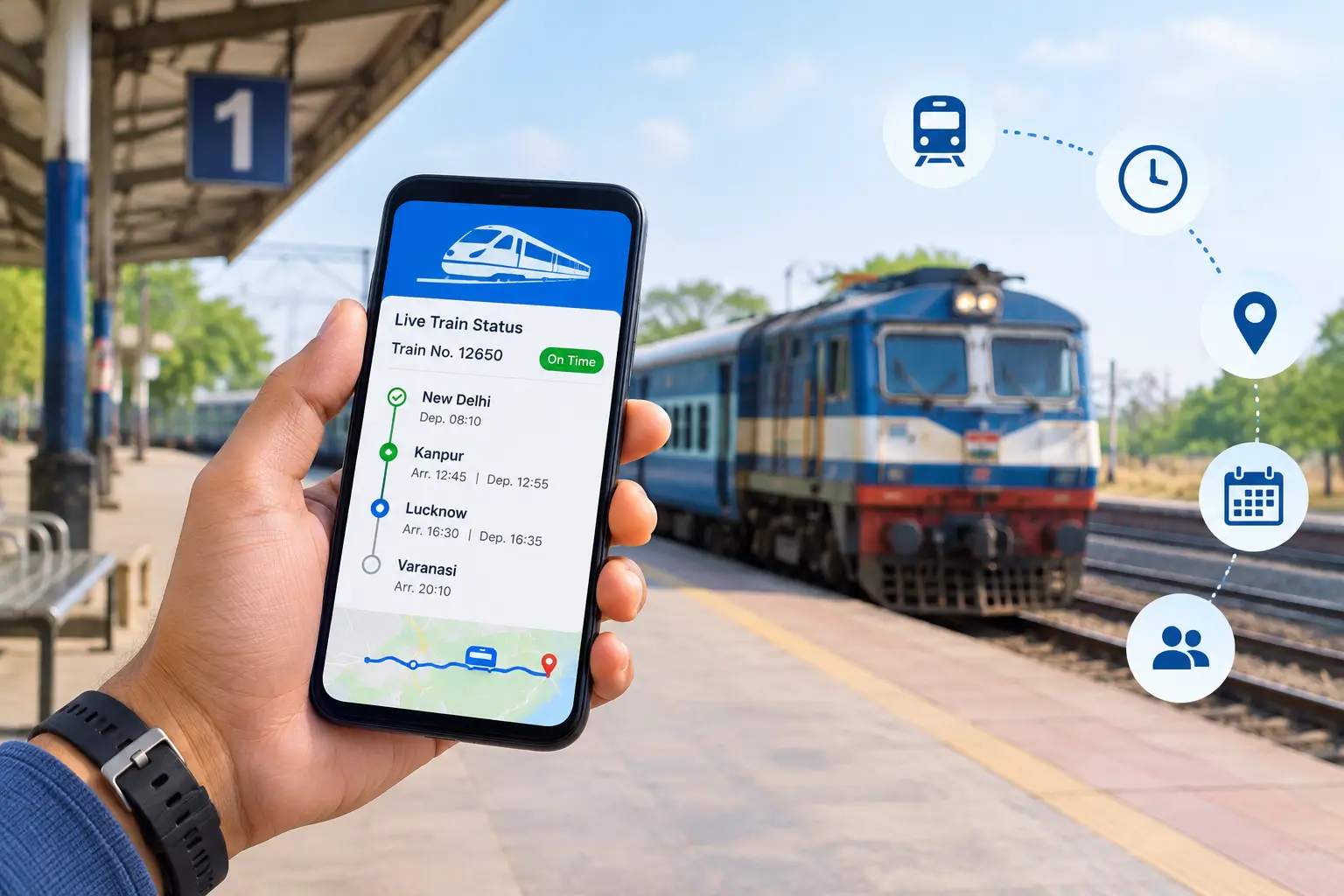
Train travel remains the most popular way to travel across India. Whether you are going home for a festival, visiting family, travelling for work, or planning a holiday, Indian Railways connects thousands of destinations. However, train journeys do not always go exactly as planned. Your train may run late, arrive at a different platform, or reach your destination earlier or later than expected. If you depend only on the departure time printed on your ticket, you may face unnecessary stress at the station.
This is why you should always track your train journey. Checking the latest train status helps you understand where your train is, whether it is running on time, and when it may reach your station. Train tracking takes only a few minutes, but it can help you plan your journey more comfortably.
What Does Tracking Your Train Journey Mean?
Tracking your train journey means checking the latest available information about your train’s location, running status, arrival time, and departure time. For example, suppose you have a ticket from Jaipur to Delhi, and your train is scheduled to leave Jaipur at 8:00 AM. Before leaving home, you check the train status and discover that the train is running late. You can use that information to plan your journey to the station more sensibly.
Train tracking can also help you check the train’s progress while you travel. If someone plans to pick you up at your destination, they can check the expected arrival time instead of waiting at the station without knowing when you will arrive.
What information can you check?
Depending on the service you use, train status information may include:
- Live running status: The latest reported position or progress of your train.
- Expected arrival time: The estimated time at which the train may reach a particular station.
- Expected departure time: The estimated departure time from a station.
- Delay information: Whether the train is running late compared with its scheduled timetable.
- Previous and upcoming stations: Information that helps you understand the train’s route and progress.
Remember that estimated times can change during a journey. Always check the latest available information before making important travel decisions.
7 Reasons Why You Should Always Track Your Train Journey
1. You can avoid unnecessary waiting at the railway station
Waiting at a railway station can become tiring, especially when you have luggage, children, or elderly family members with you. If your train runs late, reaching the platform much earlier than necessary can leave you waiting for a long time. Checking the train’s running status before leaving home helps you understand whether it is running on schedule. You can then plan your departure from home with better information. However, do not leave for the station at the last minute just because the train shows a delay. The status can change, and you still need enough time to reach the correct platform and board safely.
2. You can plan your arrival at the destination
Knowing the expected arrival time helps you plan what happens after you leave the train. You may need to book a taxi, arrange a family pickup, or catch another train or bus. For example, suppose your train is expected to reach Lucknow at 6:00 PM. Your family can use the latest running status to decide when to leave home to collect you. This can save time for both you and the person waiting for you. It also reduces confusion if the train arrives later than expected.
3. You can manage connecting journeys better
Some travellers use more than one train to reach their final destination. Others need to catch a bus, flight or taxi after arriving at a railway station. A delay early in the journey can affect the rest of your travel plans. Tracking your train helps you identify possible delays and decide what to do next. For example, if you have a separate train ticket from Delhi to another city, you should check the connection time and the conditions that apply to your booking. Train tracking can help you understand the situation, but it cannot guarantee that you will make the connection. Whenever possible, allow enough time between separate bookings. A tight connection can create problems even when you monitor your train carefully.
4. You can keep your family informed
Many people travel alone for work, education, or personal reasons. Their family members may want to know whether they have boarded the train or when they will arrive. Sharing your train number and expected arrival time can make communication easier. Family members can check the running status and plan accordingly. This can be especially helpful when an elderly parent, a child travelling with a responsible adult, or another family member needs to be collected from the station. You should still keep your phone charged and inform your family directly if your plans change.
5. You can prepare for unexpected delays
Long distance train journeys can face delays because of weather conditions, railway traffic, maintenance work, or operational issues. These situations may affect the expected arrival time. When you track your train regularly, you can spot changes in its estimated schedule. This gives you more time to inform people, adjust local transport plans, or make arrangements for food and other essentials. Keep drinking water and necessary medicines with you, along with your phone charger or power bank. Tracking will not prevent a delay, but it can help you manage the inconvenience more effectively.
6. You can reduce confusion at the station
Large railway stations can feel confusing, particularly if you are visiting them for the first time. Passengers may need to identify the correct platform, check announcements, and understand changes to their travel plans. Train status services can provide useful information about your train’s progress. However, live running status does not always provide a confirmed platform number, and platform details can change. Always check the display boards and listen to official station announcements. Use your ticket and the railway staff’s guidance to confirm where you need to board.
7. You can travel with greater confidence
Uncertainty can make even a short journey stressful. You may keep wondering whether the train has departed, whether it will arrive on time, or whether someone will be waiting for you. Regularly checking the train status gives you a clearer picture of your journey. You can make practical decisions based on the latest information instead of relying only on assumptions. You do not need to check the status every few minutes. Checking before leaving home, before an important connection, and during a long journey when necessary is often more useful.
How to Check Your Train’s Live Running Status in India
Indian travellers can use official railway services and other train information platforms to check running status.
1. Use the official Indian Railways services
The National Train Enquiry System (NTES) provides train enquiry information through its official website and available services. You can visit https://enquiry.indianrail.gov.in/ to look for train running information. Keep your train number or train name ready. Searching by train number can help you identify the correct service when several trains have similar names or travel along related routes. Check the information close to your departure time because running status can change. If you cannot access the website, use station displays or ask railway staff for assistance.
2. Check through railway enquiry options
Indian Railways provides enquiry options for passengers who need information about train schedules and running status. The availability of particular services and contact methods can change, so check the current official railway guidance before relying on a specific number or service. Don’t trust unknown websites that show old information or ask for unnecessary personal details. To check your train status, you only need the train name or number—never enter your account password.
3. Follow these simple steps
- Find your train number on your ticket or booking details.
- Open the official train enquiry service.
- Enter the train number or select the relevant train.
- Check the latest running status and estimated arrival or departure time.
- Confirm important platform and boarding information at the station.
These steps can help you check the right train without wasting time searching through unrelated information.
When Should You Track Your Train?
The best time to check your train depends on your journey and travel plans.
| When to check | Why it helps |
| Before leaving home | Helps you understand the latest running status |
| Before reaching the station | Allows you to review any schedule changes |
| During a long journey | Helps you estimate arrival at upcoming stations |
| Before a connecting journey | Helps you assess possible delays |
| Before someone collects you | Helps them plan their arrival at the destination |
You should also check your ticket for the scheduled departure time, boarding station, and coach details. Live status works best when you combine it with the information on your ticket and the railway’s official announcements.
Conclusion
Tracking your train is an easy habit that makes traveling across India much smoother. It helps you check for delays, plan your station stops, update your family, and adjust to any schedule changes. You do not need special technical knowledge to use train tracking services. Keep your train number ready, check the latest information through a reliable service, and confirm important details at the station.
Treat live train status as a planning aid rather than a promise that the train will arrive at an exact time. Combine it with your ticket details and official railway announcements. Whether you travel for work, visit family, or take a holiday, checking your train status before and during the journey can help you make better decisions and travel with greater peace of mind.