

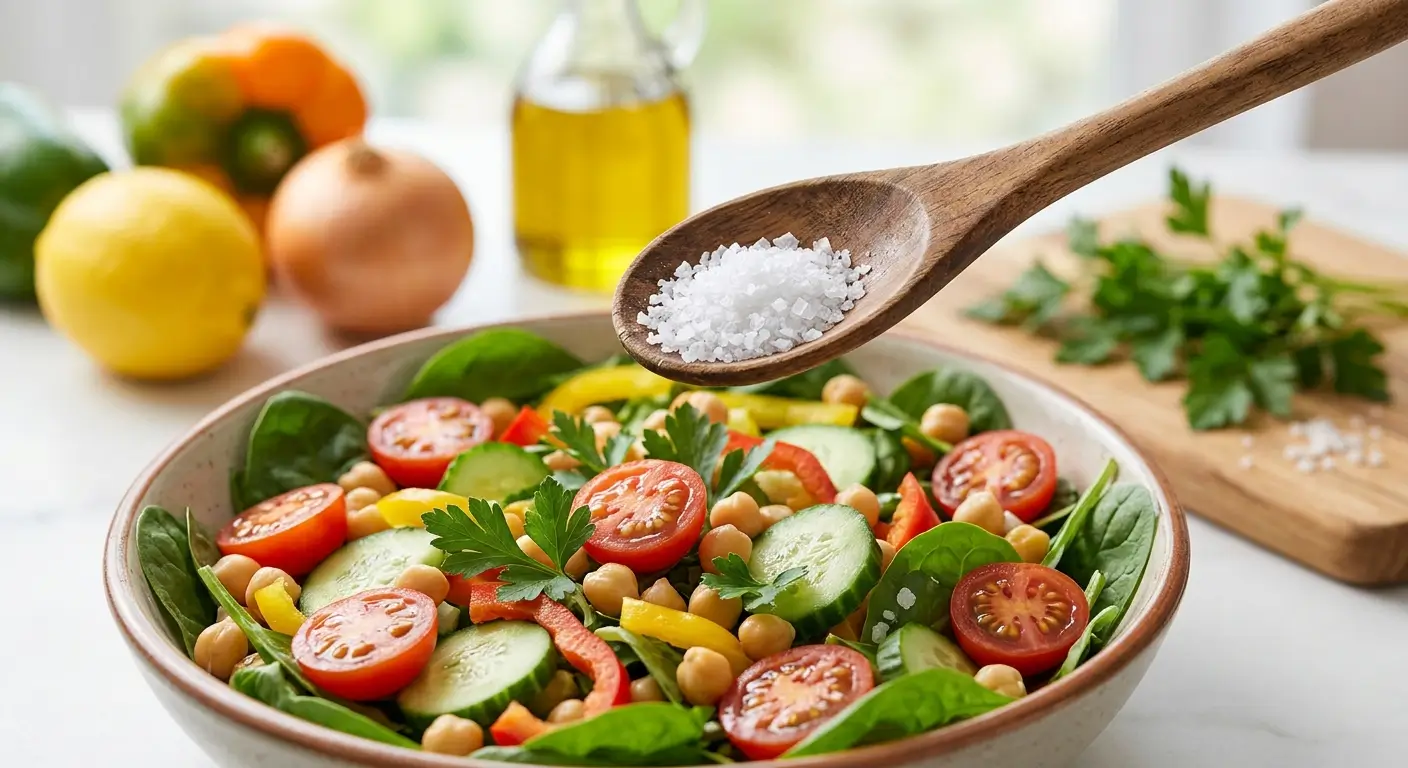
We all use salt to make our food taste better and keep it fresh, but eating too much of it can sneakily hurt your health. While a lot of people worry more about sugar and fat, they don’t realise that too much salt can cause serious problems like high blood pressure, heart disease, stroke, and kidney issues.
The challenge is that most people do not realise how much salt they consume every day. Apart from table salt, sodium is present in packaged foods, snacks, sauces, restaurant meals, and even foods that do not taste particularly salty.
Understanding why salt should be consumed in moderation can help you make healthier dietary choices and protect your long-term health.
Table of Contents
What Is Salt and Why Does the Body Need It?
Salt primarily consists of sodium and chloride. Sodium is an essential mineral that helps regulate fluid balance, supports nerve function, and assists muscle contractions. Without sodium, the body cannot perform many important functions properly.
However, the body requires only a small amount of sodium to function effectively. Problems begin when daily intake exceeds recommended limits for an extended period.
How Much Salt Should You Consume Daily?
According to the World Health Organisation (WHO), adults should consume less than 5 grams of salt per day, which is roughly one teaspoon. This amount provides about 2,000 mg of sodium.
Unfortunately, many populations consume far more than this recommendation. Global average salt intake is more than double the recommended level, and studies suggest that many Indians also exceed safe limits.
Why Too Much Salt Is Harmful
1. Raises Blood Pressure
Too much salt makes your blood pressure go up. Salt pulls water into your blood. This extra water means there is more blood for your heart to push. Your heart has to work much harder. Over time, this hurts your veins and can cause heart problems.
2. Increases Heart Disease Risk
High blood pressure is a major risk factor for heart attacks, heart failure, and other heart diseases. When blood pressure stays high for years. Your heart has to work too hard. This makes the heart muscle weaker. This can lead to serious health problems.
3. Affects Kidney Function
Your kidneys work hard to filter extra salt out of your body. If you eat too much salt all the time, it puts too much stress on them. Over time, eating too much salt can cause kidney disease. It also makes it harder for your kidneys to keep the right amount of fluid in your body.
4. May Increase Stroke Risk
Too much salt causes high blood pressure. This can hurt the blood vessels in your brain. It makes having a stroke much more likely, especially for older people.
5. Can Impact Bone Health
Research shows that eating too much salt can cause you to lose calcium through your urine. Over time, this loss of calcium can weaken your bones and make you more likely to develop osteoporosis, especially as you get older.
Hidden Sources of Salt in Everyday Foods
Many people think they are safe just by skipping the salt shaker. But most of our salt actually comes from snacks and packaged foods. You should watch out for chips, namkeen, and papads. Foods like instant noodles, soup packets, and frozen meals have a lot of salt too. You should also be careful with ketchup, sauces, cheese, and bread products. Also, food from restaurants or fast food shops often has a lot of hidden salt. In many Indian homes, pickles, papads, snacks, and restaurant curries are the biggest sources of extra salt.
Signs That You May Be Consuming Too Much Salt
Eating too much salt often does not show any signs right away. However, some people might notice that they feel thirsty all the time. You might also feel bloated or notice your body holding onto extra water. Sometimes, your hands or feet may become swollen. You might also experience headaches, feel tired, or notice that your blood pressure has gone up. If you feel these things often, it is a good idea to look at what you eat.
Benefits of Reducing Salt Intake
Eating less salt provides many important health benefits. Here are the key improvements you may experience:
- Better Blood Pressure Control: When you eat less salt, your blood pressure goes down. This makes it easier for your heart and blood vessels to do their job without as much pressure.
- Improved Heart Health: Eating less salt helps keep your arteries healthy. Over time, this change helps to lower your overall risk of heart disease.
- Better Kidney Function: Reducing your sodium intake helps your kidneys maintain the proper fluid balance in your body. This also decreases the workload on these vital organs.
- Reduced Water Retention: Many people who lower their sodium intake notice positive physical changes. Specifically, they often experience less bloating and less swelling in their body.
- Long-Term Disease Prevention: Maintaining recommended salt levels helps lower the risk of developing several chronic diseases. Ultimately, this choice contributes to a much healthier aging process.
Practical Ways to Reduce Salt Intake
You can try these practical steps to reduce your salt intake:
- Read Food Labels: Always check the sodium levels on packaged foods before you buy them to help manage your intake. Checking these labels is a practical step you can take to understand what is in your food.
- Cook More Meals at Home: Making meals at home lets you control your ingredients and how much salt is used.
- Use Herbs and Spices: Instead of using too much salt, flavour your food with garlic, ginger, coriander, cumin, lemon juice, black pepper, or fresh herbs. Using these alternatives helps you avoid relying heavily on salt to make your meals taste good.
- Limit Processed Foods: Packaged foods often have a lot of hidden salt, so choosing fresh foods can help you eat much less.
- Reduce Salt Gradually: Your taste buds will get used to less salt over time, usually within a few weeks.
Conclusion
Salt is important for the body, but eating too much can be harmful. Too much salt can lead to high blood pressure, heart disease, stroke, and kidney problems. The World Health Organization says you should eat less than 5 grams of salt each day. Many people eat more than this without knowing it.
You can make small changes to help your health. You should cook more meals at home to control your salt use. You should check food labels to see how much salt is inside. It also helps to eat fewer processed foods. You can use herbs and spices to add flavour to your food instead of salt. Taking these steps today can keep your heart and kidneys healthy for a long time.
Read More: Acidity Home Remedies: 10 Natural Ways to Get Quick Relief
Frequently Asked Questions
1. Is sea salt healthier than table salt?
Sea salt and table salt contain similar amounts of sodium. Both should be consumed in moderation.
2. Can I completely eliminate salt from my diet?
You should not remove all salt from your diet. Your body needs a small amount of sodium to work correctly. The goal is to eat a healthy, moderate amount rather than cutting it out completely.
3. Are children affected by high salt intake?
Yes. Excessive sodium intake during childhood may contribute to health problems later in life. WHO recommends age-appropriate sodium limits for children.
4. How long does it take to get used to less salt?
Most people adapt within two to four weeks, after which heavily salted foods may taste overly salty.