

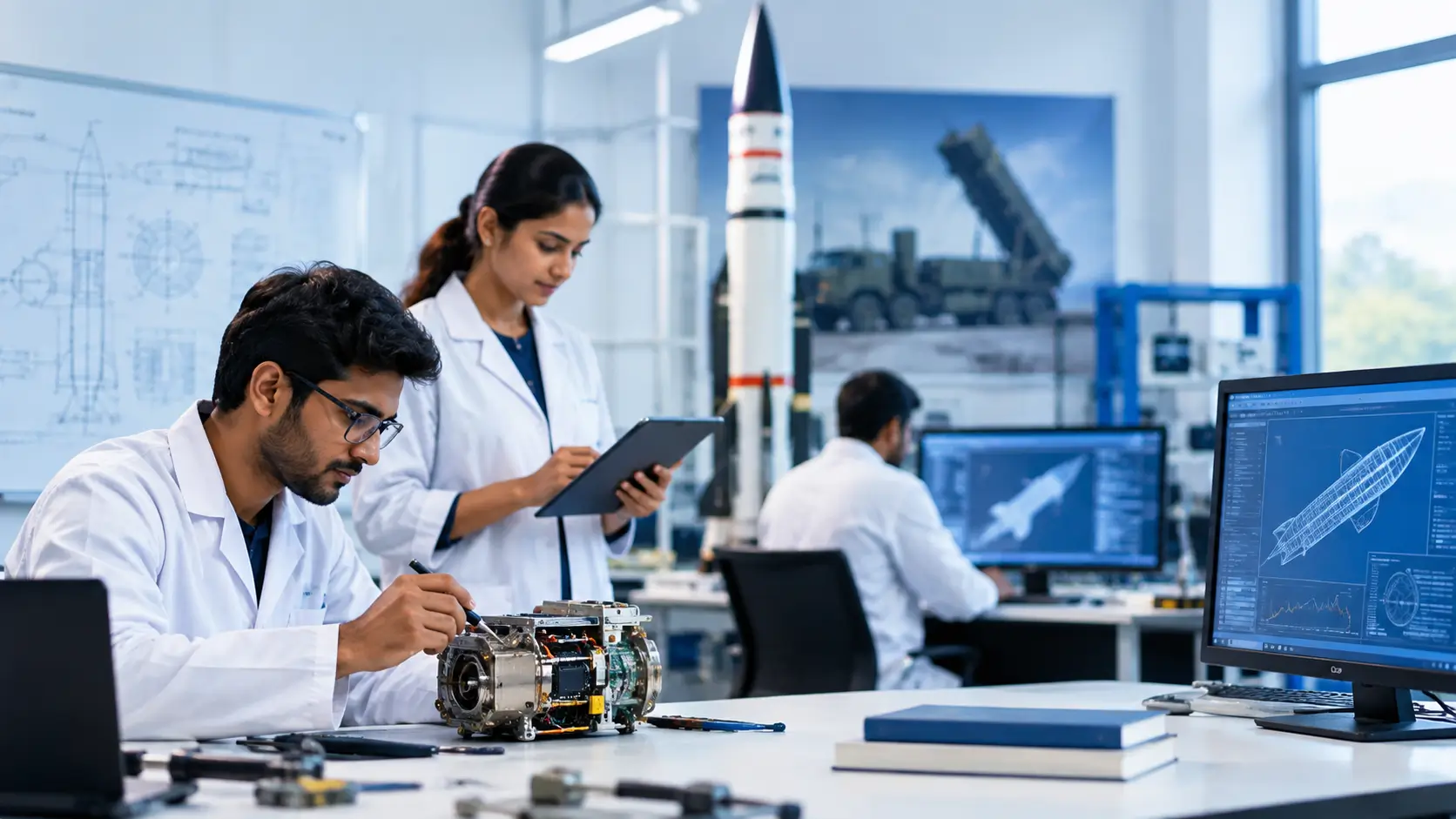
India has built a strong research and development system to create important technologies within the country. One organization that plays a role in this work is the Advanced Systems Laboratory (ASL) of the Defence Research and Development Organisation (DRDO).
Advanced Systems Laboratory is based in Hyderabad and works under DRDO’s Missiles and Strategic Systems cluster. The laboratory operates from the Dr. A.P.J. Abdul Kalam Missile Complex in Kanchanbagh, Hyderabad. The name Advanced Systems Laboratory may sound highly technical to a normal reader. In simple terms, Advanced Systems Laboratory works on advanced engineering and defense technologies that support India’s strategic systems.
Its work involves several areas of engineering and research. These areas require scientists, engineers, technicians, researchers, and other skilled professionals who can work on complex problems.
What Is Advanced Systems Laboratory?
Advanced Systems Laboratory, commonly called ASL, is a DRDO laboratory located in Hyderabad. DRDO’s Missiles and Strategic Systems cluster works on the design and development of advanced missile and strategic systems for India’s defense needs. The cluster includes laboratories such as ASL, DRDL, RCI, TBRL, and ITR.
Advanced Systems Laboratory is therefore part of a larger research network rather than an isolated organization. Different DRDO laboratories work on different areas of technology. Together, they contribute to research, development, testing, integration, and other activities required to develop advanced defense systems.
Where Is Advanced Systems Laboratory Located?
The is located at:
Advanced Systems Laboratory (ASL)
Kanchanbagh Post Office
Hyderabad – 500058, Telangana
DRDO lists ASL under its Missiles and Strategic Systems cluster and provides the laboratory’s official contact details on its website.
What Does Advanced Systems Laboratory Work On?
Advanced Systems Laboratory works in an area where many different engineering fields come together. DRDO’s Missiles and Strategic Systems cluster identifies areas such as aerodynamics and airframe design, propulsion, navigation, guidance, control, onboard power systems, warhead systems, launch systems, and command and control systems.
These terms may sound difficult, but the basic idea is easier to understand. A complex defense system cannot depend on just one technology. Engineers need to consider how its structure works, how it moves, how its systems receive power, how it is guided, and how different parts work together. That is why research laboratories need people from different engineering backgrounds.
Engineering at Advanced Systems Laboratory
Engineering forms an important part of advanced defense research. Mechanical engineers may work with structures, materials, testing, design, and other mechanical systems. Electrical and electronics engineers can contribute to electrical systems and electronic technologies. Other specialists may work in areas connected with control, guidance, software, or testing.
A DRDO recruitment advertisement for ASL has previously invited Junior Research Fellows in fields including Mechanical Engineering, Electrical and Electronics Engineering, and Electronics and Communication Engineering. This gives students a useful idea about the range of technical skills that can be relevant to research work at ASL.
Why Different Engineering Fields Matter
Imagine building a large machine. One engineer may focus on the physical structure. Another may work on electrical systems. Someone else may study how the system moves or responds to commands. All these areas need to work together. Advanced defense systems follow the same basic principle, although the technology involved can be much more complex.
Research and Innovation at ASL
Research is not only about creating something completely new. Scientists and engineers also need to improve existing technologies, test new materials, solve engineering problems, and find better ways to make systems work reliably. ASL’s role within the DRDO Missiles and Strategic Systems cluster connects it with research and development work in advanced defense technologies.
One example of the type of technical expertise associated with ASL comes from a DRDO consultant requirement that mentioned structural design and analysis, testing and evaluation of mechanical components, dynamic analysis, and review of failures and non-conformance in mechanical systems.
This shows how engineering research can involve both designing systems and understanding why something may not perform as expected.
Testing Is an Important Part of Research
A design may look good on paper, but engineers still need to test it. Testing can help researchers understand how a component or system performs under different conditions. When a test identifies a problem, engineers can study the results, find the cause, improve the design, and test it again. This process helps turn an engineering idea into a more reliable technology.
ASL and India’s Defense Technology
India has focused heavily on developing defense technologies within the country. DRDO’s Missiles and Strategic Systems cluster supports this goal by working on missile and strategic systems and the technologies needed for them. ASL forms one part of this larger ecosystem.
The importance of such research goes beyond a single laboratory. Developing advanced technology within India can help build domestic technical skills, research capabilities, engineering knowledge, and industrial expertise. However, it is important to remember that defense technology development involves many organizations and laboratories. ASL is one part of this broader DRDO system.
Opportunities for Students and Young Engineers
ASL can also be relevant to students who want to build careers in research and engineering. DRDO has previously published opportunities for Junior Research Fellows at ASL. A 2023 ASL advertisement listed opportunities for candidates from Mechanical Engineering and Electrical and Electronics/Electronics and Communication Engineering backgrounds, with qualification requirements that included engineering degrees and, for some routes, a valid GATE score.
ASL has also advertised apprenticeship opportunities. A 2024 ASL apprenticeship advertisement included graduate, technician, and trade apprentice positions. The listed fields included Mechanical Engineering, Electrical Engineering, Electrical and Electronics Engineering, Electronics and Communication Engineering, Computer Science and Engineering, and several ITI trades.
What Students Should Understand
Students should not assume that these old advertisements represent current vacancies. Recruitment rules, qualifications, available positions, age limits, and application methods can change. Anyone interested in working at ASL should check the latest official DRDO recruitment or apprenticeship notification before applying.
Industry and Research Partnerships
Advanced research also requires cooperation between research organizations and industry. DRDO maintains industry interaction mechanisms for its laboratories. A 2026 DRDO document lists ASL as an organization with an Industry Interaction Group and provides contact information for industry-related interaction.
ASL has also published industry-related opportunities in the past. For example, a DRDO document concerning an industry partnership listed requirements related to experience with aerospace-grade materials, manpower, engineering expertise, turnover, and supporting financial and company documents.
This shows that private industry can have a role in supporting advanced technology development when it meets the requirements of a particular opportunity.
Skills That Can Help in Advanced Engineering Research
Students who want to enter advanced engineering research should focus on building strong basic skills.
- Technical Knowledge: A strong understanding of the chosen engineering field is important. Students should understand subjects rather than simply memorizing answers. Strong basics in mathematics, physics, engineering principles, and practical problem-solving can help later.
- Problem-Solving Ability: Research often involves problems that do not have an obvious answer. Students should learn how to break a large problem into smaller parts and test possible solutions.
- Practical Experience: Projects, laboratory work, internships, and technical training can help students understand how classroom knowledge works in real situations.
- Communication: Engineers also need to explain their work clearly. Writing reports, presenting results, discussing problems, and working with people from other technical fields are all useful skills.
Why ASL Matters to Young Indians
For students interested in engineering, Advanced Systems Laboratory represents one example of how engineering knowledge can connect with national research and technology development. A student studying mechanical engineering may eventually work on advanced structures. An electronics student may explore electronic systems. A computer science student may find opportunities in technology areas where computing skills support larger engineering systems.
The exact opportunities depend on the recruitment or research program available at a particular time. The important lesson is that advanced research needs many types of technical skills.
Advanced Systems Laboratory: Quick Overview
| Category | Details |
| Full Name | Advanced Systems Laboratory |
| Short Name | ASL |
| Organization | Defence Research and Development Organisation |
| Ministry | Ministry of Defence, Government of India |
| Location | Kanchanbagh, Hyderabad |
| DRDO Cluster | Missiles and Strategic Systems |
| Main Focus | Advanced defense and strategic system technologies |
| Opportunities | Research, apprenticeships, technical and other roles depending on notifications |
The details above are based primarily on official DRDO information.
Conclusion
The Advanced Systems Laboratory is an important part of DRDO’s Missiles and Strategic Systems research network. Based in Hyderabad, ASL works within a larger ecosystem focused on advanced defense technologies and engineering. Its broader research environment covers areas such as propulsion, structures, guidance, control, power systems, and other technologies that support strategic systems.
For engineering students and professionals, Advanced Systems Laboratory also shows how different technical fields can come together to solve complex real-world problems. The laboratory has offered research, apprenticeship, and other professional opportunities at different times. However, candidates should always check the latest official DRDO notification before making any application decision.