

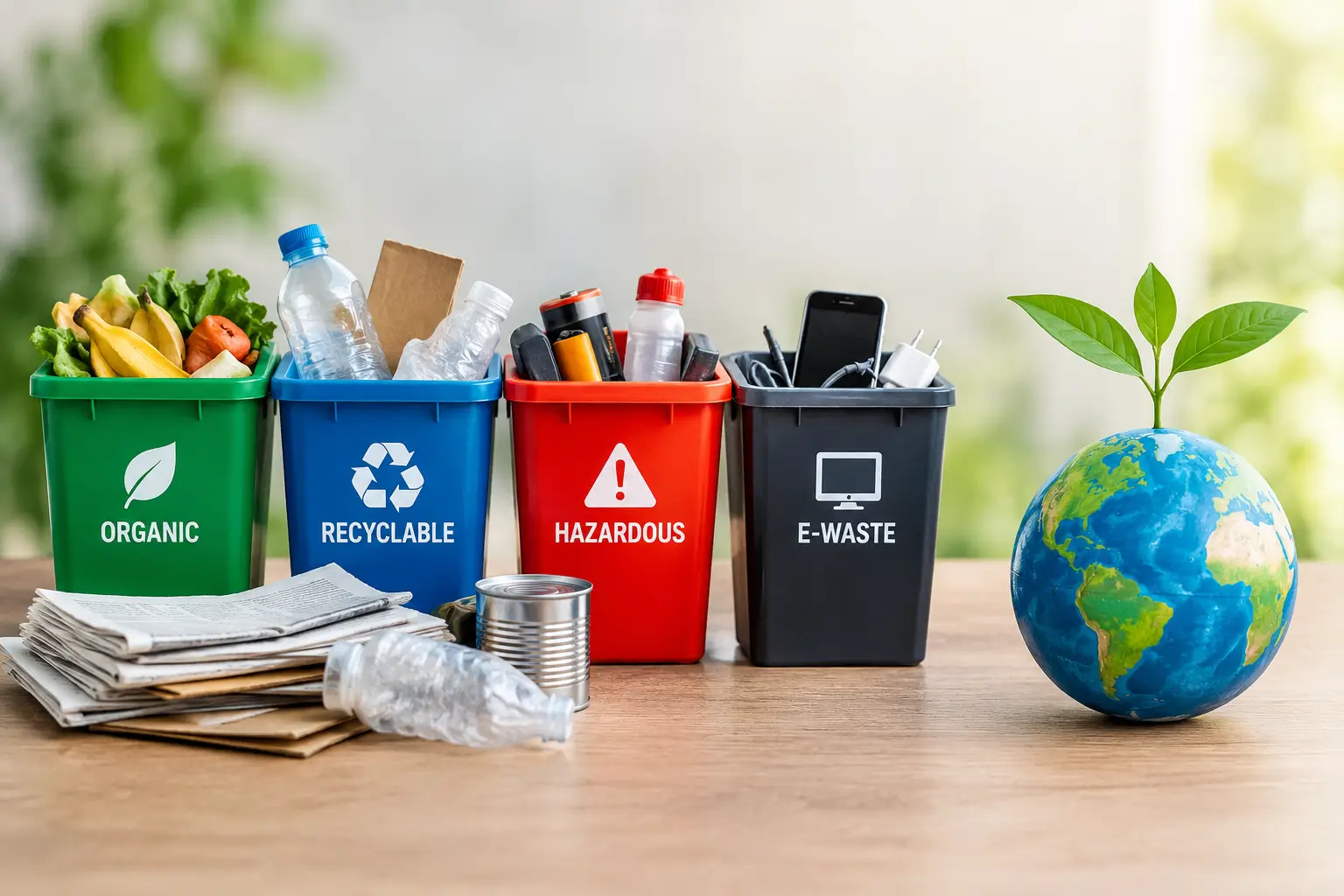
Waste products are a normal part of everyday life, produced by homes, shops, offices, schools, factories, hospitals, and construction sites alike. Anything can turn into waste once people are finished with it, whether it is food leftovers, plastic packets, used paper, broken items, sewage, chemicals, or old electronic devices. The problem starts when we throw waste away without thinking about where it goes. Poor waste management can make streets dirty, pollute water and soil, attract insects and animals, and cause health problems. At the same time, some waste contains useful materials that we can recover and use again.
Learning about waste products helps us make smarter choices, and you do not need to be an expert to help. Simple habits like separating kitchen scraps from dry waste and skipping unnecessary plastic can truly make a big difference.
What Are Waste Products?
Waste products are materials that people or businesses no longer need or want and decide to throw away, discard, or send for further treatment. Waste products can come from many sources. A family may produce food scraps and packaging waste every day. A factory may produce industrial waste during manufacturing. A hospital produces medical waste that needs special handling.
Not all waste products have the same level of risk. Some waste decomposes naturally, while other materials remain in the environment for a long time. Some waste can also be recycled or reused. This is why proper waste management starts with understanding what type of waste we have.
Major Types of Waste Products
Different types of waste products need different methods of handling. Treating every waste product item in the same way can create unnecessary problems.
| Type of Waste | Common Examples | Suitable Management |
| Biodegradable waste | Food scraps, vegetable peels, garden waste | Composting or suitable treatment |
| Dry waste | Paper, cardboard, some plastics, glass | Reuse or recycling |
| Plastic waste | Bags, bottles, packaging | Reduce, reuse and recycle where possible |
| E-waste | Phones, computers, chargers | Proper collection and recycling |
| Biomedical waste | Used medical items and certain healthcare waste | Special handling and treatment |
| Hazardous waste | Certain chemicals, paints and batteries | Safe collection and controlled treatment |
| Construction waste | Concrete, bricks, wood and debris | Recovery, reuse or proper disposal |
1. Biodegradable Waste
Biodegradable waste can break down naturally through the action of microorganisms. Kitchen waste such as vegetable peels, fruit waste, leftover food, and garden waste commonly falls into this category. Composting provides one useful way to manage many types of biodegradable waste. Instead of sending food and garden waste directly to a landfill, people can turn suitable organic waste into compost. However, people should not put every household item into a compost pile. Materials such as plastic, glass, metal, and certain chemicals need different treatment.
2. Dry Waste
Dry waste means clean things like paper, cardboard, glass, and boxes. If you keep these items clean and away from wet garbage, many of them can be recycled! For example, a clean cardboard box may have another use or may enter a recycling process. A newspaper can also go into a suitable paper recycling stream. Keeping dry waste separate makes collection and sorting easier.
3. Plastic Waste
Plastic waste has become a major waste-management challenge because many plastic products do not break down easily in natural conditions. Plastic bags, bottles, food packaging, containers, and other products can enter drains, water bodies, streets, and landfills when people dispose of them carelessly. The practical approach starts with reducing unnecessary plastic use. Reusing suitable items and sending recyclable plastic through proper collection channels can also help.
4. E-Waste
E-waste means discarded electrical and electronic equipment. Old mobile phones, computers, keyboards, chargers, televisions, and other electronic products can become e-waste. People should not treat e-waste like ordinary household garbage. Electronic products can contain materials that require proper handling, and they also contain valuable materials that recycling systems can recover. When you replace an old electronic device, look for an authorised collection or recycling option instead of simply putting it into a regular waste bin.
5. Biomedical Waste
Hospitals, clinics, laboratories, and other healthcare facilities generate biomedical waste. This may include certain used medical items, contaminated materials, and other healthcare-related waste. This type of waste needs special handling because careless disposal can expose people to health and safety risks. These facilities must follow strict steps to properly sort, collect, treat, and get rid of biomedical waste.
How Do Waste Products Affect the Environment?
Poorly managed waste products can affect land, water, air, animals, and people. When people dump waste products in open areas, rain can carry some pollutants into nearby drains, soil, or water bodies. Plastic waste can also reach rivers and other waterways. Waste dumped in public places can block drains. During heavy rain, blocked drains can contribute to waterlogging and create unhygienic conditions.
Burning waste products in the open can also create smoke and harmful air pollution. This becomes particularly concerning when the waste contains plastics or other materials that should not be burned. Waste also affects the appearance and cleanliness of neighbourhoods. A clean environment requires cooperation from households, businesses, waste collectors, and local authorities.
How Can Waste Products Affect Human Health?
Poor waste disposal can create conditions that support flies, mosquitoes, rodents, and other pests. These pests can come into contact with waste and then move into areas where people live or work. Sharp objects and certain hazardous materials can also cause injuries when people handle them without proper care.
People who collect, sort, transport, or process waste may face additional risks if waste does not reach them in a properly separated and safe form. This makes waste segregation important not only for recycling but also for basic safety.
What Is Waste Management?
Waste management refers to the collection, segregation, transportation, processing, recycling, treatment, and final disposal of waste. Good waste management does not simply mean taking garbage away from your home. It involves deciding what can be reduced, reused, recycled, treated, or safely disposed of.
For example, a household can sort food waste from dry waste before the trash collector picks it up. A business can cut down on extra packaging, and an apartment building can set up separate bins for different types of waste. These small steps help create a better waste-management system.
Importance of Waste Products Segregation
Waste products segregation means separating different types of trash before it is collected and thrown away. At home, you can easily set up a system to sort wet or food waste from dry waste, while special items like old electronics should go through proper collection channels instead.
Mixing everything like food scraps, cardboard, plastic bottles, and old electronics into a single bag makes sorting it later much harder and messier. Sorting your trash from the very beginning gives every piece of waste a much better chance of being properly recycled or treated. Segregation also reduces contamination. Clean and dry recyclable materials become harder to recover when they get mixed with wet food waste.
The Waste Management Hierarchy
A useful way to think about waste management is to avoid creating unnecessary waste in the first place.
- Reduce: You can make less trash over time simply by buying only what you need and choosing items with less packaging. Bringing your own shopping bag and picking things that last a long time are also easy ways to help.
- Reuse: Before throwing something away, ask whether you can use it again. Containers, bags, boxes, furniture, and many household items may have another useful purpose.
- Recycle: Recycling allows suitable materials to enter processes where manufacturers can use recovered materials to make new products. Proper segregation makes recycling easier.
- Recover and Treat: Some waste needs treatment or recovery before final disposal. Special waste streams require appropriate systems rather than ordinary household disposal.
- Dispose Properly: Some waste cannot be reused or recycled and needs final disposal. Even then, people should use the disposal system available in their area instead of dumping waste in open spaces.
What Can Households Do to Reduce Waste?
Waste management does not start at a landfill or recycling centre. It starts at home. Indian households can take several simple steps. Keep wet and dry waste separate, avoid throwing batteries and electronic products into regular garbage, and reuse suitable containers and bags.
Food waste is also important to tackle. Buying only what your family can actually eat cuts down on extra leftovers, and if you have the space, you can try composting using the right methods. Children can learn these habits early. When a family makes waste segregation part of its daily routine, the habit becomes easier over time.
Why Proper Waste Management Matters in India
Because of its massive population, India generates a huge amount of waste from homes, businesses, factories, schools, and construction sites. Handling all of this trash successfully takes teamwork between everyday people and local waste management systems.
Rules and collection systems can support better waste management, but household behaviour also matters. If people mix every type of waste together or dump garbage in open areas, collection and processing become more difficult.
Conclusion
Waste products are unavoidable, but poor waste management does not have to be. The way we handle waste from the moment we create it can affect our homes, neighbourhoods, water, soil, air, and health. Different waste products need different treatment. Food waste, paper, plastic, electronic items, medical waste, and hazardous materials should not all go into the same stream.
Good waste management can begin with a few simple habits like reducing unnecessary purchases, reusing useful items, separating wet and dry waste, and using proper collection systems for special waste. When many households follow these basic practices, waste management becomes easier, and the amount of waste reaching poorly managed disposal sites can decrease. A cleaner environment starts with small decisions made every day.
Frequently Asked Questions
1. What is the simplest way to manage household waste?
Start by separating wet or biodegradable waste from dry waste. Keep electronic waste and other special waste separate and use appropriate collection options available in your area.
2. Is all waste recyclable?
Different materials require different treatment. Some waste can be recycled, some can be reused or composted, while other waste needs controlled treatment or disposal.
3. Why should plastic waste be separated?
Separating plastic from wet waste can make collection and recovery easier. Clean and suitable plastic materials have a better chance of entering an appropriate recycling process.
4. What should I do with old electronic items?
Avoid putting old electronic devices into regular household garbage. Use an appropriate e-waste collection or recycling service available in your area.