

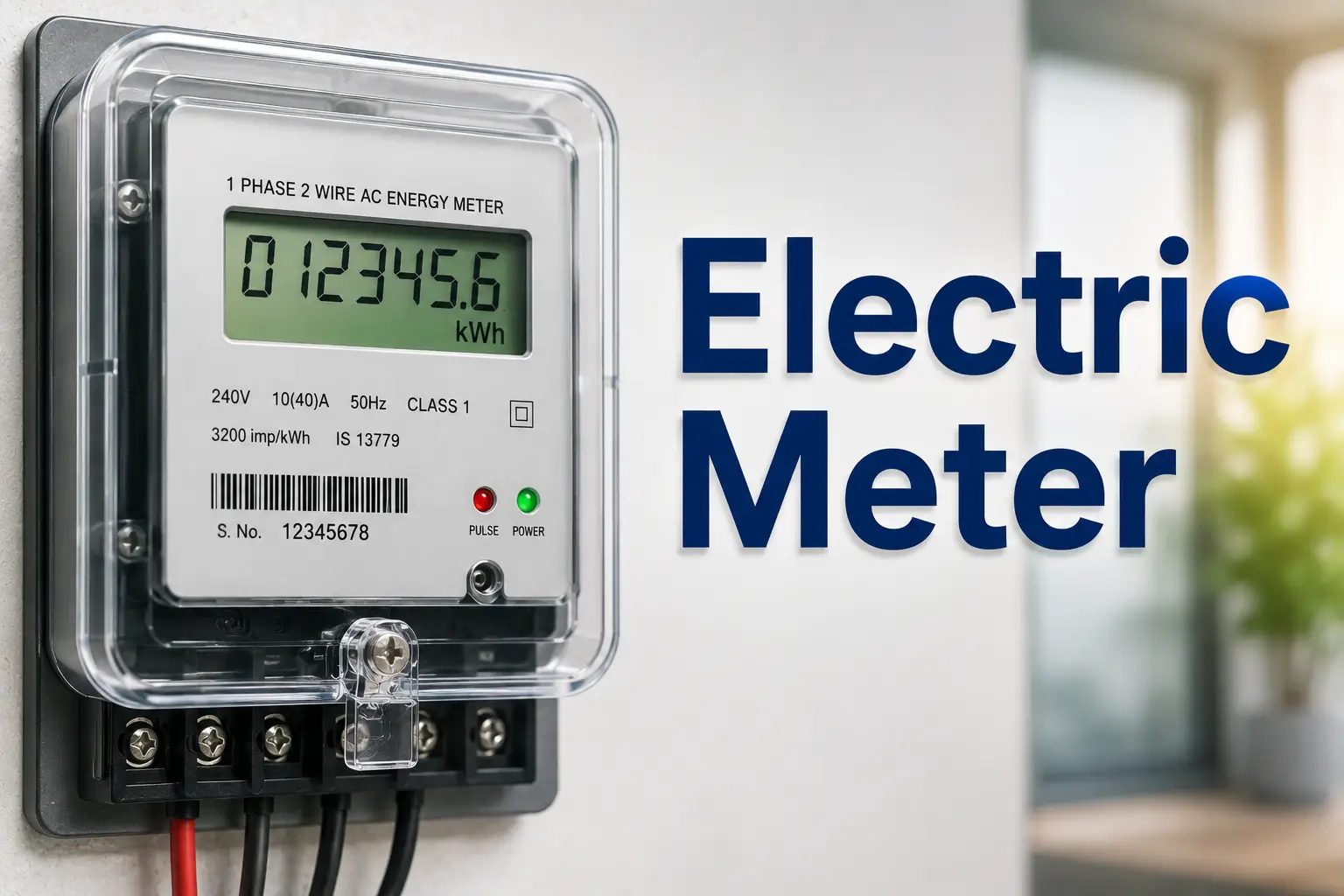
Electricity bills are often one of your biggest monthly headaches, but you might not know how to actually read your electric Meter. Learning to check it yourself is a game-changer for keeping your costs down. When you check your meter, you can see exactly how much power your home is using and get a better idea of what your next bill will look like.
It is also a great way for you to catch sudden jumps in your energy use, which might be a sign that an old appliance is acting up. Best of all, it gives you peace of mind because you can double-check your utility company’s math and make sure you are only paying for the energy you have actually used.
Whether your home has a digital meter, an analog meter, or a smart meter, the reading process is simple once you understand how each type works.
What Is an Electric Meter?
An electric meter is a device installed by your electricity provider to measure the amount of electrical energy your home or business consumes.
Electricity usage is measured in kilowatt-hours (kWh), commonly called units. Every unit recorded on the meter contributes to your electricity bill.
Why Should You Check Your Electric Meter Reading?
Checking your electric meter regularly offers several benefits:
- Verify that your electricity bill is accurate.
- Track daily and monthly electricity usage.
- Identify unusually high power consumption.
- Detect faulty appliances using excessive electricity.
- Compare consumption before and after using energy-saving devices.
- Estimate your upcoming electricity bill.
Monitoring your meter can also help you spot unexpected usage spikes early.
Types of Electric Meters
You should identify your electric meter before reading it:
1. Digital Electric Meter
Most modern homes use digital meters. These meters show your electricity usage clearly on an LCD or LED screen. Digital meters provide accurate numbers and need very little maintenance. You do not need to read complex dials or needles. The screen displays the numbers directly. This makes checking your electricity usage quick and easy.
2. Analog (Dial) Meter
Older homes may still use analog meters with rotating dials. These require slightly more attention because each dial must be interpreted correctly.
3. Smart Meter
Smart meters automatically send usage information to your electricity provider. Many also allow consumers to monitor electricity consumption through online portals or mobile apps.
How to Check a Digital Electric Meter Reading
Digital meters are the easiest to read.
Step 1: Locate the Electric Meter
Your electric meter is usually installed:
- Outside the house
- Near the main electrical panel
- In the apartment meter room
- Near the entrance gate
Step 2: Wake the Display (If Needed)
Some digital meters automatically display the reading. Others require pressing a button to cycle through different screens.
Step 3: Find the kWh Reading
Your digital meter might show several different values, such as the voltage, current, the current time, or your unique meter identification number.
Look for the screen labelled kWh, Total kWh, or a similar energy reading. This is the value used for billing.
Step 4: Record the Numbers
Write down all digits shown from left to right.
Ignore:
- Decimal places
- Red digits (if present)
- Symbols
Example:
Meter Reading:
025843
Current reading = 25,843 units
How to Read an Analog Electric Meter
Analog meters have several circular dials.
Follow these steps:
- Read each dial from left to right (or follow your utility’s guidance if different).
- If a pointer sits between two numbers, always write down the lower one.
- If a pointer sits exactly on a number, look at the dial to its right. If the right-hand dial has not passed zero yet, record the lower number for the current dial.
- If a pointer is exactly on a number, check the dial to its right to confirm whether it has passed zero before recording it.
How to Check a Smart Electric Meter
Smart meters automatically record electricity usage.
You can usually:
- View the reading on the display.
- Check your supplier’s website.
- Use the official mobile app.
- Monitor near real-time electricity consumption.
Even though readings are sent automatically, it’s still useful to verify the displayed total occasionally.
How to Calculate Electricity Consumption
Your meter reading is cumulative, so you need two readings to know how much electricity you’ve used.
Formula: Electricity Used = Current Reading − Previous Reading
Example
Previous Reading: 18,450
Current Reading: 18,685
Electricity Consumed:
18,685 − 18,450 = 235 units (kWh)
This is the figure generally used to calculate your electricity bill.
Common Electric Meter Display Codes
Some digital meters display multiple values.
| Display | Meaning |
| kWh | Total electricity consumed |
| Voltage (V) | Supply voltage |
| Current (A) | Current usage |
| Frequency (Hz) | Electrical frequency |
| Meter Number | Unique meter ID |
| Date & Time | Current device settings |
Only the kWh value is generally used for billing.
Avoid Common Electric Meter Reading Mistakes
Many people make these errors while reading their meters:
- Don’t record the serial number. People often mistake the identification number for the actual energy usage.
- Skip the decimal digits. Most utility companies only need the main numbers, not the digits after the decimal point.
- Check the right screen. Some digital meters cycle through different displays; make sure you look at the one showing your total usage.
- Compare your numbers. Always look at your previous reading to make sure your new number makes sense.
- Watch the dials carefully. It is easy to misread an analog dial, especially when the pointer sits between two numbers.
- Check for multiple rates. If your plan uses dual-rate pricing, remember to record both the “day” and “night” readings.
Tips to Monitor Electricity Usage
You can easily reduce your electricity consumption by following these simple steps.
- Record your meter reading once a week. Regular monitoring helps you identify unusual increases in your usage before your next bill arrives.
- Turn off appliances when not in use. This simple habit saves significant power over time.
- Avoid leaving devices on standby. Many devices consume power even when they appear off.
- Replace old bulbs with LED lighting. You should use LEDs as they use much less energy and last longer than traditional bulbs.
- Use energy-efficient appliances. You should choose devices with high energy ratings to lower your consumption.
- Compare monthly usage trends. Reviewing your records helps you spot habits that drive up your costs.
Signs of Unusually High Electricity Usage
You should investigate if:
- Your bill suddenly increases without any change in usage.
- The meter continues to move rapidly when most appliances are off.
- Electricity usage is much higher than in previous months.
- You notice unexplained spikes after installing new appliances.
If you suspect a faulty meter or billing error, contact your electricity provider.
Final Thoughts
Knowing how to check your electric meter reading is a simple skill that can help you better understand your household’s energy consumption. Whether you have a digital, analog, or smart meter, taking regular readings allows you to verify your electricity bill, track usage patterns, and identify opportunities to save energy.
Read More: Easy Way to Calculate the Split AC Size for Your Room
Frequently Asked Questions
1. How do I read a digital electric meter?
First, locate the display on your meter. Next, find the reading labeled “kWh.” Finally, write down the numbers from left to right, but ignore any digits after the decimal point.
2. What does kWh mean?
kWh (kilowatt-hour) is the standard unit used to measure electricity consumption.
3. How do I calculate my electricity usage?
You calculate your electricity usage with a simple subtraction. Subtract your old meter reading from the current reading.
4. Do smart meters need manual readings?
Usually not. Smart meters automatically transmit readings to the utility, although you can still view the displayed reading yourself.
5. Why should I check my meter regularly?
Regular checks help you monitor electricity usage, estimate bills, detect abnormal consumption, and identify possible billing errors.