

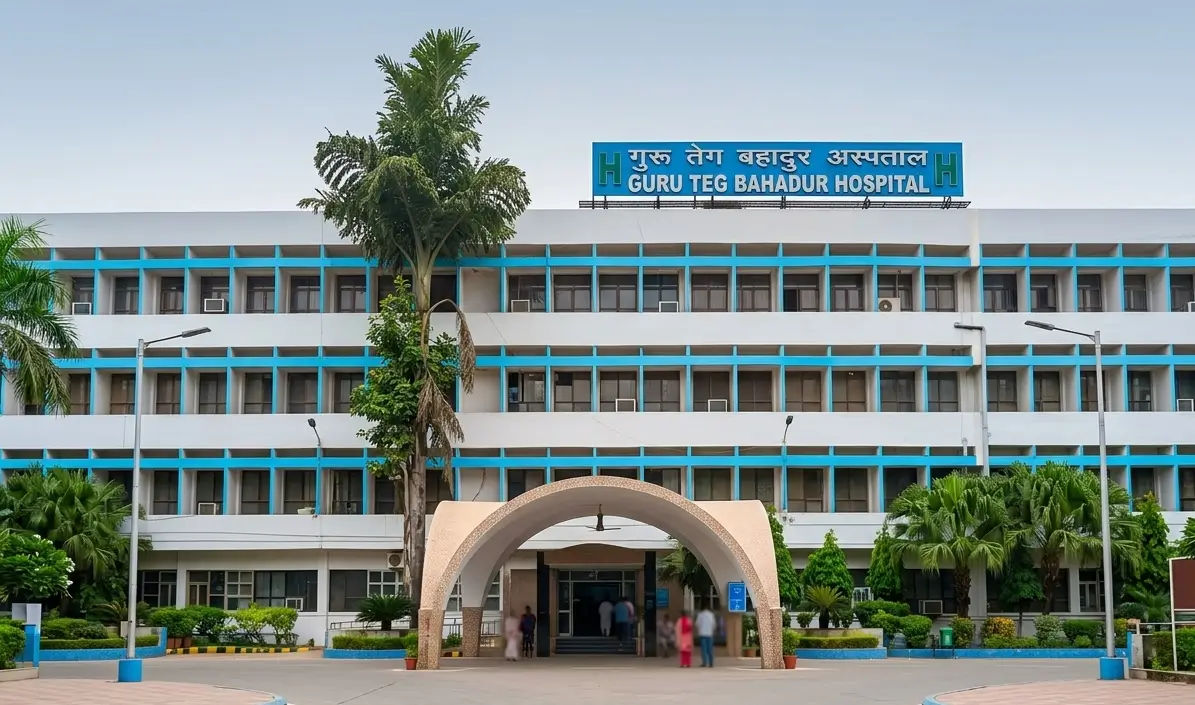
Finding the right hospital can feel stressful when you or a family member needs medical help. You may want to know which doctors are available, how to register for treatment, where to go for an emergency, and what documents to carry. Guru Teg Bahadur Hospital is a major government hospital in East Delhi. Located in Dilshad Garden, it provides medical services to people from Delhi and nearby areas. The hospital also works as a teaching hospital associated with UCMS.
The Guru Teg Bahadur Hospital provides several medical and surgical services. These include general medicine, children’s healthcare, maternity care, orthopaedics, neurology, emergency treatment, and diagnostic facilities.
Overview of Guru Teg Bahadur Hospital
Here are the main details to know before visiting the hospital.
| Detail | Information |
| Hospital name | Guru Teg Bahadur Hospital (GTB Hospital) |
| Location | Dilshad Garden, Delhi – 110095 |
| Hospital type | Delhi government teaching hospital |
| Associated medical college | University College of Medical Sciences |
| OPD hours | Check the current department schedule before visiting |
| Emergency services | Available 24 hours |
| Hospital contact | 011-22586262 |
| Emergency contact | 011-22588383 |
| Official website | https://gtbh.delhi.gov.in/ |
The Guru Teg Bahadur Hospital provides medical care across several specialties. Since registration arrangements and department schedules may change, patients should check the official hospital website before a planned visit.
History of Guru Teg Bahadur Hospital
Guru Teg Bahadur Hospital has served the healthcare needs of East Delhi and nearby areas for decades. The hospital began developing its services in the 1980s to meet the growing demand for government healthcare in the Trans-Yamuna region. According to the hospital’s official information, outpatient services started on 3 November 1985. The hospital began inpatient services on 15 June 1987, followed by casualty and emergency services on 10 August 1987.
Over the years, the hospital expanded its medical departments and treatment facilities. It developed into a large government hospital that serves patients who need both routine consultations and specialised medical care.
Its association with medical education
Guru Teg Bahadur Hospital works with the University College of Medical Sciences, which is affiliated with the University of Delhi. This relationship connects patient care with medical education and clinical training. Medical students and postgraduate trainees gain experience through the hospital’s clinical departments. The hospital also supports nursing education and training. This teaching role makes the hospital important for both public healthcare and medical education in Delhi.
Medical Services Available at GTB Hospital
Guru Teg Bahadur Hospital offers several medical and surgical specialties. The service you need will depend on your symptoms and the doctor’s assessment.
1. General Medicine
The general medicine department treats many common health problems. Patients may seek medical advice for fever, weakness, infections, diabetes, high blood pressure, and other conditions. The doctor examines the patient and may recommend blood tests or other investigations. If the condition requires specialised treatment, the doctor may refer the patient to another department.
2. Paediatrics and Children’s Healthcare
The paediatrics department provides medical care for children. Parents may visit for childhood illnesses, medical examinations, and other health concerns. The hospital also lists paediatric emergency services. Parents should seek urgent medical attention when a child has severe breathing difficulty, becomes unresponsive, or develops other serious symptoms.
3. Obstetrics and Gynaecology
This department provides healthcare related to pregnancy and women’s reproductive health. Its services include maternity care and treatment for gynaecological problems. The hospital lists separate emergency and labour room services. Pregnant women who experience heavy bleeding, severe abdominal pain, or other warning signs should seek urgent medical care rather than wait for a routine appointment.
4. Orthopaedics
The orthopaedics department treats problems affecting bones, joints, and the musculoskeletal system. Patients may visit for fractures, joint pain, injuries, and movement difficulties. The hospital also lists orthopaedic trauma services. Patients with serious injuries should use the emergency department instead of waiting for a regular OPD consultation.
5. Neurology and Neurosurgery
Neurology treats brain, spinal cord, and nerve problems with medicine and therapy. Neurosurgery involves surgery to treat severe issues in these same areas. GTB Hospital lists neurology and neurosurgery among its services. Its emergency and trauma facilities also support the treatment of selected serious injuries. Patients should follow the hospital’s referral and registration process for non-emergency consultations.
6. Eye, ENT, and Dental Care
The hospital provides services through its ENT and dental departments. Patients may seek help for vision problems, ear pain, throat complaints, dental pain, and related conditions. The relevant department will decide which examination or treatment the patient needs.
7. Burns and Plastic Surgery
The burns and plastic surgery department provides care for burns and certain injuries or conditions that require specialised surgical treatment. Serious burns need urgent medical attention. Patients should not delay emergency treatment while trying to arrange a routine appointment.
8. Dialysis and Other Specialised Services
The Guru Teg Bahadur Hospital lists haemodialysis and peritoneal dialysis among its facilities. These treatments support patients who need medical care for kidney failure. The hospital also provides laboratory and imaging services. The availability of a particular test or treatment may depend on the department, medical assessment, and current hospital arrangements.
Emergency Services at Guru Teg Bahadur Hospital
Medical emergencies can happen at any time. Guru Teg Bahadur Hospital lists round-the-clock emergency services for patients who need urgent care. Its emergency facilities include casualty services, trauma care, paediatric emergency care, maternity emergency services, emergency laboratory investigations, and radiology support.
If someone experiences severe chest pain, major bleeding, serious breathing difficulty, or a severe accident injury, seek emergency medical help immediately. For emergencies, call the hospital’s listed casualty number at 011-22588383. For life-threatening situations, you can also call India’s emergency response number, 112. Do not delay emergency care while arranging routine OPD registration.
OPD Registration and Timings
The outpatient department (OPD) allows patients to consult doctors without staying in the hospital overnight. If you need a routine consultation, you should check the registration process and the schedule of the department you want to visit. The hospital’s published information lists weekday and Saturday registration hours. However, schedules can change, so confirm the latest details through the official GTB Hospital website before travelling.
How to Prepare for an OPD Visit
Follow these practical steps to make your hospital visit easier.
- Check the department. Identify whether you need general medicine, orthopaedics, paediatrics, or another specialty. If you are unsure, ask the hospital’s enquiry desk for guidance.
- Reach the registration counter early. Government hospitals can receive many patients every day. Arriving early may help you complete registration before the department becomes busy.
- Carry your medical documents. Bring previous prescriptions, test reports, discharge summaries, and any existing hospital registration card. These records help the doctor understand your medical history.
- Keep your identification details ready. Carry a valid identity document and any paperwork required for registration or an applicable government health scheme.
- Confirm your appointment details. Check whether your department requires an online appointment or an in-person registration. Follow the instructions provided by the hospital.
The Guru Teg Bahadur Hospital provides online appointment information through its official website. Patients should check the current process before relying on an older appointment link or registration instruction.
Location and How to Reach GTB Hospital
Guru Teg Bahadur Hospital is located in Dilshad Garden in East Delhi. Its location makes it accessible to people from several parts of Delhi and nearby areas of Uttar Pradesh. The hospital’s official location information lists nearby Jhilmil and Mansarovar Park metro stations. Patients can also check available bus routes and local transport options before travelling.
What Should Patients Carry?
Preparing your documents before leaving home can make registration easier. The exact requirements depend on the service you need.
Keep these items ready when applicable:
- A valid identity document.
- Previous prescriptions and medical reports.
- Your existing hospital registration card, if you have one.
- Referral papers from another doctor or hospital, if applicable.
- Documents required for a relevant government health scheme.
Patients who need regular treatment should also keep a record of their medicines and allergies. Tell the doctor about any medicines you currently take, including those prescribed by another hospital. Do not delay emergency treatment because you cannot find every document.
Conclusion
Guru Teg Bahadur Hospital is an important government healthcare facility in East Delhi. Its history dates back to the 1980s, and it has developed into a teaching hospital associated with the University College of Medical Sciences. The hospital offers services across general medicine, paediatrics, maternity care, orthopaedics, neurology, surgery, dental care, emergency treatment, and other specialties.
Check the latest OPD schedule, registration process, and department information through the official website before visiting. Carry your previous medical records and allow enough time to complete registration. Use the emergency department rather than waiting for a routine appointment for serious medical emergencies. With the right preparation, patients and their families can better understand the hospital’s services and plan their visit more confidently.