

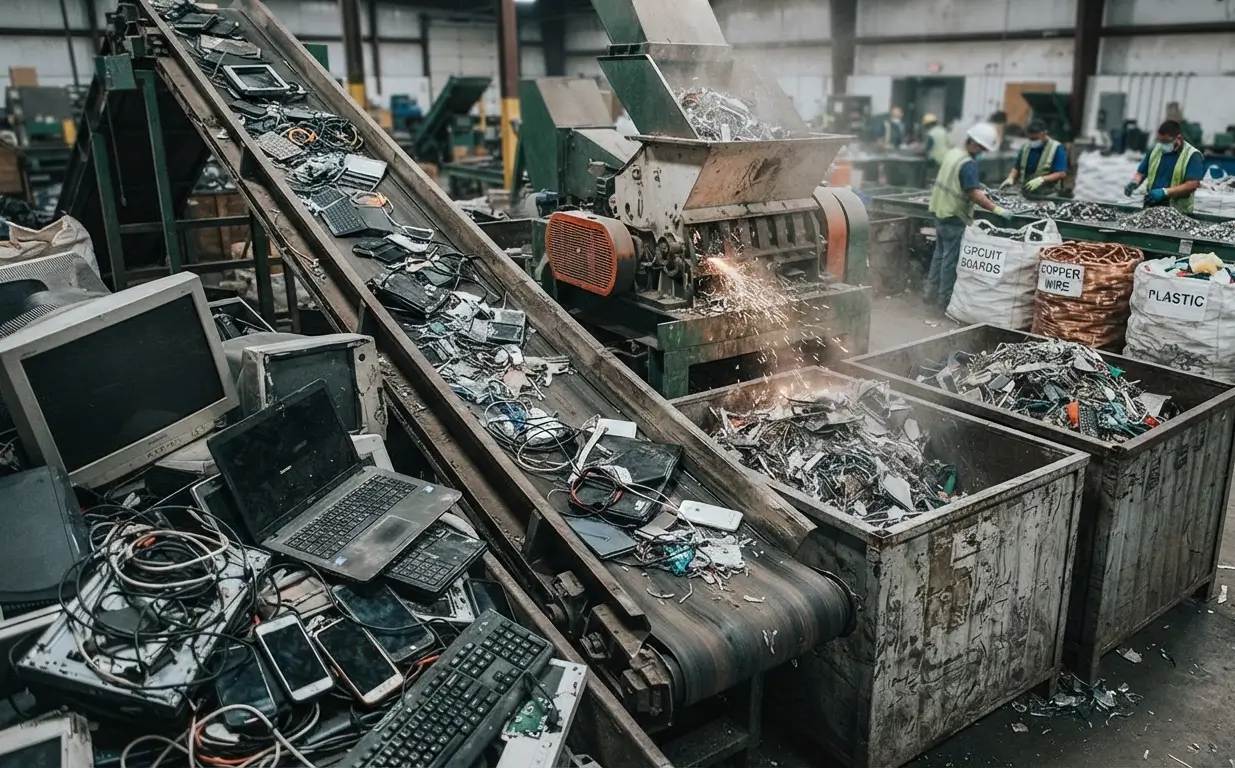
Have you ever wondered what happens after you throw away an old mobile phone, laptop, television, or charger? The story ends when an electronic item leaves their home for many people. We put it in a bin or hand it to someone who collects old items. After that, we may never think about it again.
But electronic waste, also called e-waste, does not simply disappear. Old electronic products can follow different paths after disposal. Some items go to authorised recycling facilities where workers recover useful materials. Some products may get repaired or reused. In other cases, electronic waste can reach informal recycling channels where workers recover valuable parts using unsafe methods. This is why proper e-waste disposal matters.
What Happens to E-Waste After Disposal?
The journey of e-waste depends on where you send it. When you give an old electronic product to an appropriate collection centre or authorised recycler, the item can go through several stages.
1. Collection
The first stage involves collecting unwanted electronic products. Collection can happen through dedicated e-waste collection points, recycling facilities, take-back programmes, or other appropriate channels. The collected items usually include many different types of electronics. Workers then sort these items based on their condition, type, and possible next use. This first step matters because proper collection keeps electronic waste separate from ordinary household waste.
2. Sorting and Inspection
After collection, workers sort the electronic products. They may check whether an item still works or whether it needs recycling. A working phone, computer, or other device may have a chance of being reused after suitable checks and repairs. Products that cannot be reused move towards recycling. Workers may also separate different types of electronic products because each item can contain different materials and components.
3. Reuse and Repair
Not every old electronic device needs to become waste immediately. Some products may still work or may need only minor repairs. Reusing a product can extend its useful life and reduce the need to manufacture another product immediately.
For example, an old computer may no longer meet your needs but could still work for basic tasks. A suitable repair or refurbishment process may give the device another useful life. However, people should remove personal information before handing over devices for reuse or recycling.
4. Dismantling
Electronic products that cannot be reused may go through dismantling. Workers take apart devices and separate different components. This process helps recyclers identify materials that they can recover. A computer, for example, contains a mixture of plastic, metal, circuit boards, and other parts. A mobile phone also contains several different materials packed into a small space. Proper dismantling helps recyclers handle these materials in a more organised way.
What Materials Can Come From E-Waste?
Electronic products can contain useful materials such as:
- Metals
- Plastics
- Glass
- Circuit board materials
- Other recoverable components
The exact materials depend on the product. Recycling these materials can reduce the need to obtain all new raw materials for future products. This gives old electronics a potential value even after they stop serving their original purpose.
5. Material Recovery
After dismantling, recyclers process different materials so they can recover useful resources. For example, suitable metal components can go through recycling processes that allow the material to enter another manufacturing cycle. Plastic and glass can also have recycling value depending on their type and condition.
The goal is to recover useful materials while handling unwanted parts safely. This stage shows why throwing electronics into ordinary waste is not the best option. A device that looks useless to you may still contain materials that recyclers can recover.
What Happens to Parts That Cannot Be Recycled?
Not every part of an electronic product can be recovered. Some materials or components may require special handling. Responsible recyclers need to manage these materials according to applicable safety and waste-management requirements. This is one reason why people should avoid dismantling complicated electronic products at home. Trying to recover valuable parts without proper knowledge or equipment can create safety problems.
What Happens When E-Waste Goes Into Regular Garbage?
This is where the situation can become more complicated. When electronic products enter regular household waste, they may travel through the normal waste collection and disposal system instead of reaching an appropriate e-waste recycling channel.
Electronic items may then miss the specialised handling that they require. There is also a risk that valuable materials will not get recovered properly. Old electronics should not simply be treated like ordinary household rubbish when a suitable e-waste collection or recycling option exists.
The Problem With Informal E-Waste Recycling
India has a large informal sector involved in collecting and processing recyclable materials. Informal workers often collect electronic products because they contain materials with resale value. However, some informal recycling methods can expose workers and the surrounding environment to harmful substances.
People may manually break, burn, or process electronic components without suitable safety equipment or controlled conditions. These practices can create health and environmental risks. This does not mean every informal collector handles waste in the same way. The important point is that consumers should try to send e-waste through responsible and appropriate recycling channels.
Why E-Waste Recycling Matters
Proper e-waste recycling offers several benefits.
1. It Helps Recover Useful Materials
Old electronics contain materials that still have value. Recycling allows some of these materials to return to the production cycle. This reduces waste and makes better use of resources.
2. It Reduces Unnecessary Waste
When electronic products go through proper recycling, fewer useful materials end up being discarded. Recycling also gives manufacturers and other industries access to recovered materials.
3. It Supports Safer Waste Handling
Specialised recycling facilities can handle electronic waste using processes designed for these materials. This can reduce the risks associated with unsafe dismantling or disposal practices.
What Should You Do With Your Old Electronics?
The best option depends on the item and its condition. If the device still works, consider whether you can continue using it, repair it, or pass it to someone who can use it. If you no longer need the device, look for an appropriate e-waste collection or recycling option. Before giving away a phone, laptop, or computer, take a few minutes to protect your personal information.
Old electronic devices can contain photos, documents, passwords, contacts, and other private information. Back up anything you need and remove your accounts from the device. Use the manufacturer’s recommended process to reset the device before handing it over. For computers and phones that contain sensitive information, take extra care to make sure you properly erase the data.
Do Not Burn or Break Electronics at Home
You should not burn electronic products to recover metals or other materials. You should also avoid breaking complex electronic devices without proper knowledge and safety equipment. These activities can create unnecessary risks for you, your family, and the surrounding environment.
Conclusion
Through a proper recycling route, old electronics can be collected, sorted, inspected, reused where possible, dismantled, and processed to recover useful materials. Some components that cannot be recovered need appropriate handling and disposal. The journey becomes less responsible when electronic waste enters ordinary garbage or unsafe recycling channels.
As consumers, we can make a simple difference. Do not throw old phones, laptops, chargers, and other electronic products away without thinking about where they will go. Reuse or repair them when practical and send unwanted electronics through suitable e-waste collection and recycling channels. A device may be useless to you today, but it can still contain materials that have value. Responsible disposal helps those materials get a second chance while supporting safer e-waste management.