

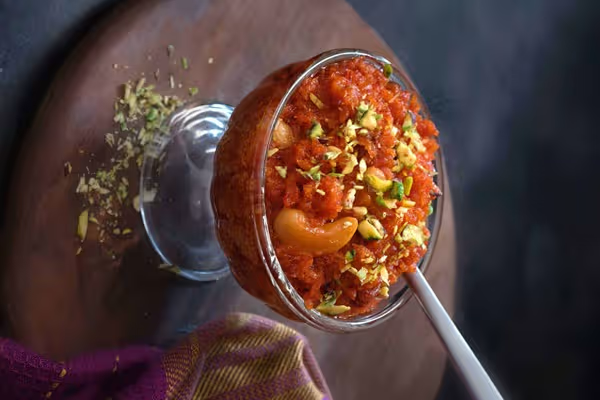
The first cold evening of the year has a smell to it. It’s the ghee, the cardamom and the sweetness that coax their way on to the stove in a slow, bubbling manner. In most of the houses in India it is called ‘halwa weather’.
It’s especially delicious in the winter when it’s planted with roots. Sweet, juicy and natural colour. If you are armed with the right ingredients and some patience, you can create a halwa taste that can be a family’s freshly prepared creation.
Why Red Carrot makes the best Halwa? This post is a must read!
Not all carrots will produce a good end result. It is the long, deep red carrot, one of the winter carrots known as ‘gajar’ or ‘Delhi carrot’.
- In its natural state is sweeter than orange carrots.
- It has some additional juices that make the halwa soft and moist.
- Does not add food colouring for depth of colour.
For firmness, smoothness and bright red roots. Do not use those that are very bendy, thick-cored or seem dry. The thinner the cores, the sweeter the halwa.
A traditional halwa, made using ‘condensed milk’.
Condensed milk will save time on boiling milk. It also imparts a creamy, caramel flavor.
Ingredients (serves 5 to 6)
- 1kg of washed and peeled red carrot
- 3 tbsp ghee
- 200 g sweetened condensed milk
- ½ cup full fat milk
- 4 green cardamoms, crushed
- 10 cashews and 10 almonds, chopped
- 1 tbsp raisins
- Some pistachios to garnish
Method
- Using the medium side of a grater, grate the red carrot. If it is just finely grated, it has a mushy texture.
- In a heavy bottomed pan, melt 1 tbsp of ghee. Bake the nuts until they are golden brown. Keep them aside.
- Stir in the grated carrot. Cook in medium heat until it is softened and the raw odor is removed, about 8 to 10 minutes.
- Add the milk. Cook on low heat, stirring frequently, until it is absorbed. This will take around 20 minutes.
- Add the condensed milk and cardamom. Stir well. Cook for 10 to 12 minutes or until the halwa thickens.
- Add the remaining ghee, raisins and roasted nuts. Cook for another 2 minutes.
Taste first, add more sugar if necessary. Generally your condensed milk will be sweet enough.
Free and easy tips for better Halwa.
- Go slow. The natural sweetness comes out with low heat.
- Use a heavy pan. Prevents sticking and burning of the halwa.
- Add ghee in two rounds. A few added at the beginning for flavour and the rest at the end for shine.
- Rest it. Halwa tastes better when it is removed from the heat after 15 minutes.
- Store smartly. Can be refrigerated for 4 to 5 days. Again, top with a splash of milk and reheat.
Here are some other Root Vegetable Halwas to try!
A carrot isn’t the only winter root to cook down.
Earthy and bright pink beetroot halwa. Grate and cook in ghee and add milk and condensed milk. Cardamom is tempered with a hint of earthiness.
Shakarkandi halwa: Mash sweet potato first and then boil. Then roast in ghee with jaggery/sugar. It is filling and used for fasting days.
Mixed root halwa: Mix red carrot & beetroot in the ratio of 3:1. The colour is deeper and there is a slightly different taste.
Planting a variety of roots that are still in season.
Vitamin A rich red carrot is best from November to February. Then it becomes light in color and less sweet. This is a sabzi mandi that many busy households nowadays order through a grocery delivery app, particularly on weekdays, when there is no time for the sabzi mandi.
Here are a couple of easy tricks to use when ordering online:
- Review the picture and write up for colour and size.
- This is a good tip, as grating will lose a lot of volume, so order the order a little extra.
- Add up ghee, cardamom and dry fruits on the same cart so that you don’t run out mid recipe.
- The roots should be refrigerated immediately after arrival.
The price of winter red carrot is approximately ₹60 to 100 per kilo, varying by city and the week. So, halwa is one of the cheapest festive desserts.
It’s a Warm Bowl Worth the Wait.
Not fancy. Winter halwa is not. It’s about mixing in a pan, filling the home with sweet steam and sharing a bowl with those you love.
Use a good red carrot, and take your time, working at a low heat. You’ll know the difference in the first spoonful.
