

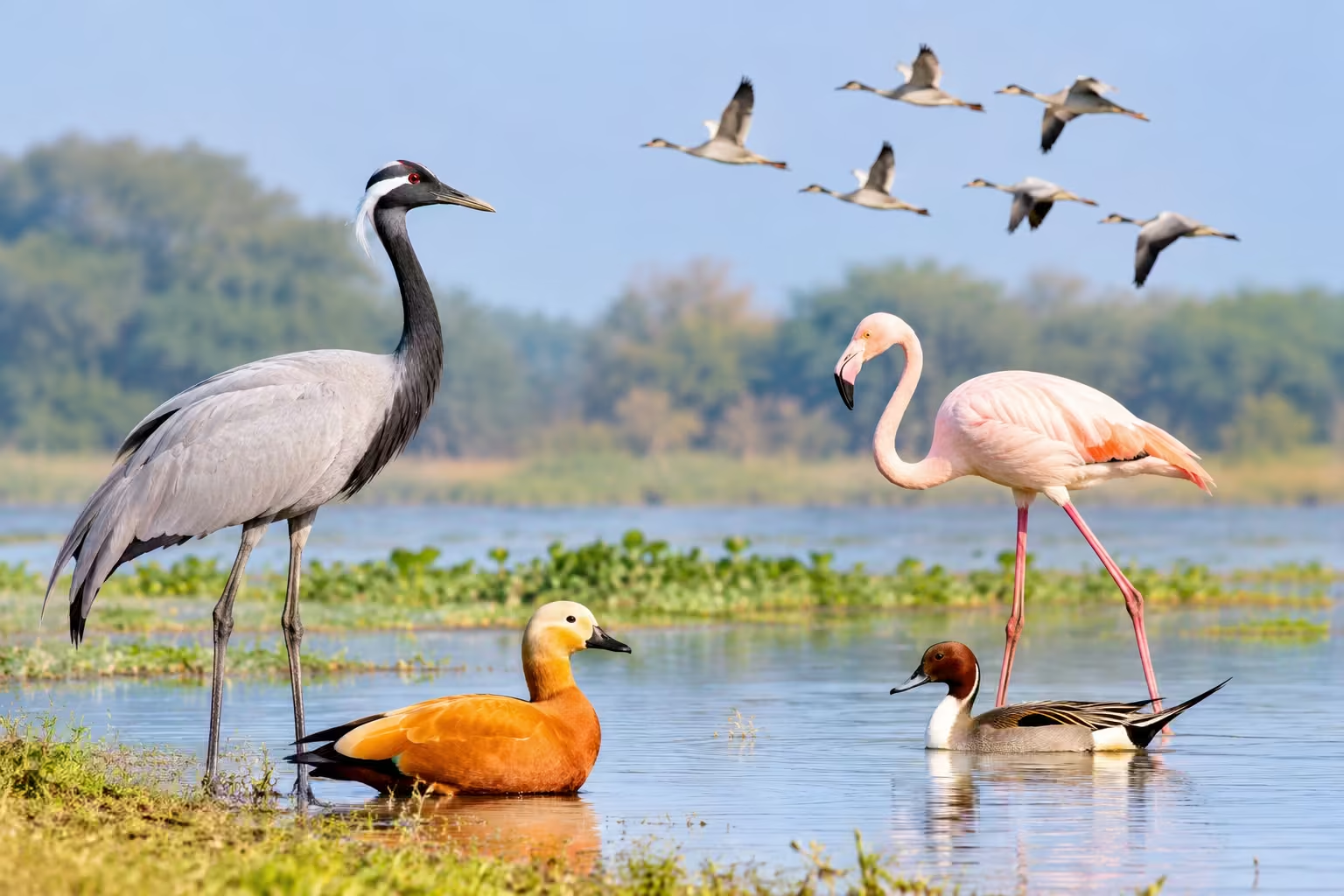
Every winter, India welcomes thousands of birds that travel long distances from colder parts of the world. Some arrive from Siberia and Central Asia. Others travel from Europe and nearby regions. They come here to escape freezing weather and find food in India’s lakes, wetlands, rivers, and grasslands. It’s not necessary to go to a well-known wildlife park to take in this natural phenomenon. On a morning stroll, you might see migratory birds by a marsh, a lake outside your city, or a local pond. Birdwatchers visit locations like Sultanpur National Park, Keoladeo National Park, and Chilika Lake annually.
This guide introduces some popular winter migratory birds in India. It also explains why they visit, where you can spot them, and how you can enjoy birdwatching without disturbing them.
Why Do Migratory Birds Visit India in Winter?
Many birds cannot find enough food in their breeding areas during harsh winters. Water bodies may freeze, insects become harder to find, and cold weather makes survival difficult. These birds travel to warmer regions where they can find food and safer places to rest.
India provides a variety of environments for these tourists. Fish, insects, small aquatic animals, and aquatic plants can be found in its wetlands. Seeds and other food are available in open fields. Shorebirds can also rest and feed in coastal environments. Flyways are the typical seasonal routes that birds travel. India is situated along the Central Asian Flyway, which links the Indian subcontinent and other southern countries with northern and central Asia. This passage is used annually by many migratory waterbirds.
Flyways are the typical seasonal routes that birds travel. India is situated along the Central Asian Flyway, which links the Indian subcontinent and other southern countries with northern and central Asia. This passage is used annually by many migratory waterbirds.
When Do Migratory Birds Arrive in India?
Most winter migratory birds begin arriving in India during the autumn months. Many species reach their wintering areas between September and November. They stay through the colder months and begin moving back towards their breeding grounds around March or April.
The species, location, and weather all affect the precise dates of arrival and departure. While some migratory birds stay for several months, others take a little break to eat and rest before moving on.
Popular Winter Migratory Birds in India
India is home to many migratory bird species. Ducks, geese, cranes, flamingos, waders, and tiny songbirds are found across the country. These are some intriguing wintertime guests you might encounter.
1. Bar-Headed Goose
The bar-headed goose is one of the most well-recognised migratory birds that come to India. It is light grey with two dark streaks across the rear of its white head. They are easily identified by these markings. Tibet and areas of Central Asia are high-altitude breeding grounds for this type of goose. In the winter, it migrates to warmer, lower regions, such as marshes throughout India. Bar-headed geese can be seen in flocks in northern India, particularly near large lakes and wetlands. The bird is also known for flying over the Himalayas when migrating. It is a good flier and does long journeys across the high alpine country.
2. Demoiselle Crane
The demoiselle crane has long legs, a black neck, and a grey body, making it a beautiful bird. Its eyes are surrounded by white feathers as well. Birdwatchers and photographers adore this gorgeous bird. These cranes travel from parts of Central Asia and surrounding regions to spend winter in warmer areas. Khichan in Rajasthan is especially famous for the large numbers of demoiselle cranes that visit the area. The demoiselle crane is an elegant bird with a grey body, a black neck, and long legs. It also has white feathers near the eyes. Its exquisite look makes it popular among birdwatchers and photographers.
3. Greater Flamingo
The greater flamingo is easy to notice because of its long legs, curved bill, and pinkish feathers. It often stands in shallow water while searching for food. Flamingos feed on small water invertebrates and other tiny food sources in wetlands. Their colour is partly due to the pigments in the food they eat. You can see larger flamingos at the Rann of Kutch, Nalsarovar and other suitable wetlands in Gujarat. They make a magnificent sight against the open water when they are in huge groups.
4. Ruddy Shelduck
The ruddy shelduck is commonly known as the Brahminy duck by people. It has a warm orange-brown body, a pale head and a stout black bill. Its colouration makes it a noticeable bird among other waterbirds. This bird winters in several parts of India. It prefers lakes, rivers and marshes where it may find food and resting places. Ruddy shelducks may be seen swimming in couples or in groups. They are often easy to spot around water areas due to their loud calls.
5. Northern Pintail
The northern pintail is a slender duck with a long pointed tail. The male has a chocolate-brown head, white neck, and grey body. The female has a browner and more patterned appearance. It migrates from its northern breeding grounds to warmer places in the winter. Indian wetlands provide appropriate roosting and feeding grounds for it. Northern pintails typically eat seeds and plants and small water creatures. You might see them in mixed flocks of ducks around lakes and marshes.
6. Eurasian Wigeon
The Eurasian wigeon is another winter visitor that prefers wetlands and shallow lakes. The male has a reddish-brown head with a pale yellow forehead. The female has softer brown colouring. These ducks eat aquatic plants and frequently congregate in groups. Additionally, they might feed on grass close to bodies of water. Look carefully among other ducks when you visit a wetland. You may find Eurasian wigeons resting or feeding in the same area as other migratory waterbirds.
7. Black-Tailed Godwit
The black-tailed godwit is a long-legged shorebird with a long, straight bill. It searches for food in shallow water and muddy areas. Its bill helps it find small animals hidden in wet mud. This bird migrates through coastal mudflats and Indian marshes. It might graze with other wading birds and sandpipers. You can recognise it by its long legs and its habit of walking through shallow water while searching for food.
8. Bluethroat
The bluethroat is a small and colourful migratory bird. The male has a striking blue patch on its throat. Some birds also show orange or chestnut markings below the blue area. Bluethroats, unlike ducks and geese, tend to stick to brushy regions, reeds, and grass. They graze on insects and other tiny animals. In winter, they may be seen in appropriate marshes and brush. But they are tough to picture because of their small size and rapid motions.
Best Places to Spot Winter Migratory Birds in India
India has many birdwatching destinations where you can see migratory birds. Your chances depend on the season, weather, and condition of the habitat.
| Place | State | What makes it special |
| Chilika Lake | Odisha | Ducks, flamingos, waders and other waterbirds |
| Keoladeo National Park | Rajasthan | A well-known wetland for migratory waterbirds |
| Sultanpur National Park | Haryana | Seasonal waterbirds and wetland species |
| Nalsarovar Bird Sanctuary | Gujarat | Ducks, flamingos and other wetland birds |
| Khichan | Rajasthan | Famous for wintering demoiselle cranes |
| Point Calimere Wildlife and Bird Sanctuary | Tamil Nadu | Coastal birds and migratory shorebirds |
| Mangalajodi | Odisha | Guided wetland birdwatching and waterbirds |
Chilika attracts large numbers of migratory birds every winter. Mangalajodi and Nalabana are important birdwatching areas around the lagoon. Keoladeo and Sultanpur also offer opportunities to observe seasonal waterbirds.
How to Enjoy Birdwatching During Winter
You do not need expensive equipment to start birdwatching. A little patience and a quiet approach can make your visit enjoyable.
1. Choose the Right Time
The first hours of the day are usually a fantastic time to view birds. As the day begins, many animals become active. You may witness them grazing, swimming, or travelling between resting locations. There are also outstanding prospects in the late afternoon. But the sightings are subject to location and weather.
2. Carry Basic Equipment
A pair of binoculars helps you watch birds without getting too close to them. You can also bring a camera or use your phone to capture photos from a reasonable distance. Bring drinking water and wear comfortable shoes. A notebook might help you jot down names of migratory birds you see on your visit.
3. Avoid Disturbing the Birds
Never chase birds in order to take a better picture. Avoid loud noises and maintain a safe distance. Avoid attempting to entice them with recorded bird cries or tossing food at them. Observe the sanctuary’s or wetland’s regulations. Select authorised local guides who are familiar with the environment if the area permits guided boat excursions.
Why Should We Protect Migratory Birds?
Migratory birds depend on safe places along their long journeys. Wetlands provide food and shelter during their stay. If these areas disappear or become polluted, birds may struggle to complete their migration. Migratory birds may be stressed by wetland loss, pollution, hunting, and changes in their native habitat. The Government of India has also noted risks like wetland reclamation and pollution as an issue for these species.
We can support bird conservation through simple actions. Avoid throwing plastic into lakes and rivers. Never buy wild birds or support illegal trapping. Respect protected areas and encourage others to keep natural habitats clean. The local communities are also essential. Khichan and Mangalajodi demonstrate how community engagement may aid bird conservation and sustainable nature tourism.
Conclusion
Winter brings a special kind of beauty to India’s lakes, rivers and wetlands. Migratory birds such as bar-headed geese, demoiselle cranes, flamingos, ruddy shelducks and northern pintails travel long distances to spend the colder months here. You can enjoy this seasonal event at places such as Chilika Lake, Keoladeo National Park, Sultanpur and Nalsarovar. Even a small wetland near your home may offer an opportunity to see migratory birds.
The most crucial thing is to watch them appropriately. Keep your distance, do not interfere with their normal behaviour and assist safeguard the locations they rely on. These seasonal guests contribute to India’s natural world, and making sure they are looked after means they will come back year after year.