

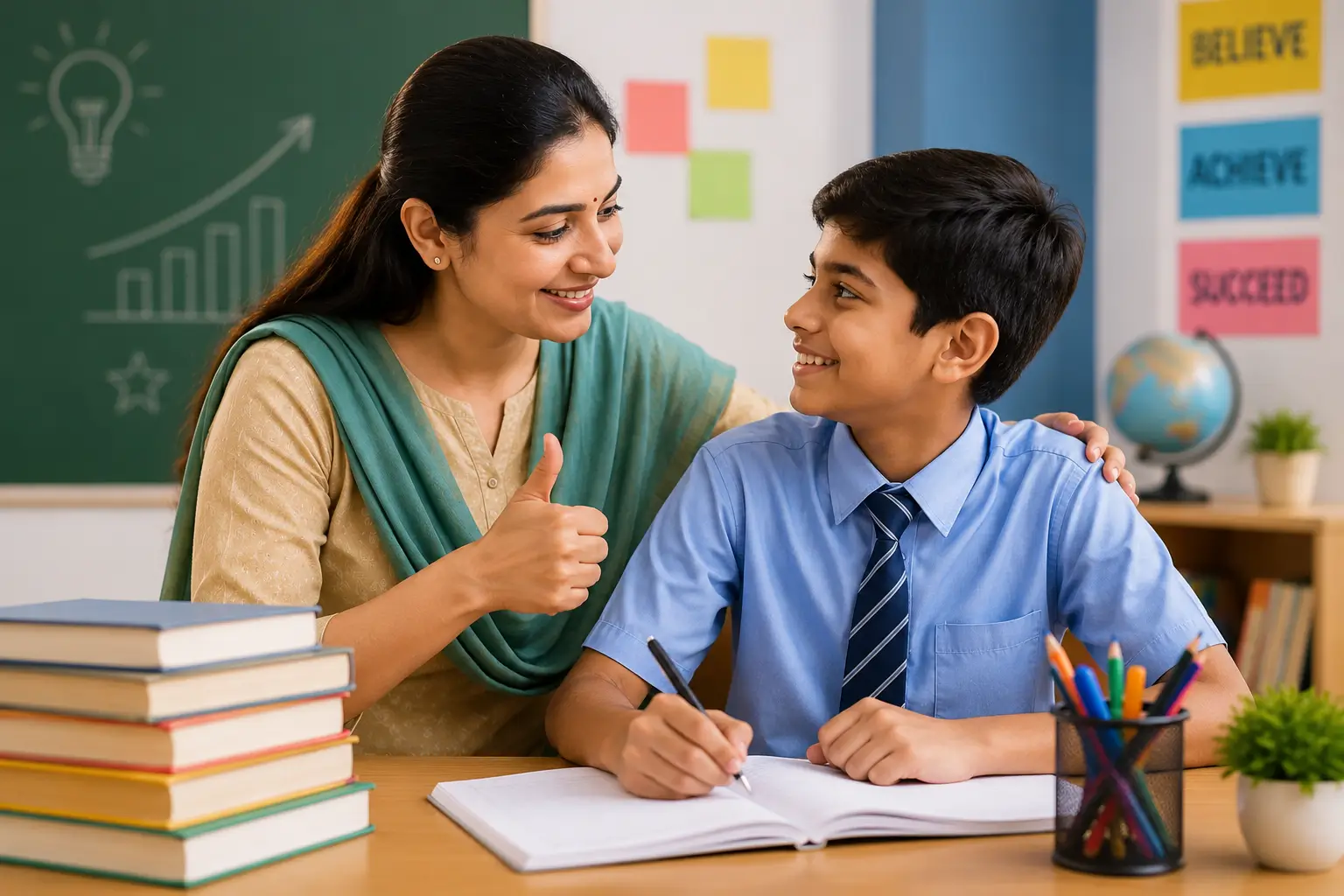
Think of a teacher who made you feel safe to ask questions. Even if you made mistakes, they never made you feel bad. Instead, they explained it again and cheered you on. Many people remember such teachers for years. A good teacher and student relationship can influence much more than marks in an examination. It can affect how students see themselves, how confidently they communicate, how they handle mistakes, and how willing they feel to learn something new.
A classroom works best when students feel respected, and teachers understand their students. This does not mean a teacher should become a student’s best friend. It means both sides should develop trust, respect, and healthy communication.
In India, where students often face academic pressure, competition, and expectations from family, a supportive teacher can make a meaningful difference.
What Is a Positive Teacher and Student Relationship?
A great connection between a teacher and student grows when both talk to each other with respect and understand what they need to do. The teacher guides the student, explains concepts, gives feedback, and creates a safe learning environment. The student listens, participates, asks questions, and respects classroom rules.
This does not mean the teacher treats one student better than others. A good teacher is fair to everyone while understanding that each student learns in their own way and faces different challenges.
For example, one student may understand mathematics quickly but struggle with English. Another may speak confidently but need more time to understand a difficult science topic.
A supportive teacher notices these differences and helps students improve without making them feel inferior.
Why Does the Teacher and Student Relationship Matter?
Students spend a large part of their childhood and teenage years in school. Teachers therefore become important adults in their daily lives. When students feel comfortable with a teacher, they often become more willing to participate in class. They may ask questions instead of quietly sitting with confusion.
A positive relationship can also help students accept feedback. When students know that a teacher wants them to improve, they may see corrections as guidance instead of personal criticism. This can create a healthier attitude toward learning.
1. Builds Confidence in Students
Confidence develops when children receive opportunities to try, make mistakes, and try again. A teacher can encourage this process through simple words and actions.
Imagine a student gives a wrong answer in front of the class. If the teacher says, “That’s wrong. You should know this,” the student may become afraid of answering again.
But if the teacher says, “Good attempt. Let’s look at this step once more,” the student gets another chance to learn. That small difference can affect classroom participation over time. Students who feel safe making mistakes often become more comfortable asking questions and sharing ideas.
2. Makes Learning More Interesting
Students do not always lose interest because a subject is difficult. Sometimes they lose interest because they do not understand how the subject connects with real life. A teacher who understands students can explain concepts through familiar examples. When teachers make lessons relatable, students may find it easier to understand and remember information.
3. Encourages Students to Ask Questions
Questions play an important role in learning. However, some students hesitate to raise their hands because they fear that classmates may laugh at them or the teacher may judge them. A respectful classroom changes everything. When teachers welcome honest questions, students learn that needing help does not make them weak. It just means they need a new explanation. Over time, students can develop curiosity instead of depending only on memorising answers.
4. Helps Students Handle Failure
Failure forms part of education and life. A student may perform poorly in a test despite studying hard. Another student may lose confidence after receiving low marks in a subject.
A good teacher can help students understand what went wrong without making them feel hopeless. Instead of focusing only on the marks, the teacher can discuss preparation, mistakes, and areas that need more practice. This approach teaches students an important lesson: one poor result does not decide their future.
5. Develops Communication Skills
The classroom provides many opportunities for students to communicate. Students answer questions, participate in discussions, give presentations, and work on group activities. Teachers can encourage students to express their ideas clearly and listen to others.
A student who feels respected may become more comfortable speaking in front of others. These communication skills can help later in college, job interviews, workplaces and everyday situations. Good communication does not mean speaking perfect English. It means being able to explain thoughts clearly and listen properly.
6. Builds Discipline Without Fear
Students need discipline, but fear does not always create healthy discipline. A positive teacher explains classroom expectations clearly and applies rules fairly. Students understand what behaviour the teacher expects and why those rules matter.
For example, instead of just saying, “Do not talk during the lesson,” a teacher can explain that talking disturbs others and makes it hard for everyone to learn.
Students also need to understand that respect works both ways. They should listen to teachers, follow reasonable classroom rules, and avoid behaviour that disturbs others. This balance creates a healthier classroom environment.
7. Helps Teachers Understand Individual Students
Every student comes from a different family and learning environment. Some students speak openly about their difficulties. Others remain quiet even when they need help. A teacher who builds a positive relationship may notice changes in a student’s behaviour.
For example, a normally active student may suddenly stop participating in class. A teacher may notice the change and gently ask whether the student needs help.
This does not mean teachers should interfere in every personal matter. It simply means that understanding students can help teachers respond more thoughtfully.
8. Supports Academic Improvement
A positive relationship cannot magically make every student score high. However, it can create conditions that support better learning. When students attend class regularly, ask questions, complete work, and accept feedback, they get more opportunities to improve.
Teachers can also give useful feedback instead of simply writing “wrong” or “poor” on an answer. For example, telling a student exactly where they made a mistake gives them something specific to work on.
Good teachers understand that education involves more than examination scores. Students also need problem-solving ability, communication, teamwork, creativity, discipline, and confidence. These skills can become valuable later even when they do not appear directly on a report card.
9. Prepares Students for the Future
A teacher’s influence can extend beyond school. Students learn habits such as punctuality, responsibility, teamwork, listening, and accepting feedback. These habits can help them in higher education and professional life. Think of a student who learns to finish homework on time because their teacher encourages them to be responsible. Later on, that good habit helps them handle college work or job tasks.
In the same way, a student who learns to speak up in class will feel much more confident during presentations or job interviews. Small classroom experiences can therefore contribute to long-term personal growth.
How Teachers Can Build Better Relationships With Students
Teachers do not need complicated methods. They can start with simple habits such as listening patiently, treating students fairly, explaining expectations clearly, and giving constructive feedback. Learning students’ names, encouraging participation, and noticing genuine improvement can also make students feel valued. A teacher should maintain professional boundaries while remaining approachable.
The goal is not to please every student. The goal is to create a classroom where students can learn without unnecessary fear or humiliation.
How Students Can Build a Positive Relationship With Teachers
Students also have an important role. They should attend classes regularly, listen when the teacher explains something, complete their work, and ask questions respectfully.
If a student disagrees with a teacher, they can express their concern politely instead of becoming rude or disruptive. Students should also understand that teachers may correct them because they want them to improve. Learning to accept reasonable criticism is an important life skill.
Role of Parents in Teacher and Student Relationships
Parents can also support healthy relationships between teachers and students. If a child complains about a teacher, parents should listen calmly before reaching a conclusion. They can ask what happened and understand the situation from the child’s perspective.
At the same time, parents should maintain communication with teachers when necessary. Teachers and parents do not always need to agree on everything. However, both can focus on the same basic goal: helping the child learn and develop.
What Makes a Teacher Truly Memorable?
Students may forget some textbook chapters after leaving school, but they often remember how a teacher made them feel. A teacher who encouraged a shy student to speak, helped a struggling child understand mathematics, or simply listened during a difficult period may leave a lasting impression.
Such teachers do not necessarily become memorable because they gave easy marks. They become memorable because they helped students believe that improvement was possible. That belief can influence the choices students make later in life.
Conclusion
A positive teacher and student relationship can shape much more than classroom performance. It can influence confidence, communication, discipline, curiosity, emotional strength, and the way students respond to failure.
For Indian students facing academic competition and pressure, a supportive teacher can sometimes provide the encouragement they need to keep going. The strongest teacher-student relationships do not remove challenges. Instead, they help students face those challenges with greater confidence.