

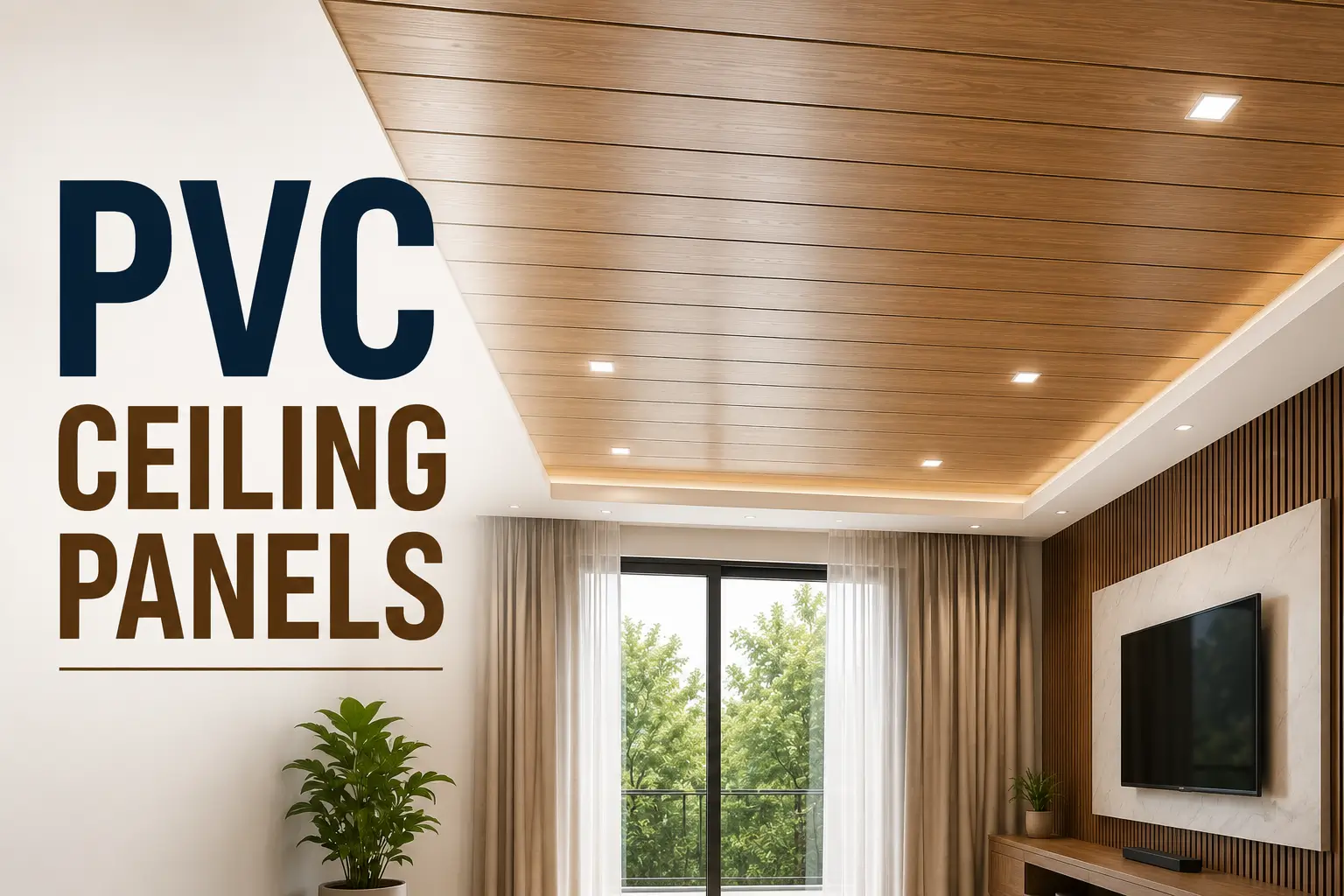
PVC ceiling panels are a popular choice for homes and offices today. Many people choose them for kitchens and bathrooms because they are affordable, long-lasting, and easy to keep clean.
They have both good and bad points, like any other material. Before you decide to use them, it is helpful to look at how they compare to other options regarding how they look, how well they hold up over time, how they handle moisture, how they are installed, and if they are a good value for your money.
This article covers everything you need to know about PVC ceiling panels, including their benefits, drawbacks, costs, applications, and whether they are the right choice for your project.
Table of Contents
What Are PVC Ceiling Panels?
PVC (Polyvinyl Chloride) ceiling panels are simply lightweight plastic boards used to cover ceilings in homes and offices. They come in many different colors, patterns, and textures. It make easy to find a style that makes your room look modern and great.
Unlike traditional plaster or gypsum ceilings, PVC panels are prefabricated and usually feature an interlocking system that makes installation quicker and cleaner. They are especially popular in moisture-prone areas because they are waterproof and resistant to mold growth.
Quick Overview of PVC Ceiling Panels
| Feature | PVC Ceiling Panels |
| Material | Polyvinyl Chloride (PVC) |
| Weight | Lightweight |
| Water Resistance | Excellent |
| Maintenance | Very Low |
| Installation | Fast and Easy |
| Lifespan | 15–25+ Years |
| Cost | Budget-Friendly |
| Best Areas | Bathrooms, Kitchens, Basements, Balconies |
| Design Options | Multiple Colors and Finishes |
Advantages of PVC Ceiling Panels
1. Completely Waterproof
A huge benefit of PVC ceilings is that they are waterproof. While other materials like gypsum or plaster can soak up moisture and get stained, PVC stays perfectly fine even in damp, humid rooms. This makes them perfect for bathrooms, kitchens, laundry rooms, basements, and balconies. Plus, because they resist mold and mildew, they help keep your home cleaner and healthier.
2. Highly Durable
PVC ceiling panels are known for their long lifespan.
They do not warp, crack, or bend easily under normal conditions. Unlike traditional plaster ceilings, they are less prone to accidental damage during installation and maintenance.
Durability Benefits
- Resistant to termites
- Resistant to moisture damage
- Corrosion resistant
- Long service life
- Suitable for humid climates
3. Easy Installation
PVC ceilings are lightweight and come with interlocking edges.
This allows installers to complete projects much faster than gypsum or POP ceilings. Since the panels can be easily cut and fitted, installation is generally cleaner and creates less dust.
Installation Benefits
- Faster project completion
- Lower labor costs
- Minimal mess
- Easy replacement of damaged panels
4. Low Maintenance
PVC ceilings are very easy to take care of. Unlike painted ceilings, you don’t need to worry about repainting or fixing them up over time. If they get dirty, you can usually clean them with a cloth and a little bit of mild soap.
Maintenance Requirements
Keeping your PVC ceiling looking good is simple:
- Dust occasionally: Just a quick dusting now and then is all it needs.
- Wipe clean: If there is a mark, just use a damp cloth.
- No extra work: You never need to paint or polish them.
5. Budget-Friendly Solution
If you are looking for an affordable ceiling, PVC panels are a great choice. They save you money in three ways: the materials are cheap, they are quick and easy to install (which lowers labor costs), and you won’t have to spend much on maintenance in the future. This makes them a smart, budget-friendly investment.
6. Wide Range of Designs
Modern PVC panels have a wide variety of styles, including realistic wood grain, elegant marble textures, sleek matte finishes, shiny glossy surfaces, and many decorative patterns. This huge selection allows you to achieve the specific interior design look you want for your home without having to spend a fortune on expensive, high-end materials.
Disadvantages of PVC Ceiling Panels
Even though PVC ceilings have a lot of great benefits, they are not the right choice for every situation.
1. Plastic Appearance
One common criticism is that PVC ceilings can sometimes look artificial. While high-quality panels can look just like real wood or stone, cheaper versions may still look like plastic and have clearly visible lines where the panels join together.
2. Limited Heat Resistance
PVC is sensitive to high heat, which can cause the panels to soften, bend, or change color if they get too hot for too long. Because of this, experts suggest using LED lights instead of traditional bulbs that get hot, as LEDs help keep the panels in good condition.
3. Environmental Concerns
Since PVC is made of plastic, some homeowners worry about how it affects the environment. Additionally, because PVC can release harmful gases if it catches fire, it is very important to make sure the panels are installed correctly and that you follow all necessary fire safety precautions.
4. Limited Structural Strength
PVC panels are lightweight and can not hold much weight. Because of this, you should not attach heavy items like ceiling fans or chandeliers directly to them. If you want to hang something heavy, you must build extra support behind the panels first.
5. Lower Acoustic Performance
PVC ceilings don’t block out sound very well, especially when compared to ceilings made specifically for soundproofing. This can be a problem in offices, meeting rooms, or home theaters where keeping noise down is important.
PVC Ceiling vs Gypsum Ceiling
| Feature | PVC Ceiling | Gypsum Ceiling |
| Water Resistance | Excellent | Moderate |
| Maintenance | Very Low | Medium |
| Installation Speed | Fast | Slower |
| Design Flexibility | Moderate | Excellent |
| Cost | Lower | Higher |
| Appearance | Modern | Premium |
| Moisture Resistance | Excellent | Limited |
For bathrooms and kitchens, PVC often performs better. For luxury living rooms and designer interiors, gypsum may offer a more premium appearance.
PVC Ceiling vs POP Ceiling
| Feature | PVC Ceiling | POP Ceiling |
| Installation | Quick | Time-Consuming |
| Maintenance | Low | Moderate |
| Moisture Resistance | Excellent | Poor |
| Cracking Risk | Low | Higher |
| Design Customization | Moderate | High |
| Cost | Affordable | Moderate |
Best Places to Use PVC Ceiling Panels
PVC ceilings are a great choice for many different areas because of their practical features:
- Bathrooms: Their waterproof design makes them perfect for humid, steamy spaces.
- Kitchens: They are easy to wipe clean, which is ideal for removing grease and cooking stains.
- Basements: Their moisture resistance helps prevent water damage.
- Commercial Buildings: They help businesses keep their upkeep costs low since they are so easy to maintain.
- Garages: They are a tough, budget-friendly way to finish off a workspace.
- Balconies: They work well for covered areas that are semi-outdoors.
Are PVC Ceiling Panels Safe?
High-quality PVC ceiling panels made to industry standards are generally safe for home use. To ensure the best results, always buy from trusted suppliers, follow fire safety rules, and keep the panels away from direct heat sources. LED lights are a great way to prevent overheating, and choosing a proper, professional installation will make your ceiling much safer and longer-lasting.
How to Maintain PVC Ceilings
To keep your PVC ceilings looking great for years, follow these simple maintenance tips:
- Dust regularly: You should keep them free of dust with a light wipe or duster.
- Clean gently: You should use a soft, damp cloth for cleaning.
- Avoid harsh scrubbers: Do not use abrasive cleaners that could scratch the surface.
- Check the seams: Inspect the joints once a year to make sure they are still tight.
- Fix damage early: If a panel gets damaged, replace it right away.
With this simple care, your PVC ceiling will stay in excellent shape for a long time.
Should You Choose PVC Ceiling Panels?
PVC panels are a fantastic choice if you want a waterproof, affordable, and modern ceiling that is quick to install and easy to look after. If you are looking for a more high-end appearance, custom shapes, or extra fire protection, you might want to look into alternatives like gypsum or POP ceilings instead.
Summary
PVC ceiling panels are a popular choice because they are affordable, waterproof, tough, and very easy to keep clean. They work especially well in areas that get damp, such as bathrooms, kitchens, basements, and commercial spaces.
They might not look quite as high-end as gypsum or POP ceilings, but their practical benefits make them one of the best value-for-money options you can buy. PVC panels are a very smart investment for homeowners who want a ceiling that lasts a long time and is easy to take care.
Read More: Benefits of Full-Size Bedroom Sets for Modern Living
Frequently Asked Questions
1. How long do PVC ceiling panels last?
Most quality PVC ceiling panels can last 15–25 years or more with proper maintenance.
2. Are PVC ceilings waterproof?
Yes. PVC panels are completely waterproof and highly resistant to moisture.
3. Can PVC ceilings be used in bathrooms?
Absolutely. Bathrooms are among the best locations for PVC ceiling installations due to their moisture resistance.
4. Do PVC ceilings require painting?
No. PVC panels come pre-finished and do not require painting.
5. Are PVC ceiling panels expensive?
No. PVC ceilings are generally considered one of the most affordable ceiling solutions available.