

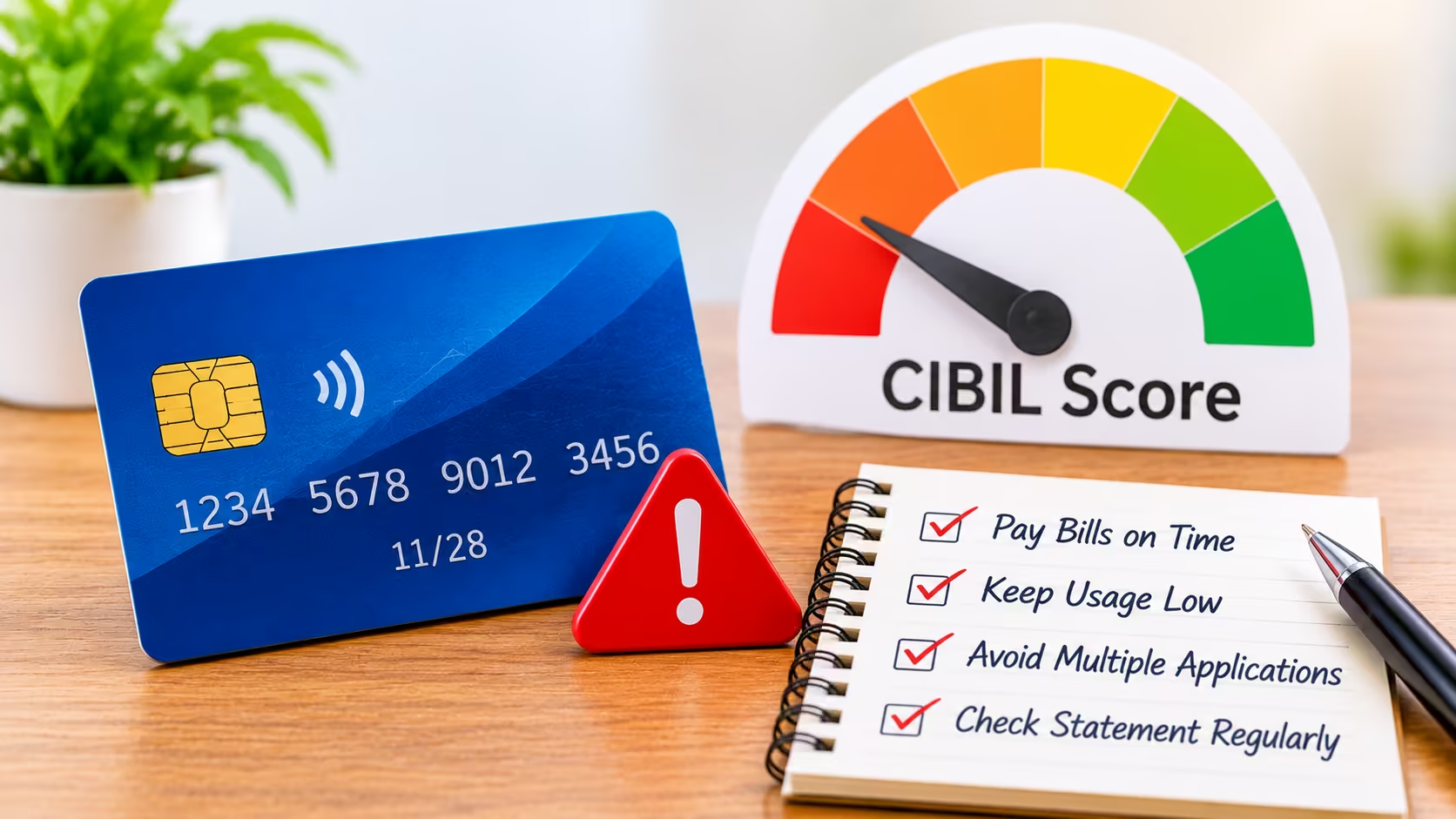
Having a credit card can simplify your life. Without carrying cash, you can make purchases online, purchase airline tickets, settle payments, and get reward points. However, have you ever looked at your CIBIL score and questioned why it decreased?
Your credit card habits could be one reason. Many people think that paying their credit card bill before the due date is enough to maintain a good credit score. However, your credit history depends on several other factors. High credit card usage, frequent applications, and unpaid balances can also affect your credit profile. The good news is that many of these mistakes may be fixed with minor adjustments to your spending patterns.
Why Does Your Credit Card Affect Your CIBIL Score?
Your CIBIL score is a three-digit number that enables lenders to ascertain your ability to manage borrowed funds. This score is determined by TransUnion CIBIL by analysing your credit history. When you apply for a personal loan, home loan, or any other credit facility in India, lenders could check your credit score.
Your credit history is influenced by the transactions you make with your credit card. Relevant account information is shared with credit bureaus by banks and credit card firms. For example, if you pay your credit card bills on time and manage your outstanding balance carefully, you can build a positive credit history. However, missed payments, high outstanding balances, and other risky habits can hurt your credit profile.
10 Credit Card Mistakes That Could Be Hurting Your Credit Score
Let’s understand the common mistakes that many Indian credit card users make.
1. Paying Your Credit Card Bill After the Due Date
Missing your credit card payment deadline is one of the biggest mistakes you can make. Let’s say you have a ₹15,000 credit card bill that is due on the tenth of each month. In accordance with the relevant reporting guidelines, your bank may notify credit bureaus if you neglect to pay the bill. A late payment can hurt your credit history. It can also attract late payment charges and other applicable fees.
How to avoid this mistake:
Set a reminder a few days before your payment due date. You can also enable bill payment alerts through your banking application. If possible, use an automatic payment facility and make sure your bank account has enough money.
2. Using Almost Your Entire Credit Limit
How much of your available credit limit you use is indicated by your credit utilisation ratio. For example, suppose your credit card has a limit of ₹1,00,000. If you spend ₹80,000, your credit utilisation reaches 80%. A high credit utilisation rate may give the impression that you are more reliant on loans. Your credit score could suffer as a result. As a general rule, many financial experts advise limiting credit utilisation below 30%. Nevertheless, neither the RBI rule nor the scoring barrier is set in stone.
How to avoid this mistake:
Make an effort to maintain a modest outstanding credit card amount. You should try to maintain your reported balance under ₹30,000 if you have a ₹1 lakh restriction. Just because your bank has a high credit limit doesn’t mean you should make needless purchases.
3. Paying Only the Minimum Amount Due
The total amount owed and the minimum amount owed are often displayed on your credit card statement. Some people pay only the minimum amount because they think this will protect their credit score. Your outstanding debt can increase quickly if you keep making new purchases.
How to avoid this mistake:
Make an effort to settle the entire statement balance by the deadline. If you cannot afford the entire bill, stop making unnecessary purchases and clear the outstanding amount as soon as possible.
4. Applying for Too Many Credit Cards
Cashback, shopping discounts, and enticing joining bonuses are all included with credit cards. People may be encouraged to apply for many cards quickly as a result of this. However, a hard inquiry on your credit report could result from each official credit application. Your credit profile may be impacted by several enquiries in a brief amount of time, and lenders may become suspicious of your borrowing patterns.
How to avoid this mistake:
Only apply for a credit card if you truly need one. Before submitting an application, evaluate the joining fees, annual fees, rewards, and qualifying requirements.
5. Ignoring Your Credit Card Statement
Many consumers only look at the total amount owed on their credit card statement, ignoring the other information. This behaviour may lead to issues. There could be strange transactions, extra fees, or inaccurate payment information on your statement. You can lose the opportunity to promptly report a problem if you disregard these concerns.
How to avoid this mistake:
Check your credit card statement every month. Review your purchases, refunds, interest charges, and payment history. If you see a transaction you do not recognise or an inaccurate entry, call your bank.
6. Closing Your Old Credit Card Without Checking the Impact
You may want to close an old credit card because you no longer use it or dislike its annual fee. However, closing a credit card can reduce your total available credit limit. If you continue to have balances on other cards, this could raise your credit utilisation ratio.
How to avoid this mistake:
Check your overall credit utilisation before you close an old card. If the card has a high annual fee, ask your bank whether they provide a lifetime-free or lower-fee option. Don’t keep an unnecessary card open just for the sake of your credit score.
7. Taking Cash Advances From Your Credit Card
Most credit cards allow cash withdrawals from ATMs. However, this facility can become expensive. Banks generally charge cash advance fees and interest on cash withdrawals. The usual interest-free period does not apply to these transactions. Frequent cash advances may also suggest that you depend heavily on borrowed money.
How to avoid this mistake:
Use your credit card primarily for planned purchases. Keep cash in your savings account and don’t use your credit card for cash.
8. Maxing Out Your Credit Card
Using up your credit limit will hurt your credit profile. A high balance recorded to credit agencies might hurt your score, even if you pay it back later.
How to avoid this mistake:
Keep track of your spending throughout the month. Avoid treating your available credit limit as extra income. Spend according to your actual budget rather than the maximum amount your bank allows.
9. Ignoring Errors in Your Credit Report
Inaccurate information may occasionally appear in your credit report. It can indicate a credit account that is not yours or an outstanding amount even after you have paid the bill. Such errors can affect your credit profile if you ignore them.
How to avoid this mistake:
Check your credit report regularly. If you find an incorrect entry, raise a dispute with the relevant credit bureau and contact your bank or lender. Keep your payment receipts and other supporting documents.
10. Missing Payments on Other Loans
Your credit card is not the only financial product that affects your credit history. Missed payments on personal loans, home loans, car loans, and other credit facilities can also hurt your credit score. For example, even though you pay your credit card payment on time, you can forget to make two EMIs on your personal loan. Your credit profile may still be impacted by these late payments.
How to avoid this mistake:
Maintain a monthly repayment calendar. Include all your EMIs, credit card bills, and other loan payments. Keep enough money in your bank account before each payment date.
How to Improve Your CIBIL Score After Making Credit Card Mistakes
If your credit score has already dropped, do not panic. There are actions that you may take to enhance your credit practices and rebuild your credit history.
1. Pay All Outstanding Bills
Ensure you clear any pending credit card bills and loan installments. If you can’t pay the full sum all at once, please contact your bank. Enquire about repayment options.
2. Reduce Your Credit Utilisation
Avoid using a large portion of your available credit limit. Pay down your outstanding balances and control unnecessary purchases.
3. Stop Applying for Unnecessary Credit
Do not apply for several credit cards and loans in a short period of time. Let your credit profile breathe.
4. Check Your Credit Report
Review your credit report for payment mistakes, incorrect balances, and unfamiliar accounts. Raise a dispute if you find inaccurate information.
5. Build a Consistent Payment Habit
Pay all loan EMIs and credit card bills on schedule. Keep in mind that it takes time to raise your credit score. A quick improvement is not guaranteed by any bank or financial provider.
Conclusion
Credit cards help you manage expenses and enjoy useful benefits. However, careless usage can create financial problems and hurt your credit score. Missing payment dates, using your entire credit limit, paying only the minimum amount, and applying for too many cards are some common mistakes you should avoid. Keep your outstanding balance under control, pay your obligations on time, and often review your credit report. Having more cards does not translate into a higher credit score. It results from prudently handling your existing credit.