

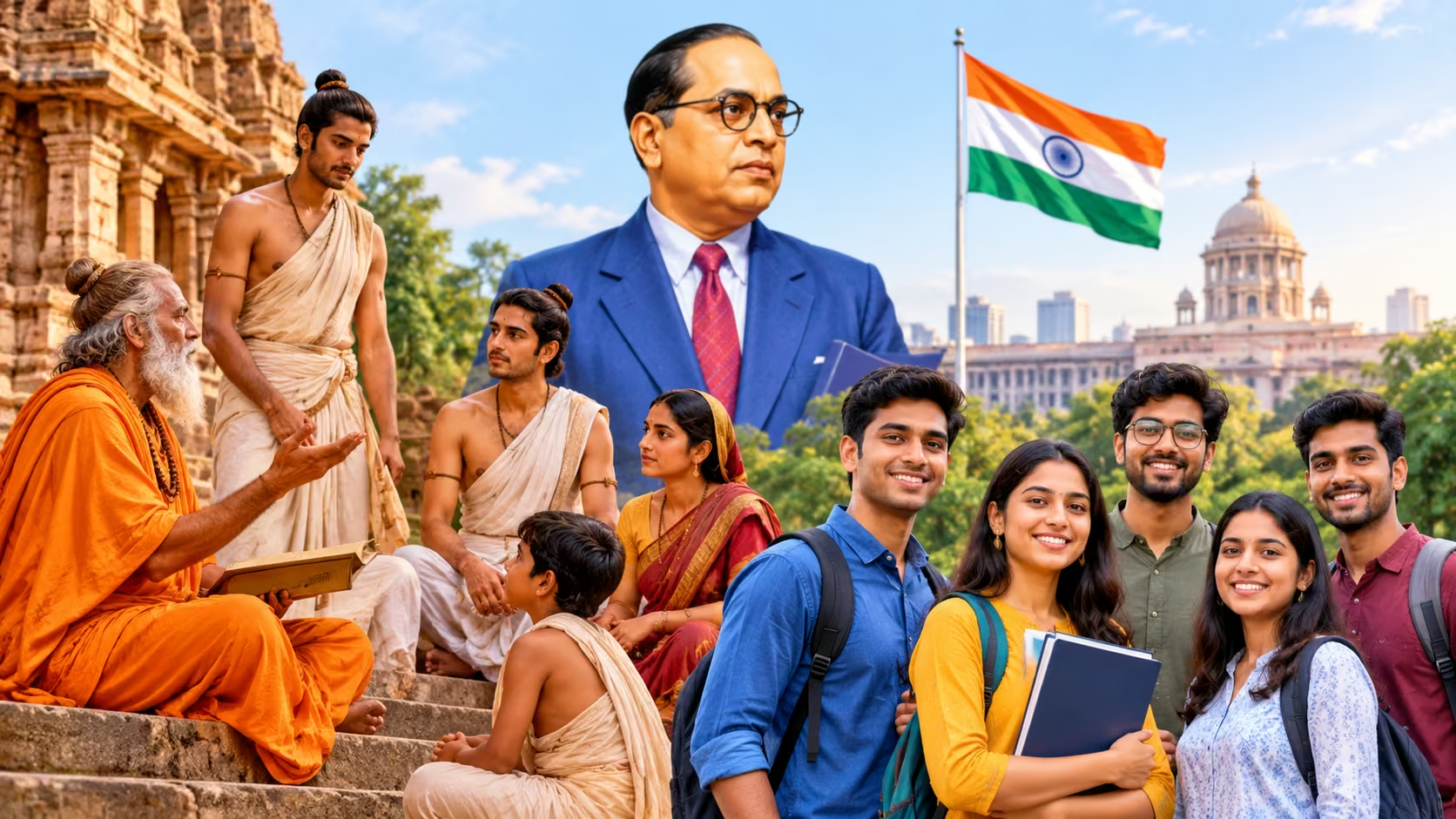
India has a rich and varied social past. The customs, languages, professions, and lifestyles of many communities have varied. The caste system, however, is one social structure that has had a significant and enduring impact on Indian culture. Caste shaped people’s social standing, careers, marriage decisions, and interpersonal interactions for generations. Communities became divided as a result, and certain groups benefited more socially than others. Because of their caste identification, many people also experienced severe discrimination.
India has seen numerous changes since gaining its independence. Millions of individuals have benefited from new employment prospects, education, urbanization, and constitutional rights. However, caste still has an impact on certain segments of Indian culture. Understanding the history of the caste system helps us understand many social changes and challenges in modern India.
What Is the Caste System?
The caste system is a traditional form of social division in which people belong to particular communities, often based on birth. These communities have historically followed certain customs and social practices. A person’s caste may have an impact on the employment they did, the people they married, and the groups they engaged with. Caste also determined who had access to particular public areas and social opportunities in various regions. Varna and jati are two key words that aid in the explanation of this system.
Understanding Varna and Jati
Some ancient Hindu writings refer to a wide four-part social division called varna. Four primary groups are described:
| Varna | Traditional association |
| Brahmins | Priests, teachers and scholars |
| Kshatriyas | Rulers and warriors |
| Vaishyas | Traders, merchants and agricultural groups |
| Shudras | Workers and service providers |
However, this straightforward four-part paradigm was never universally applied in actual Indian society. Numerous groups created their own identities, traditions, and social roles. These groups are frequently referred to as jatis. Marriage, employment, and local social ties were frequently impacted by a jati. There were regional and historical differences in the relationship between varna and jati. It is crucial to realize that the caste system was not a single, set framework that functioned uniformly across India.
History of the Caste System in Ancient India
The history of the caste system developed over a long period. Early Indian society included different communities with different occupations and social roles. The varna system was used in several ancient writings to describe social divisions. Birth, family history, occupation, and regional traditions all became significant determinants of caste identity over time.
1. Growth of Social Hierarchies
As communities developed, social groups began to follow different customs and rules. Some groups gained greater religious, economic, and political influence. Certain professions were viewed as more reputable than others in various areas. Additionally, they linked concepts of pollution and purity to social standing. These ideas led to unfair links between communities. Certain groups had easier access to places of worship, land, and education. Others were subject to limitations due to their caste identity.
2. Birth and Occupation
Caste gradually became closely connected with family background. Children generally inherited their family’s caste identity. Children were expected to continue their families’ customary jobs in many places. For instance, a family may engage in trading, farming, weaving, or ceramics for many generations. However, not every community followed the same rules. Occupational patterns and social positions changed across regions and historical periods.
How the Caste System Affected Everyday Life
The caste system did not remain limited to social labels. It influenced several important parts of people’s daily lives.
1. Occupation and Employment
For many generations, caste influenced the type of work people could perform. Some communities traditionally worked as priests, traders, farmers, artisans, or labourers. Children frequently inherited these jobs from their parents. For those who wished to pursue alternative careers, this reduced their options.
For example, a person born into a family of traditional artisans might face social pressure to continue the same work. Even if that person wanted to study or enter another profession, social restrictions could make the journey difficult.
2. Education and Knowledge
Access to education was unequal in many parts of historical India. Certain communities enjoyed greater access to formal learning, while others faced restrictions. These differences affected people’s ability to find better jobs and improve their financial position. Education gradually became an important tool for challenging caste-based inequality. Reformers and social leaders encouraged wider access to schools and learning opportunities.
3. Marriage and Family Relationships
Traditional marriage arrangements were heavily influenced by caste. Marriages inside their own caste community were sought by many households. Endogamy is a practice that helped preserve caste divisions between generations. Caste is still taken into consideration by some families when choosing spouses. Intercaste marriages have increased in various society groups, despite the persistence of social and familial antagonism.
4. Social Interaction
Caste also influenced how people interacted with each other. In some communities, people from certain castes faced restrictions when using common wells, entering temples, or accessing public facilities. Some groups experienced social exclusion and untouchability. These actions were extremely harmful. For no reason other than their birth, they denied people basic opportunities and equal respect.
Caste During British Rule in India
British rule brought major changes to India’s administration, economy, and social structure. The colonial government also changed how it recorded and classified caste identities.
1. Caste in Census Records
The British began conducting large-scale population censuses in India during the nineteenth century. Census officials collected information about communities and attempted to classify people through caste categories. The 1901 Census under Herbert Risley tried to arrange castes according to social rank. These official classifications influenced how communities understood and presented their identities.
However, historians do not describe caste as a British invention. Caste divisions existed long before colonial rule. British administration recorded, classified, and sometimes strengthened existing social boundaries.
2. Changes in Jobs and Society
British rule introduced new forms of education, administration, transport and employment. These changes created opportunities outside traditional occupations. People from different groups began to enter new professions and institutions of learning. Social reform groups often challenged prejudice and unfair traditions.
At the same time, colonial policies and official classifications gave caste a new place in administration and in public life.
Social Reformers Who Challenged Caste Discrimination
Caste disparity was questioned by a number of Indian reformers who sought to better the lot of underprivileged people. Their initiatives contributed to raising awareness of human dignity, equality, and education.
a) Jyotirao Phule and Savitribai Phule
They opposed discrimination based on caste and unfair treatment of women. He and his spouse worked to enhance education for underprivileged communities and girls. One of the first female educators in India was Savitribai Phule. Through their labor, people were able to challenge social norms that denied some populations access to education and dignity.
b) Dr. B. R. Ambedkar
He played a big part in the fight against caste prejudice. He himself experienced caste-based exclusion and worked for equality and social justice all his life. He was a staunch advocate of education and equal rights. He also headed the Drafting Committee of the Constitution and helped build the legal framework of independent India. His thoughts continue to inform the discourse on caste, equality, and social justice.
c) Mahatma Gandhi
He fought for the abolition of untouchability and appealed to the people to respect all communities. He was a social reformer who wished to uplift the situations of the marginalized populations. But he had opinions on caste and varna different from Ambedkar. These differences would form a crucial chapter in India’s social and political history.
How the Indian Constitution Changed the Caste System
India’s independence in 1947 created an opportunity to build a society based on equal rights. The Constitution introduced important protections against caste discrimination.
Article 15: Protection Against Discrimination
Article 15 exclusively prevents the State from discriminating against its inhabitants on the grounds of caste, religion, race, sex, or place of birth. It also has special provisions for the betterment of socially and educationally backward sections, Scheduled Castes and Scheduled Tribes.
Article 16: Equal Opportunity in Public Employment
Equal opportunity in public employment is guaranteed under Article 16. Additionally, it permits reservation policies for some underprivileged groups that are underrepresented in government services. These safeguards are intended to promote access to opportunities and lessen historical disadvantages.
Article 17: Abolition of Untouchability
Untouchability is outlawed in all its forms by Article 17. Additionally, the government passed legislation to combat violence and prejudice based on caste. Two such examples are the Scheduled Castes and Scheduled Tribes (Prevention of Atrocities) Act of 1989 and the Protection of Civil Rights Act of 1955.
Caste System in Modern India
Modern India has changed significantly. People now work in different professions, study in schools and universities, and move between cities for better opportunities. Technology and urbanisation have also brought people from different backgrounds into closer contact. However, caste has not disappeared.
Caste and Education
Many students from traditionally underprivileged neighborhoods have been able to enroll in schools, colleges, and professional institutions because of government reservations and educational assistance. Access to work and education may be enhanced by these opportunities. Students’ experiences are still impacted by variations in social support, school quality, and family poverty, though.
Caste and Politics
Caste continues to have a significant role in Indian politics. Political parties frequently take caste groups into account when choosing candidates and organizing election campaigns. Additionally, some communities band together to seek access to government programs and improved representation. Because of this, caste plays a significant role in conversations around social justice and political power.
Caste and Marriage
When arranging marriages, many Indian households still take caste into account. Caste preferences are frequently mentioned in marriage-related marketing and websites. However, intercaste weddings allow people to form relationships that go beyond traditional social restrictions. Decisions can vary greatly throughout families, regions, and generations.
Caste in Cities and Workplaces
People from various communities have more opportunities to collaborate and study in cities. A person’s education and professional abilities might be crucial to their job development. However, caste discrimination can still happen in social networks, employment, housing, and interpersonal interactions. Not all forms of social prejudice can be eliminated by laws alone.
Why Understanding the Caste System Still Matters
Understanding caste history helps people recognise how social inequality develops and continues. It also helps explain why some communities need additional support to access education, employment and public services.
Judging someone based on their caste identification should not be the aim. Understanding past difficulties and treating everyone with equal dignity should be the goal. Communities, businesses, families, and schools may all contribute to the development of a more equitable society. Respect for diverse backgrounds, equitable chances, and open dialog can have a significant impact.
Conclusion
The caste system has shaped Indian society for centuries. It influenced occupations, education, marriage, social relationships, and access to opportunities. Its effects varied across regions, but caste-based inequality caused serious hardship for many communities. Social reformers opposed these customs and promoted equality, education, and dignity. The Indian Constitution established robust safeguards against untouchability and caste discrimination following independence.
Despite significant advancements, societal discrimination and unequal opportunity persist in modern India. Knowing the history enables us to identify these issues and strive toward a society where an individual’s skills, decisions, and character are valued more than their birth.